
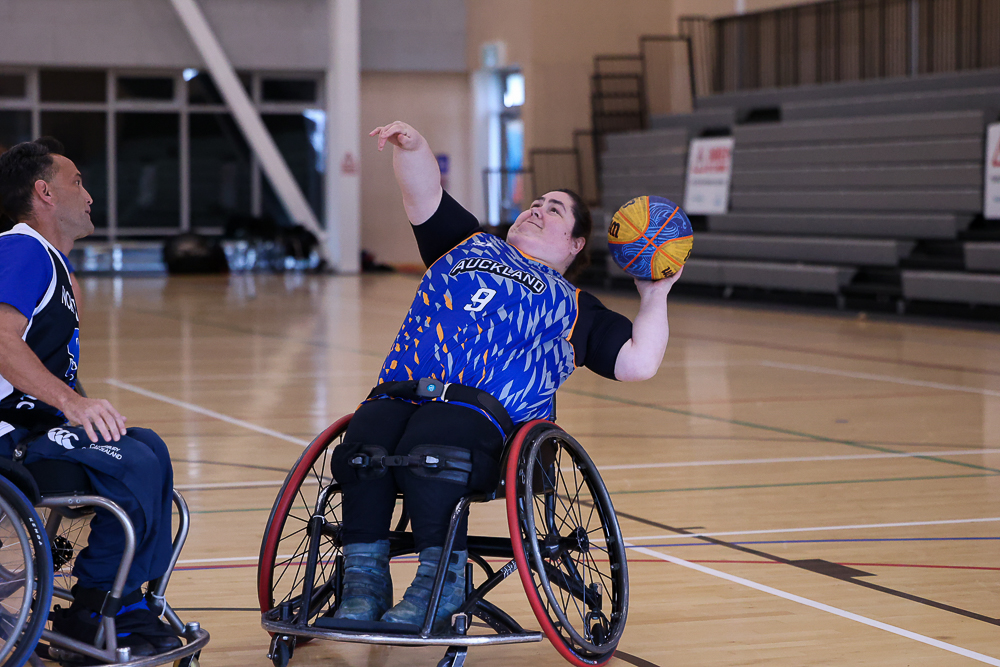
As a player, coach and administrator, few New Zealand women have had a greater influence on Wheelchair basketball than Daniella Egle-Bast.
A long-time stalwart of the Auckland Wheelbreakers, a regular in Australia’s National Women’s Wheelchair Basketball League with the Sydney Blues, and a multiple New Zealand Women’s Player of the Year, the 37-year-old is one of the country’s most accomplished female players.
More recently, she has expanded her repertoire by coaching the Auckland Wheelbreakers and serving as an assistant coach with the New Zealand Roller Blacks, the men’s national team.
Yet despite her many achievements, Daniella would love to see more women and juniors playing the Para sport for the New Zealand women’s Wheelchair basketball team to return to international competition for the first time since 2007.
“I would love to see a women’s programme start, whether that’s before or after I stop playing. It’s something I’d really like to be part of,” says Daniella, who was born with arthrogryposis multiplex congenita.
After growing up in Auckland, Daniella lived in Germany – the homeland of her parents – from the ages of seven to 12. It was there, at the age of 10, that her mum first introduced her to Wheelchair basketball.
“I didn’t like it at first because I was terrible,” she laughs. “But my mum encouraged me to keep going and I grew to love it. It has become such a big part of my life. It’s so much more than just a sport. Wheelchair basketball has allowed me to meet so many people, travel and make lifelong friends.”
Since returning to New Zealand in 2000, Daniella has been a cornerstone of the Auckland Wheelbreakers. She was also a regular member of the New Zealand women’s team until 2007, when a lack of player numbers has resulted in a period without international competition.
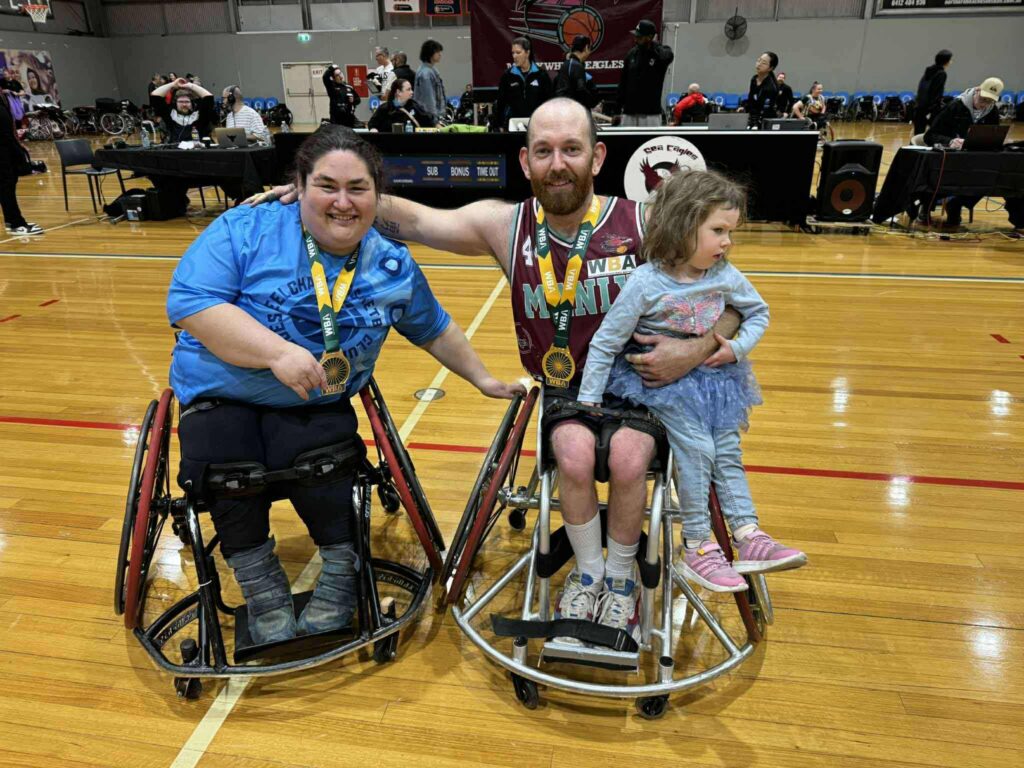
Since 2019, she has further developed her game by competing in Australia’s National Women’s Wheelchair Basketball League with the Sydney Blues. Now midway through the current season, Daniella, the only New Zealand woman in the competition, features for the defending champions.
“It is an honour and a privilege to play in Australia, and it’s something I never take for granted,” she says. “Hopefully, by playing here I can show other Kiwi women what’s possible.”
A one-point player (assigned to players in Wheelchair basketball with the lowest level of function or highest impairment level), Daniella says she has never relied on speed or natural shooting ability, instead working on her other qualities.
“My main role is to make the better players look good,” she says. “I’m not the quickest around the court, so I had to find other ways to contribute. I think I have a good basketball IQ, I’m good at setting picks and screens (creating space for other players), and I pride myself on my defensive skills.”
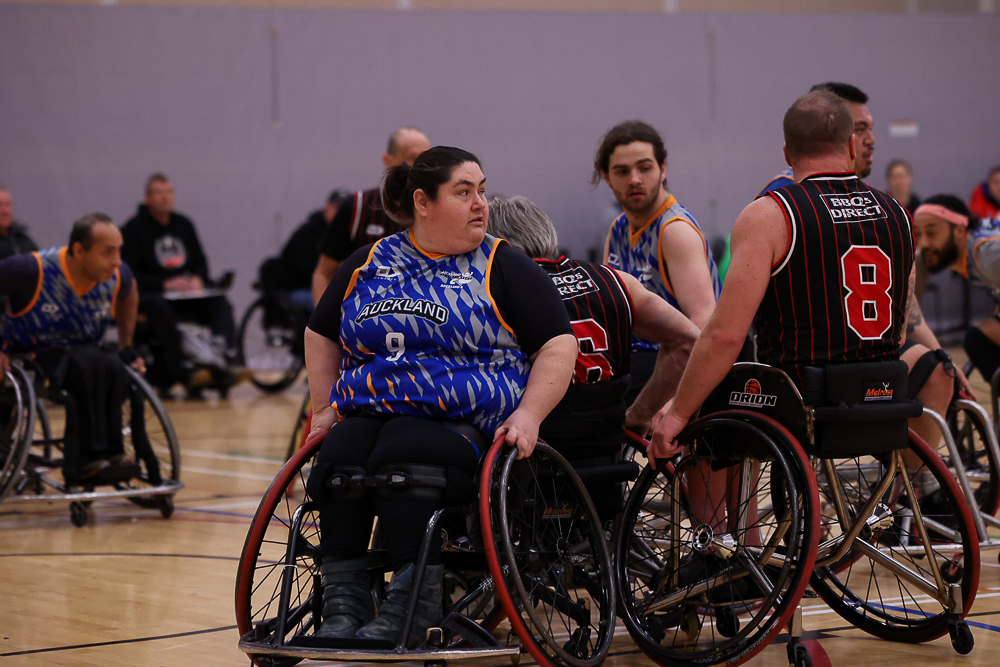
Her desire to keep learning, improving and evolving has also led her into coaching. After the COVID-19 pandemic, she was eager to share the knowledge she had gained in Australia and today coaches the Auckland Wheelbreakers.
Her growing reputation has also seen her appointed as an assistant coach with the Roller Blacks. Learning from respected mentors such as Sydney Blues coach and five-time Australian Wheelchair basketball Paralympian Troy Sachs OAM and fortunate to be guided by a strong support network, this has further accelerated her development.
To continue improving her coaching and leadership skills, Daniella completed Basketball New Zealand’s Emerging Leaders Programme and is currently part of Sport NZ’s Ta Manaakitanga, 12-month women in coaching development programme.
“I really enjoy coaching and I want to keep getting better,” she says. “At the moment I’m balancing playing and coaching, but once I finish playing, I’d love to focus on coaching full-time.”
As president of the Auckland Wheelbreakers, Daniella also plays an important administrative role. While she intends to continue playing for several more years, she remains passionate about growing the women’s game in Aotearoa New Zealand.
“I’d love to see the development of a women’s programme,” she says. “I’m sure the girls are out there somewhere – we just need to find them and create a pathway for them. We need to help change the culture around Wheelchair basketball in New Zealand. It’s important the Para sport creates a strong social community, and the more people who play, the more opportunities we have to develop elite Para athletes.”
So why should women give Wheelchair basketball a go?
“It’s a team sport that brings people together rather than focusing on individuals. It’s great fun, it’s competitive, and it creates lifelong memories. Anyone can play and enjoy the Para sport as long as they can push a chair and catch a ball.”
***For more information and how to get involved in Wheelchair basketball, email: wheelchairbasketballnz@gmail.com or contact www.facebook.com/WheelchairBasketballNZ