To qualify for the Paralympic Winter Games, Para athletes must first meet sport-specific performance and ranking standards set by the International Paralympic Committee (IPC) and the international federation of each sport, then be nominated and selected by their National Paralympic Committee (NPC) under national criteria.
In Aotearoa New Zealand, this means moving from local adaptive programmes into Snow Sports NZ and High Performance Sport New Zealand (HPSNZ) pathways, gaining international classification, earning quota places for New Zealand through World Cups and World Championships, and then meeting Paralympics New Zealand (PNZ) nomination and selection standards for the Milano Cortina 2026 Paralympic Winter Games.
Overview of the qualification system
The Milano Cortina 2026 Paralympic Winter Games are expected to feature around 665 Para athletes competing in 79 medal events across six sports. Qualification regulations published by the IPC outline exactly how many athletes and teams can qualify in each sport, which events award quota places, and what minimum performance standards apply.
The key principle is that athletes do not qualify directly for the Games as individuals in most sports – instead, they earn quota slots for their NPC, which then allocates these slots through its own nomination and selection processes. For New Zealand, PNZ’s Nomination and Selection Regulation for Milano Cortina 2026 sits alongside the IPC Qualification Regulations to define how Para athletes progress from international results to formal Team selection.
Sport-by-sport qualification pathway
Each Paralympic winter sport uses a slightly different mix of world rankings, World Cups and championship results to allocate quota slots.
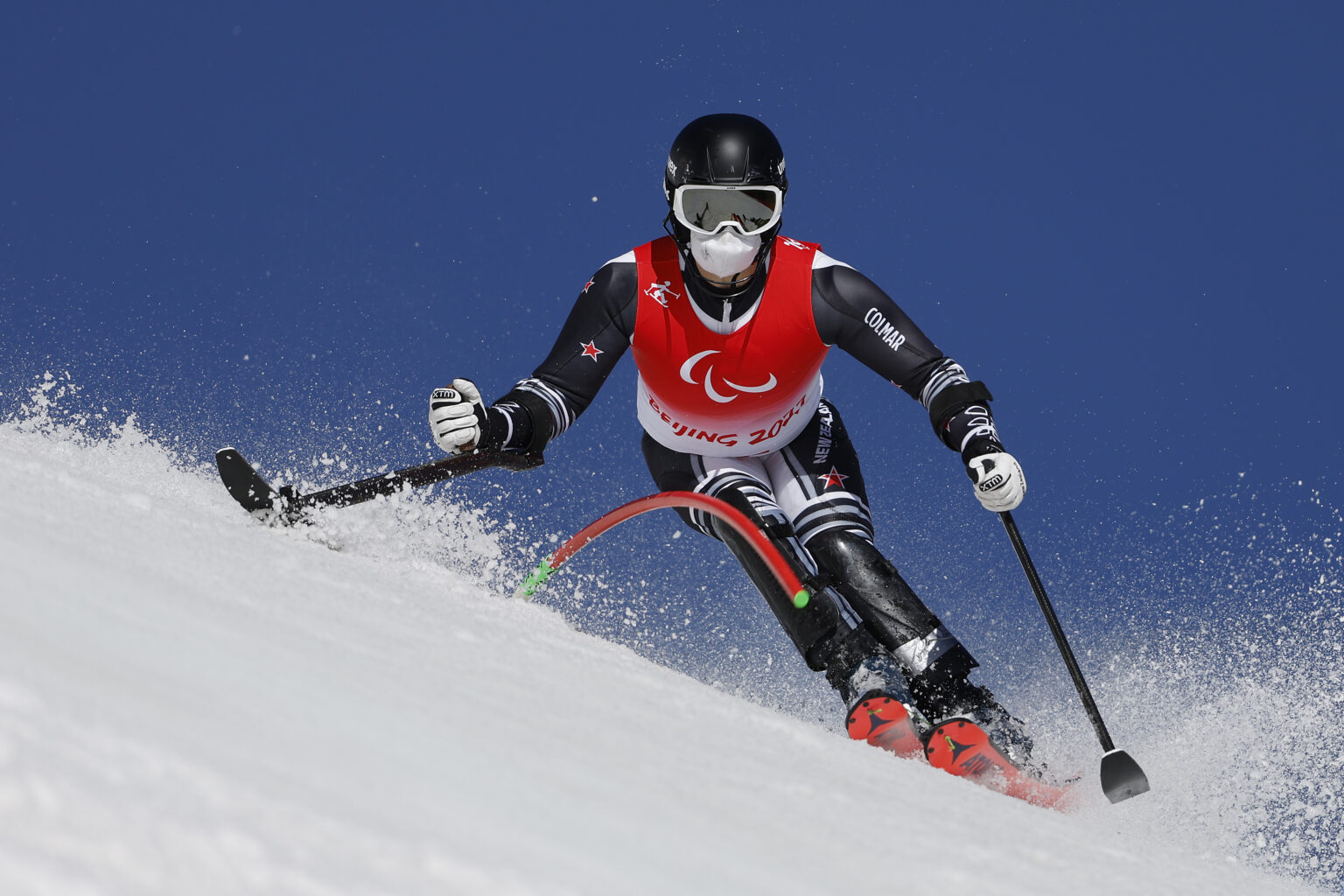
Para alpine skiing
- Quota places are allocated through World Championships, World Cup results and world ranking lists, with specific caps on total athletes by gender and event.
- Athletes must hold a valid international licence, be internationally classified, and meet minimum points standards on FIS Para alpine lists by set cut off dates.
- For New Zealand, Snow Sports NZ works with PNZ to target key qualification races and ensure athletes like Paralympian #158 Adam Hall MNZM and Paralympian #188 Corey Peters MNZM meet both IPC and national performance benchmarks.
Para cross-country skiing and Para biathlon
- Qualification combines world ranking factor allocations across FIS Para cross-country and International Biathlon Union lists, plus results at World Championships.
- Athletes must achieve points thresholds on ranking lists by mid-2025 and early 2026 and meet minimum race participation requirements in the qualification period.
- NPCs receive a set number of slots based on how many athletes meet these standards, with mechanisms to adjust for rounding and representation.
Para snowboard
- As with alpine skiing, Para snowboard uses World Cup standings, World Championships and FIS Para snowboard points lists to allocate slots.
- Athletes must hold a current FIS Para snowboard licence, be internationally classified, and reach minimum points levels in events such as snowboard cross by the end of the qualification window.
- For nations like New Zealand, targeted campaigns around key World Cups are often the most efficient route to securing quota slots.
Para ice hockey
- Qualification is team based, with places awarded through world and regional championships and a dedicated qualification tournament in the years prior to the Paralympic Winter Games.
- NPCs must finish within specified ranking positions at these events to secure one of the limited team slots available in the Paralympic tournament.
- Individual players then compete for selection within their national squad, based on national team policies.
Wheelchair curling
- Mixed gender wheelchair curling teams qualify through World Championships and specific qualification events that rank nations over a multi-year cycle.
- Points accumulated across these events determine which NPCs earn Paralympic team places, with a host nation slot reserved and further places filled via qualification tournaments.
Across all sports, there is also a limited Bipartite Commission Invitation pathway – a joint IPC and sport federation process designed to support universality, representation from smaller nations, and athletes with particular circumstances that may have limited access to standard qualification routes.
Classification and eligibility
Before thinking about quotas and rankings, every Para athlete must first be eligible under the IPC Athlete Classification Code and the specific classification rules for each sport.
Eligible impairment types
- Winter Paralympic sports are open to athletes with physical impairments such as limb deficiency, impaired muscle power or range of movement, ataxia, athetosis, hypertonia, vision impairment and, in some sports, intellectual impairment.
- Each sport defines which impairment types it supports and how they map into sport classes.
Sport classes and function-based groupings
- Para alpine skiing and Para snowboard, for example, group athletes into standing, sitting and vision impaired categories, with numbered classes that reflect functional ability.
- Wheelchair curling and Para ice hockey focus on lower limb impairments and sitting balance requirements, while Nordic sports have their own standing, sitting and visually impaired classes.
Classification status
- To compete internationally and be eligible for Paralympic selection, athletes must be classified by accredited classifiers, receive a sport class and sport class status (Confirmed or Review), and meet any minimum impairment criteria.
- For World Cup and World Championships that contribute to Milano Cortina 2026 qualification, many sports require a Confirmed classification or a Review status with a fixed review date after the Games.
For aspiring Para athletes in Aotearoa New Zealand, early connection with PNZ, Snow Sports NZ and relevant medical professionals is essential to understand classification pathways, gather medical documentation and plan for classification opportunities at international events.
Key qualifying events before Milano Cortina 2026
The road to Milano Cortina 2026 runs through multiple seasons of World Cups, World Championships and ranking events.
World Championships and World Cups
- World Para Snow Sports Championships and World Cup circuits in Para alpine skiing, Para snowboard, Para cross-country skiing and Para biathlon are major qualification drivers, often awarding direct quota places or ranking points that feed into allocation tables.
- Para ice hockey world and regional championships and wheelchair curling world championships play a similar role for team sports, determining which nations enter final qualification tournaments and which secure early Paralympic spots.
Ranking list cut off dates and quotas
- The IPC Milano Cortina 2026 Qualification Regulations specify key cut off dates such as 5 May 2025 for world ranking factor allocations in snow sports and early 2026 deadlines for points based qualification and confirmation of slots.
- After these dates, the IPC and international federations confirm how many athletes and team slots each NPC has earned and publish slot allocation overviews.
National nomination and selection timelines
- PNZ’s Milano Cortina 2026 Nomination and Selection Regulation sets out national deadlines, including Para athlete application dates, nomination dates from National Sports Organisations (NSOs) and final selection decisions for the NZ Paralympic Team.
- For example, PNZ published Para athlete application deadlines in May 2025 and updated nomination dates for NSO’s in June 2025, aligning with IPC qualification windows.
For Para athletes, this means that performances in the 2024/2025 and early 2025/2026 Northern Hemisphere seasons are particularly important for earning quota slots and demonstrating selection readiness.
PNZ’s role in the Para athlete pathway in Aotearoa New Zealand
For New Zealand Para athletes, the pathway to the Paralympic Winter Games is a partnership between community programmes, Snow Sports NZ, HPSNZ and PNZ.
Identifying and supporting talent
- Adaptive Snow Sports Programmes at most Aotearoa New Zealand ski areas provide entry level opportunities for disabled people to experience snow sports, with clear routes to progress into more structured training.
- Snow Sports NZ operates a High Performance Pathway where selected athletes receive tailored coaching, planning support and, in many cases, Tailored Athlete Pathway Support (TAPS) funding from HPSNZ.
Performance, planning and campaigns
- PNZ and Snow Sports NZ work together on performance strategies, international competition planning and targeted qualification campaigns for key athletes aiming at Milano Cortina 2026.
- This includes coordinating access to sport science and medical support, performance analysis, and technology partnerships to optimise equipment such as mono-skis, prosthetics and outriggers for individual athletes.
Qualification, nomination and selection
- Follow our dedicated Milano Cortina 2026 hub, which includes guidance on IPC Qualification Regulations, PNZ’s Nomination and Selection Regulation, Para athlete application forms and Team agreements.
- Once IPC qualification windows close and quotas are confirmed, PNZ convenes a Selection Panel to consider NSO nominations and select the NZ Paralympic Team, taking into account results, performance trajectories, health and readiness to compete at Games level.
For Para athletes and families, staying engaged with PNZ communications, registering interest in Para sport, and working closely with Snow Sports NZ coaches and support staff are key steps in navigating this pathway.
How to qualify for the Paralympic Winter Games – a simple New Zealand pathway example
A typical New Zealand Para alpine skiing pathway to the next Paralympic Winter Games in the French Alps 2030 might look like this.
- Start in an Adaptive Snow Sports Programme at an Aotearoa New Zealand ski area and connect with Snow Sports NZ and PNZ to explore Para sport opportunities and classification.
- Progress into regional and national level adaptive races, supported by coaches who understand classification, equipment and long-term athlete development.
- Gain international classification, obtain an international competition licence and begin racing in FIS Para events in the Southern and Northern Hemispheres.
- Target key World Cups and World Championships during the 2028/2029 and 2029/2030 seasons to achieve the points and rankings required to help New Zealand secure quota slots.
- Submit a Para athlete application to PNZ by the required deadline, work with Snow Sports NZ on nomination, and meet PNZ’s selection standards, including demonstrating the ability to compete safely and competitively at Games level.
Not every pathway will be identical, but most will follow this pattern of community entry, national development, international classification and racing, qualification through results, and final PNZ selection.
FAQ – how athletes qualify for Milano Cortina 2026
How do athletes qualify for a Paralympic Winter Games?
Athletes qualify by meeting sport-specific performance and ranking standards at designated events such as World Cups and World Championships, which earn quota slots for their country, and then being nominated and selected by their NPC according to national criteria.
What are the classification systems used in Winter Paralympic sports?
Classification systems group athletes into sport classes based on how their impairment affects performance in that sport, using categories such as standing, sitting and vision impaired in snow sports, and specific eligibility and function criteria in Para ice hockey and wheelchair curling. Each athlete is assessed by trained classifiers and given a sport class and status that must be in place before they can earn Paralympic qualification results.
How does PNZ support athletes in qualifying?
PNZ provides leadership on nomination and selection policies, works with Snow Sports NZ and other National Sports Organisations on performance plans and qualification strategies, and offers athlete-facing information such as application forms, team agreements and Games guides. In partnership with HPSNZ and Snow Sports NZ, PNZ helps connect athletes to funding, performance support services and technology expertise that underpin successful international campaigns.
What are the key dates before Milano Cortina 2026?
Key milestones include the completion of IPC qualification windows in each sport during 2025 and early 2026, ranking list cut off dates such as May 2025 for major snow sports allocations, national nomination and selection deadlines in mid-2025, and final Team announcements ahead of the Games, which run from 6-15 March 2026 (with Wheelchair curling beginning on 4 March).
If I am a Para athlete in Aotearoa New Zealand, where should I start?
The best first steps are to connect with an Adaptive Snow Sports Programme or relevant winter Para sport provider, contact PNZ through its Getting Started and For Para Athletes pages, and talk with Snow Sports NZ about development opportunities, classification and long term planning.