The most memorable Paralympic Winter Games moments combine world-class performance with powerful stories of resilience, representation and social change; from history-making Kiwi champions on alpine slopes to podium sweeps under the shadow of conflict, these inspiring Paralympic stories show how records, innovation and inclusion have reshaped the Paralympic Winter Games and are now influencing how Milano Cortina 2026 approaches sustainability, accessibility and human rights.
Introduction to the spirit of the Paralympics
The Paralympic Winter Games were created to do more than award medals; they exist to challenge assumptions about who belongs on snow and ice, and to use Para sport as a driver of inclusion and social change. Over fifty years, the Games have grown from the relatively small event in Örnsköldsvik 1976 into a global gathering featuring six sports and close to 80 medal events, while embedding accessibility, human rights and sustainability into how host regions plan and deliver major events.
For Paralympics New Zealand (PNZ), that global story is deeply local; since first contesting the Paralympic Winter Games in Geilo 1980, the NZ Paralympic Team has earned a proud tally of 35 medals, including 17 gold, and helped shift how Aotearoa New Zealand sees disability, performance and leadership. As Milano Cortina 2026 approaches with a formal Sustainability, Impact and Legacy Strategy that prioritises climate action, circular economy, inclusion and accessibility, the stage is set for a new chapter where inspiring Paralympic stories and best Paralympic moments sit alongside commitments to ethical, sustainable sport.
Iconic performances and records
Some Paralympic Winter Games performances are unforgettable because of the stopwatch; others endure because of what they meant in their moment for athletes, communities and the wider Paralympic Movement.
Global moments that changed the conversation
- In PyeongChang 2018, the men’s Para ice hockey final between the USA and Canada produced one of the best Paralympic moments in recent memory, with Declan Farmer scoring a last-minute equaliser and then the overtime winner to deliver the USA a third straight Paralympic title. For many viewers, this high-tempo, high-skill spectacle reset expectations about Para team sports and helped expand global broadcast audiences for the Paralympic Winter Games.
- At Beijing 2022, Ukraine completed double podium sweeps in Para biathlon, taking all three medals in both the Men’s Sprint Vision Impaired and Women’s Middle Distance events at a time when athletes were competing under the emotional weight of the Russian conflict. Those medal ceremonies quickly became defining images of resilience, solidarity and the power of Para sport to speak to global crises without words.
- Also in Beijing, China’s Wang Chenyang, a double arm amputee who lost his arms at age 11, stunned five-time Paralympic champion Benjamin Daviet of France to win Para cross-country skiing gold in the Men’s Middle Distance Free Standing, underlining how new athletes and nations are reshaping the medal table. For many fans, this victory offered a vivid example of how elite performance and lived experience of disability can coexist on the world stage.
New Zealand’s proud Paralympic Winter Games legacy
New Zealand’s Winter Paralympians have provided some of the most inspiring Paralympic stories in Para alpine skiing, with performances that have combined dominance, narrow margins and remarkable longevity.
- The NZ Paralympic Team made history at Innsbruck 1984 by winning its first ever medals at a Paralympic Winter Games. Paralympian #46 Christopher Orr claimed the Team’s first ever podium with silver in the Men’s Downhill B1 before Paralympian #45 Viv Gapes secured her country’s first ever Paralympic Winter Games gold in the Women’s Giant Slalom B2. Gapes enjoyed a memorable Games in Innsbruck 1984, also claiming silver in the Women’s Downhill B2 and Women’s Alpine Combination. Paralympian #44 Mark Edwards added a fifth medal for the eight-strong Team in the Men’s Downhill LW3.
- From Innsbruck 1988 onwards, standing skiers Paralympian #55 Patrick Cooper and Paralympian #114 Rachael Battersby (now Henderson) helped establish New Zealand as a Para alpine skiing powerhouse, with Battersby winning multiple gold medals in Downhill, Giant Slalom and Slalom at Salt Lake City 2002 to anchor a total haul for the NZ Paralympic Team of four gold and two bronze medals. Cooper remains New Zealand’s most decorated winter Paralympian, securing six medals (four gold, one silver and one bronze) across three Paralympic Winter Games. Their performances showed that a small team from a Southern Hemisphere nation could shape the narrative of a Paralympic Winter Games.
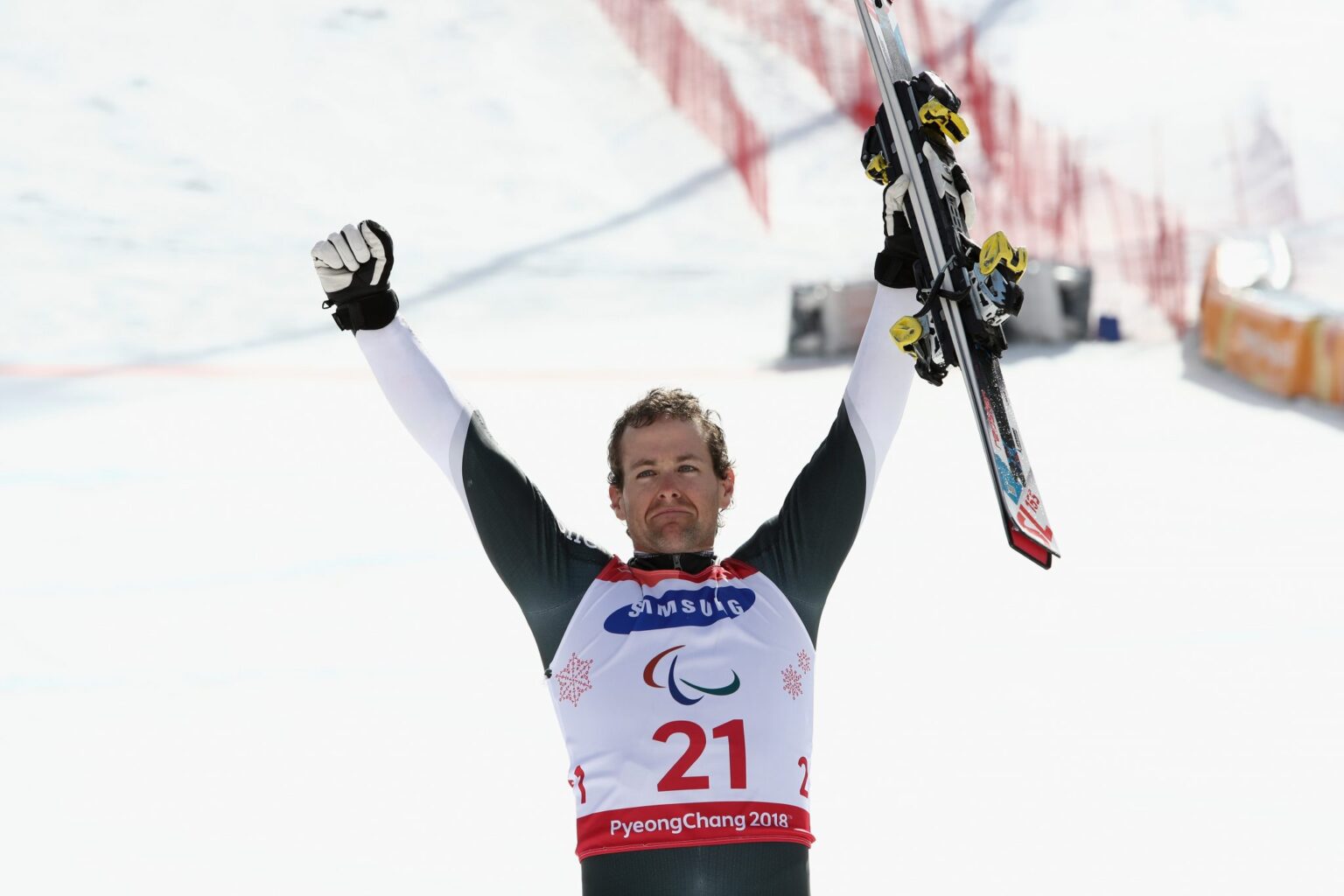
- In Vancouver 2010, Paralympian #158 Adam Hall MNZM produced one of the classic Paralympic moments for Kiwi fans when he recovered from a fall in the Men’s Slalom Standing to secure gold, a run that has been replayed as a symbol of determination and calm under pressure. Hall has since added further medals, including gold in the Men’s Slalom Standing at PyeongChang 2018, underlining a career that stretches across multiple Games cycles.
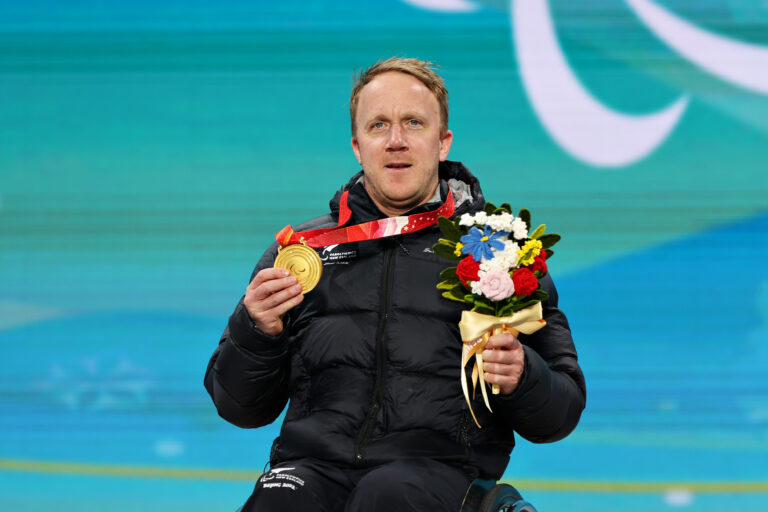
- Sit skier Paralympian #188 Corey Peters MNZM delivered another chapter at Beijing 2022, taking gold in Men’s Downhill Sitting on the opening day before adding silver in the Super-G Sitting on day two to add to the bronze medal he won at PyeongChang 2018 and the silver at Sochi 2014. For Peters, Beijing 2022 showcased how advances in mono ski technology and athlete preparation can extend careers while protecting long-term health.
Altogether, New Zealand has amassed 35 Winter Paralympic medals, including 17 gold, a striking figure for a nation whose winter sport community is small but highly innovative and tightly connected to its alpine environments. That record gives Kiwi athletes and fans a strong platform as they look toward Milano Cortina 2026 and its focus on sustainable venues and inclusive legacies.
Breakthroughs in representation
Beyond records and results, some of the most inspiring Paralympic stories revolve around who gets to be seen on screen, on snow and on selection lists.
Over time, the Paralympic Winter Games have expanded from two sports in 1976 to six sports today. Each new discipline has created room for different bodies, movement patterns and athlete cultures. This expansion has coincided with a steady rise in athlete numbers, with recent Games featuring close to 600 competitors and nearly 80 medal events, making it more likely that viewers will witness top-quality world-class competition.
Representation has also broadened geographically and demographically, as seen in China’s rapid ascent in Para ice hockey to win its first Paralympic medal (bronze) in this sport on in Beijing 2022, a mere five years after the national programme was launched. Stories like Austria’s Aigner siblings winning a combined nine Para alpine skiing medals in Beijing, or visually impaired Austrian Para alpine skier Carina Edlinger sharing her medal moment with her guide dog, have added layers of family, gender and animal-assisted independence to the Games narrative.
From a values perspective, the Impact Strategy of the International Paralympic Committee (IPC) has reinforced that representation is not only about numbers; it is about using elite sport to shift attitudes and policies for the 1.3 billion disabled people worldwide. In practice, this has meant stronger requirements for universal design in venues, accessible transport and tourism information, and a more deliberate approach to measuring how Para sport influences education, employment and wellbeing outcomes in host communities.
For PNZ, representation has meant both celebrating medal-winning stars like Adam Hall and Corey Peters, and ensuring that their visibility feeds into community programmes, coach education and advocacy for accessible snow sport facilities in Aotearoa New Zealand. This link between podiums and participation is central to ethical, sustainable sport; it raises the bar for inclusion without losing sight of environmental limits.
Lessons from these stories
Each of these best Paralympic moments carries lessons that reach beyond the finish line and can guide fans, organisers and sponsors who care about sustainable and ethical sporting events.
- Performance and purpose can reinforce each other. When Ukraine swept Para biathlon podiums in Beijing 2022 amid conflict, or when Kiwi athletes turned small team size into medal efficiency, they showed that elite performance can sit alongside advocacy for peace, inclusion and national identity, rather than competing with those aims.
- Accessibility is both a right and a legacy. The growth of the Paralympic Winter Games has pushed host cities to adopt universal design and make long-term investments in accessible transport, tourism and public spaces, leaving behind tangible improvements for disabled residents and visitors. Milano Cortina 2026 has executed a programme of venue upgrades, city route improvements, and accessible hospitality infrastructure which illustrates how Games-time requirements can accelerate wider urban change.
- Innovation must serve people, not just performance. Advances in sit skis, prosthetics and communication systems for visually impaired skiers have extended careers and opened up participation, but research and policy now emphasise that these technologies should also be affordable and adaptable for community use. This aligns with broader conversations in Aotearoa New Zealand about ensuring that adaptive equipment and programmes support wellbeing, social inclusion and long-term physical activity, not just podium success.
- Storytelling can reshape fan expectations. Coverage of dramatic Para ice hockey finals, emotional biathlon sweeps and Kiwi comeback runs has introduced global audiences to the specific skills, tactics and classification systems that make Para sport unique. As more broadcasters and digital platforms highlight these narratives, they create demand for Games that are not only exciting but also ethically grounded and environmentally responsible.
For sustainability-minded fans, these lessons suggest that asking questions about venue reuse, carbon impacts, accessibility and athlete voice is part of being a modern Paralympic supporter. Choosing to follow, share and support stories that highlight representation, social impact and environmental care can influence sponsors and organisers just as powerfully as TV ratings.
Looking ahead to Milano Cortina 2026
Milano Cortina 2026 arrives at the 50th anniversary of the Winter Paralympics, with organisers explicitly positioning the Games as a test bed for integrating climate action, circular economy principles, human rights and inclusion into a single Sustainability, Impact and Legacy Strategy. For Para athletes and fans this means that inspiring Paralympic stories will unfold in venues and cities designed to minimise new construction, maximise existing infrastructure and improve accessibility for years after the flame goes out.
Key elements include deep reuse of established ski areas and arenas, targeted upgrades to historic sites like the Cortina Curling Olympic Stadium, and investments in accessible transport corridors, pedestrian routes and tourism information across Lombardy, Veneto and the autonomous provinces. Circular economy thinking is shaping how temporary structures, venue overlays and materials are specified, with an emphasis on reuse and recycling that responds to rising public concern about the environmental footprint of mega events.
For the NZ Paralympic Team, Milano Cortina 2026 offers a chance to extend a medal tally that already stands at 35, while racing on slopes such as Olimpia delle Tofane that have been adapted to meet modern accessibility and sustainability standards. Kiwi fans can expect to see familiar names like Adam Hall and Corey Peters applying their experience and adaptive technology expertise in a Games framed not just by performance targets but also by impact metrics on accessibility and community benefit.
Perhaps most importantly, Milano Cortina will be one of the first Paralympic Winter Games to operate under the IPC’s Impact Strategy, which commits the Paralympic Movement to better data, research and evaluation of how Para sport contributes to disability inclusion worldwide. This means that when future generations look back on the most memorable moments in Paralympic Winter Games history, they will be able to trace not only who won and how they raced, but also how those Games changed cities, policies and everyday lives.
FAQ: inspiring Paralympic Winter Games moments and their impact
What are the most memorable moments in Paralympic Winter Games history?
Some of the most memorable moments include the riveting overtime Para ice hockey win by the USA over Canada at PyeongChang 2018, Ukraine’s emotional biathlon podium sweeps at Beijing 2022 amid conflict, China’s first Para ice hockey medal, achieved on home ice in 2022, and breakthrough individual performances such as the Para cross-country skiing gold snared by Wang Chenyang against a five-time Paralympic champion. For New Zealand fans, iconic runs by Rachael Battersby, Patrick Cooper, Adam Hall and Corey Peters – including Hall’s comeback Slalom gold in 2010 and Peters’ gold and silver medal haul at Beijing 2022 – stand out as defining best Paralympic moments.
Who are some of the most inspiring Winter Paralympians?
Globally, athletes such as multi-sport star Oksana Masters, who claimed her first Winter Paralympic gold in Para cross-country skiing shortly after fracturing her arm, and Para biathletes from Ukraine who medalled during wartime have become symbols of resilience and purpose driven performance. In Aotearoa New Zealand, Paralympians including Rachael Battersby, Patrick Cooper, Adam Hall and Corey Peters exemplify long-term excellence, adaptive innovation and leadership beyond the slopes.
How have these moments shaped the Paralympic Winter Games today?
These inspiring Paralympic stories have helped drive growth in athlete numbers, media coverage and sponsor interest, which in turn has strengthened the case for investing in accessible venues, inclusive transport and community legacy programmes. They have also influenced governance, with the IPC developing an Impact Strategy and host cities like Milano Cortina adopting comprehensive sustainability and inclusion frameworks that treat accessibility, human rights and environmental responsibility as core requirements rather than optional extras.
What role does sustainability play in the modern Paralympic Winter Games?
Sustainability now shapes how hosts select and adapt venues, plan transport and manage materials, with Milano Cortina 2026 committing to heavy use of existing infrastructure, strategic environmental assessment and circular economy principles. These measures are designed to minimise environmental impact while maximising long term benefits for disabled and non-disabled residents, aligning with fan expectations for ethical major events.
How can fans support ethical and inclusive Paralympic Winter Games events?
Fans can support ethical events by following and sharing stories that highlight inclusion and environmental innovation, engaging with organisers and sponsors about accessibility and sustainability, and supporting organisations that invest in adaptive sport programmes and facilities. In Aotearoa New Zealand, that includes backing Paralympics New Zealand (PNZ) initiatives that connect high performance success to community participation, ensuring that the legacy of inspiring Paralympic stories reaches local mountains, schools and clubs.