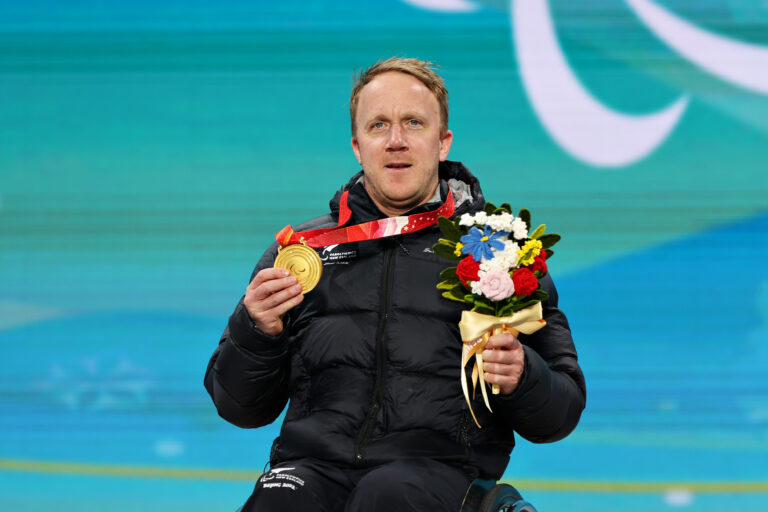
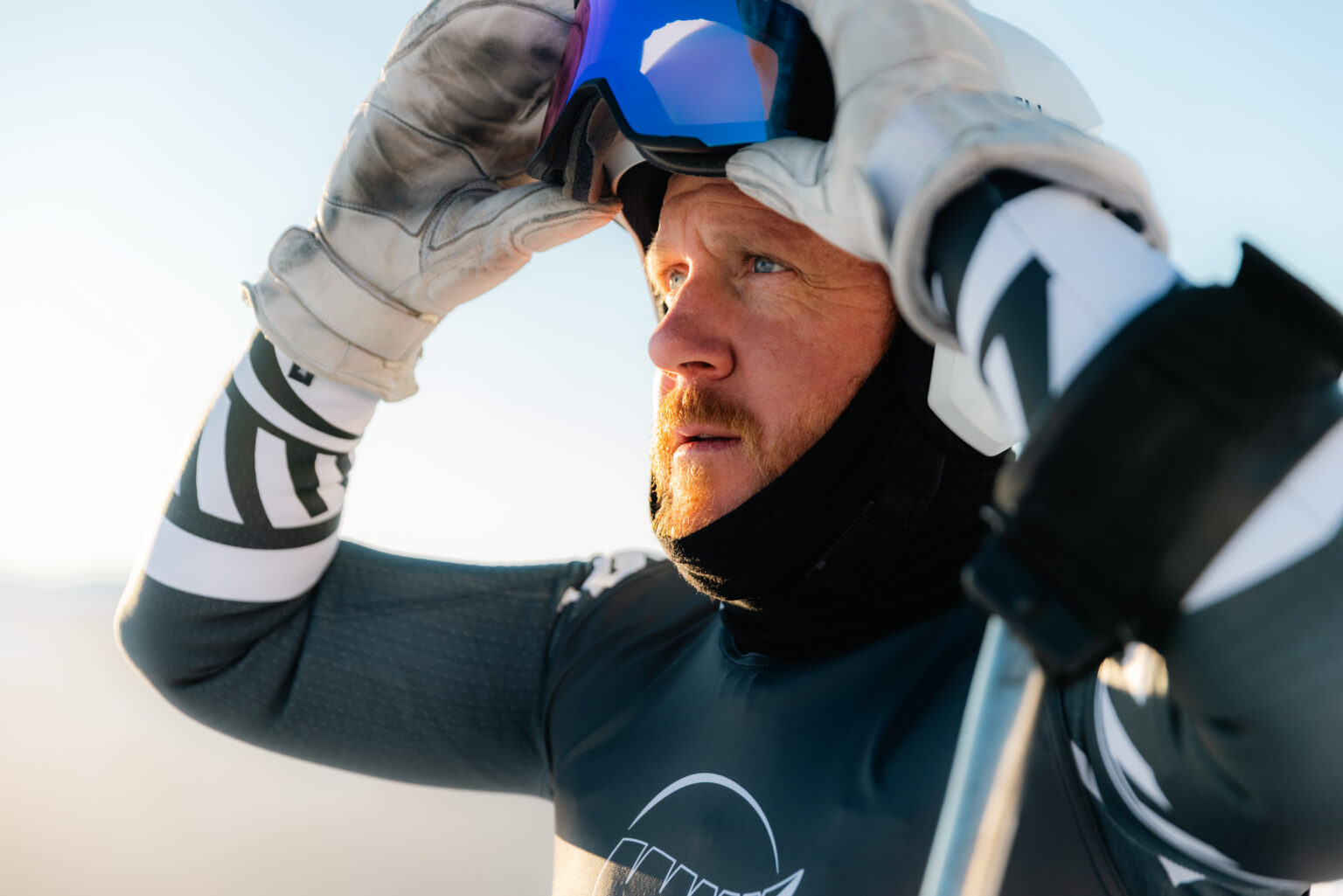
Racing at high speeds on unforgiving mountain terrain, mental toughness can be the difference between winning and wiping out. As the Milano Cortina 2026 Paralympic Winter Games approach, NZ Paralympic Team athletes; Paralympian #158 Adam Hall MNZM and #188 Corey Peters MNZM share what it takes psychologically to compete in Para alpine ski racing.
For most people, it’s hard to imagine what goes through the mind of a Para alpine ski racer in the moments before breaking the wand at the top of the mountain. Travelling at extreme speeds while maintaining focus and precision — with danger ever-present — demands exceptional mental strength. So, what exactly are Adam and Corey thinking in those final seconds?
For Corey, the Beijing 2022 Men’s Downhill Sitting champion, the risk is always front of mind.
“We are going at such speed that there is a high risk of potential crashes,” he explains. “I try to focus on a safe, clean run, and to do that I focus on technique.”
The experienced four-time Paralympic medallist has long used visualisation to help him ski the fastest possible line. However, after a dislocated shoulder sidelined him for 12 months from mid-2023, he has adopted a slightly different mental approach.
“I’ve worked more with a psychologist on self-talk and self-belief, which helps overcome any fears I may have.”
Becoming a father in 2022 has added another layer of complexity to his mindset on the slopes.
“As a dad, being injured is the last thing I want,” he says. “I’ve learned not to think too far into the past or the future, otherwise I start to feel anxious. Concentrating on the here and now really helps my mental preparation.”
While Corey has historically excelled in the speed disciplines, Adam has built his success in the technical events. A two-time Paralympic Men’s Slalom Standing champion, Adam may specialise in slightly different events, but his mental approach at the start gate mirrors that of his long-time teammate.
“Nerves are completely normal at the top of the start gate,” Adam explains. “But as high-performance Para athletes, we have tools to control our minds and make sure we’re in the present. It’s important to block out the noise.”
He relies on a combination of breathing, visualisation, and self-talk.
“I need to be able to feel it and see it before I compete. Those techniques help block out the white noise, focus on one task at a time, stop the mind from wandering, and keep me present.”
Corey is preparing to compete at his fourth Paralympic Games, and with four Paralympic medals already to his name, he is well equipped to handle the pressures of elite competition. Reflecting on his debut at Sochi 2014, he admits he was far more carefree back then, having at that point in his career yet to experience a major injury.
“As expectations have grown, I’ve had to draw on greater mental resolve,” he says. “I’ve learned how important it is to think in the moment and focus on processes rather than outcomes. When I take that approach into racing, it helps a lot.”
Corey, who acquired his disability following a motocross accident in 2009, also draws strength from his journey of recovery.
“The skills I learned overcoming my spinal cord injury transition really well into skiing,” he explains. “I’ve had injuries and disappointments, but the key is to keep pushing forward. You have to stay positive and not dwell on the past.”
For Adam, preparation is the key to eliminating doubt and delivering his best on race day.
“I see myself like a video game in a 3D image — I can see myself skiing the course from all angles,” he says. “Often, you’re on autopilot, relying on muscle memory. We train for every eventuality.”
His philosophy is simple: “Train hard, race easy.”