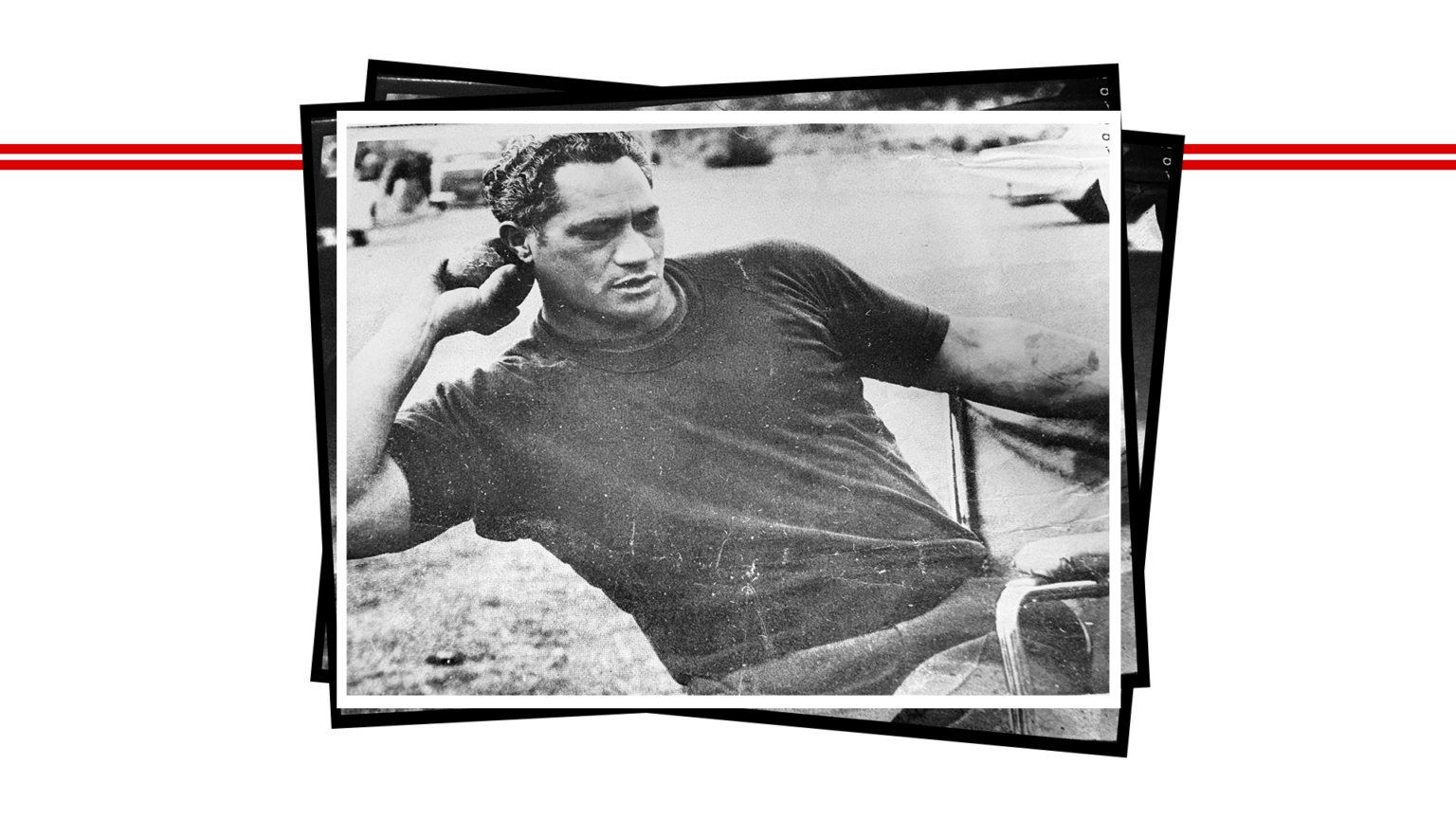
Pioneering Paralympian #10 Reuben Ngata sadly passed away in September last year. In the second in our series marking the 50th anniversary of the Toronto 1976 Paralympic Games, we reflect on his remarkable life through the voice of his wife, Fay.
A contributing author to a well-known book within the education system, to Paralympic medallist and disability activist, Reuben Ngata was a truly special individual. Part of the original NZ Paralympic Team which attended the Tel Aviv 1968 Paralympic Games, Reuben (Ngāti Porou) carved out a successful Para sport career – highlighted by a Para weightlifting bronze medal won in the Men’s Lightweight division at the Toronto 1976 Paralympic Games.
The grandson of Sir Āpirana Ngata – the former Minister for Māori Development who appears on the $50 banknote – Reuben was the fifth born of seven children who grew up on a small farm in Ruatōria in the East Cape.
Later serving in the Army he was immensely proud of his heritage and co-wrote the book Māori Action Songs – which became an influential text on traditional Māori music and dance, which was available in hundreds of schools across Aotearoa New Zealand during the 1960s and 1970s.
His promising military career was cut short, however, after he was forced to support his mother by taking over the running of the family farm. In 1961 he contracted polio, which led to a paralysis in both lower limbs.
“Reuben was walking across the creek to open the gate on the farm when he suddenly could no longer walk because of the pain in his legs,” explains Fay, Reuben’s wife for 60 years. “The pain had started in his feet and gradually spread to his legs. He was forced to drag his body across the paddock to get back home. They didn’t have a car or a phone, so when his mum went to the main road to find help, she was lucky to find the postman who carried Reuben to the hospital in the back of his van.”
Adapting to his new life, the following year he found work as an apprentice making surgical footwear through the Disabled Serviceman’s League in Auckland. He met his future wife, Fay, in 1964 and the pair married the following year.
He was introduced to Para sport shortly after through his best friend in the Army, Alan Armstrong, who had visited England and attended the Stoke Mandeville Games – regarded as the birth of the Paralympic Movement. Keen to seek out Para sport, Reuben quickly embraced the opportunity which opened a new world of possibilities.
“It was such a happy time of our life,” explains Fay. “He met a group of other Para athletes such as Paralympian #14 Jim Savage PLY MBE and others who would annually host Para Games in different parts of the country. We were billeted out and had such an amazing time meeting such a group of special individuals.”
Trying a multitude of Para sports, from Para table tennis, Para archery, and Para athletics, Reuben nonetheless was best suited to Para weightlifting (now known as Para powerlifting) where his naturally short arms, according to Fay, gave him an advantage in the bench press.
Successful as a surgical footwear specialist he moved with his work to Hamilton and Tauranga for a period before returning to Auckland. Bitten by the Para sport bug in 1968 he won gold medals in Para weightlifting and club throwing at the NZ Paraplegic Games in Auckland. Later that year earned selection for the inaugural NZ Paralympic Team competing at the Tel Aviv 1968 Paralympic Games.
Part of a tight-knit Team of 15 pioneering Paralympians – including 14 men and one woman – he competed in Para athletics; finishing 18th in the Club Throw 3 and 28th in the Shot Put 3.
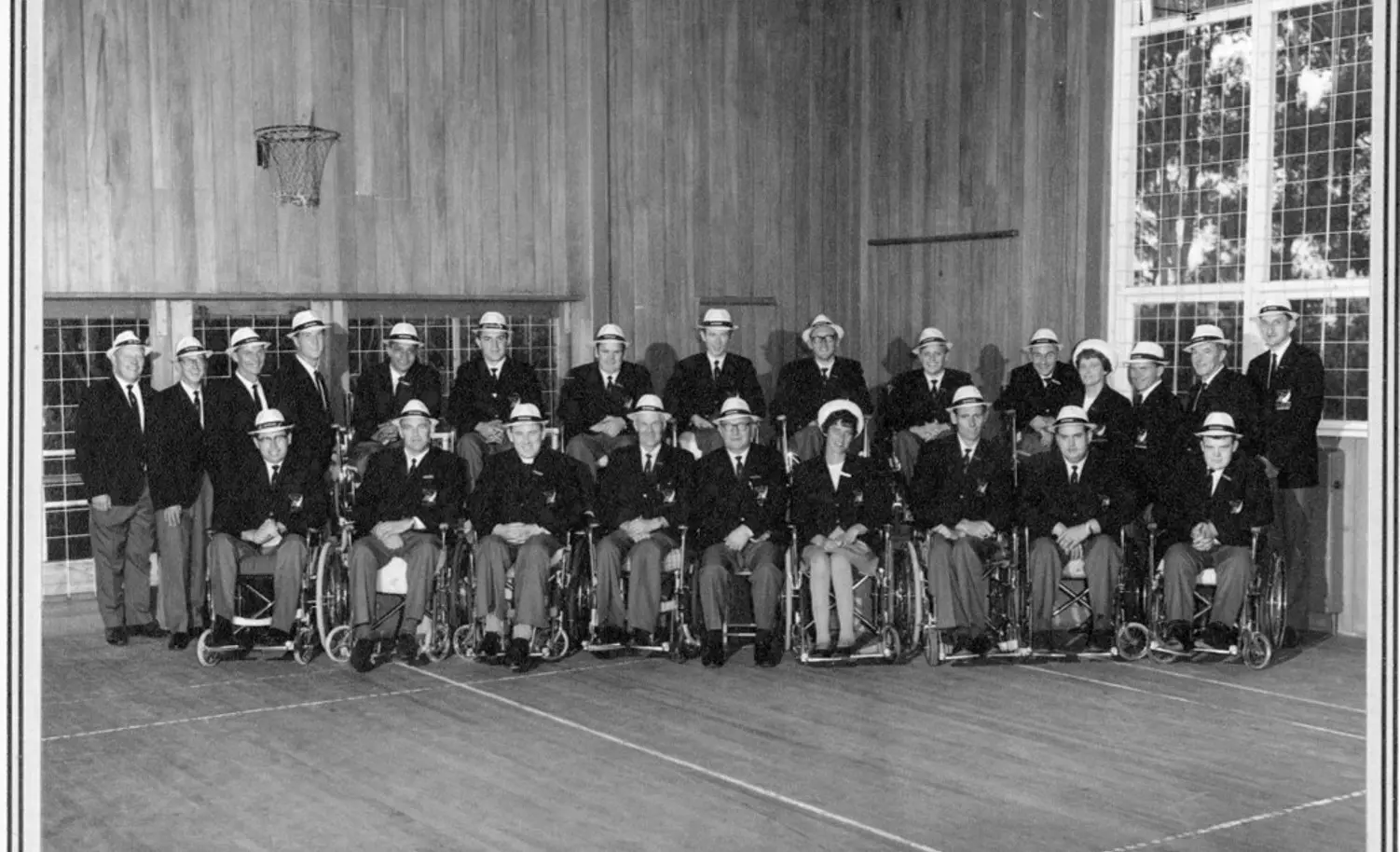
“Reuben said the people in Israel were so friendly, he loved the country and was fascinated by the kibbutz (the collective farming communities in Israel) and how well organised they were,” she recalls.
Broadening his horizons he served as President of the Waikato Paraplegic Association and delegate to the North Island Council. Yet his experiences did not begin and end with Para sport, Reuben, along with his Tel Aviv 1968 team-mates such as Jim Savage, Paralympian #4 Graham Condon QSM and Paul Curry, a competitor at the 1970 Commonwealth Paraplegic Games in Edinburgh, became passionate disability advocates.
Successfully lobbying Government, the group were instrumental is setting up the introduction of wheelchair accessible Maxi Taxis – which provide door to door transport for those with mobility needs. Later the group helped bring about change which made it law for each public building in New Zealand should have a disability toilet.
Thanks to his extensive work ‘for supporting the ideals of self-development and service to the community’ Reuben was awarded Outstanding Young Man of the Year in New Zealand in 1971.
Disappointed to be overlooked for selection at the Heidelberg 1972 Paralympic Games, where he had hoped to feature in Para weightlifting, he nonetheless returned to the international stage to compete at the 1974 Commonwealth Paraplegic Games in Dunedin and he was later selected to compete in Para athletics, Para table tennis and his favoured Para weightlifting for the Toronto 1976 Paralympic Games. At the age of 39 he competed in four Para athletics events and two Para table tennis events, but the highlight was winning bronze with a total of 165kg in the Men’s Lightweight event in Para weightlifting.
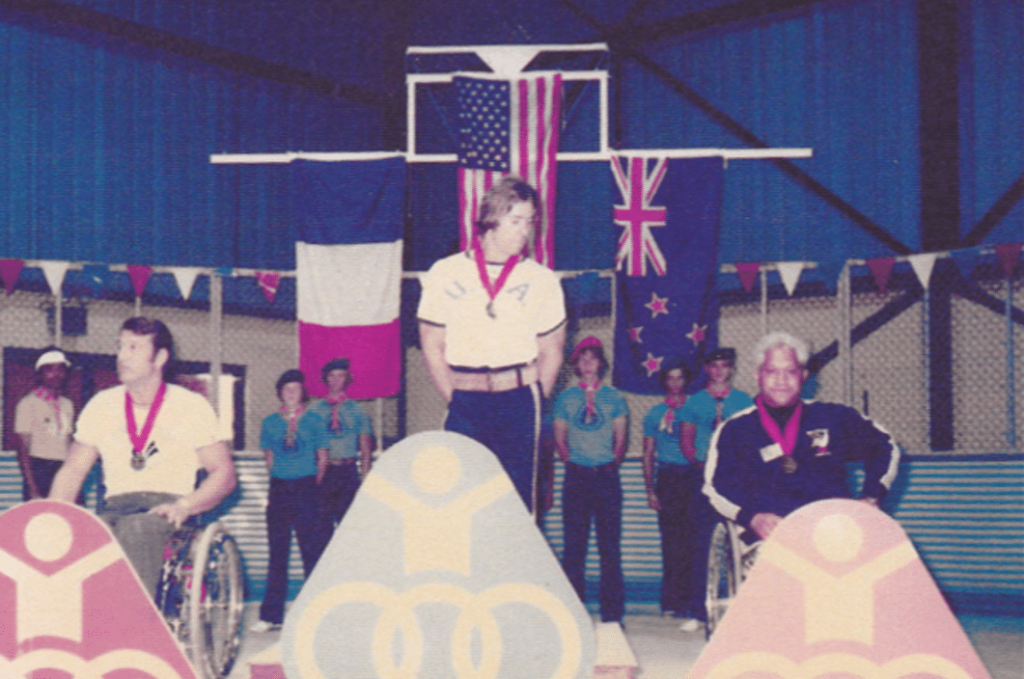
Naturally “modest and humble” according to his wife, Fay, she says Reuben talked little of his success at Toronto 1976, but she recalls him explaining how his grey hair might have played a part in elevating him to the podium.
“Most of his competitors were younger than Reuben, so when they saw this older looking guy with grey hair lifting big weights he believed it intimidated them,” she explains. “He was so grateful to win that bronze medal.”
Struggling with shoulder and elbow injuries, he retired from Para weightlifting following Toronto 1976, but he remained wedded to Para sport. He later set up the South Auckland Boccia Club and served as club president.
A keen gardener and “a perfectionist” – according to Fay – the couple shared three children and six grandchildren before his passing in September last year, aged 89.
“He was such a great man who was always willing to share his knowledge with others,” she said. “He would never speak ill of anyone, and he did so much for disability sport and the disabled. I was very lucky to have known him for more than 60 years and I miss him so much.”