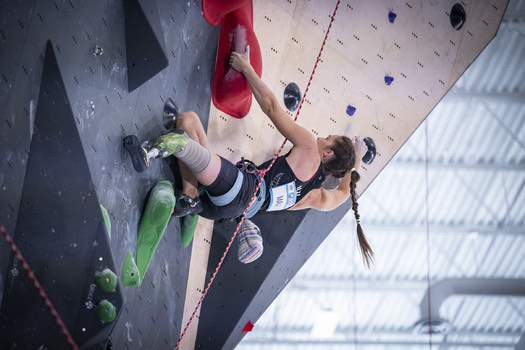
Para climber Rachel Māia enters a crucial phase of her season with upcoming Para Climbing World Series events in Gunsan, Korea (29-30 October) and Fukuoka, Japan (5-6 November). We caught up with the 43-year-old Whanganui-based Para athlete to discuss her journey in the Para sport and her hopes on the road to LA28, where Para climbing is set to make its Paralympic debut.
Can you tell us a little bit about Para climbing as a Para sport?
Para climbing is a discipline in which Para athletes attempt routes they have never seen before. You’re constantly problem-solving in the moment, adapting your body to the challenges in front of you. The key is to stay composed, regulate your breathing and remain calm under pressure.
Competitions are decided by the highest point reached on the wall in a single attempt, with climbers working within a six-minute time limit.
Para climbing is set to make its debut appearance at the LA28 Paralympic Games. What does that mean to you?
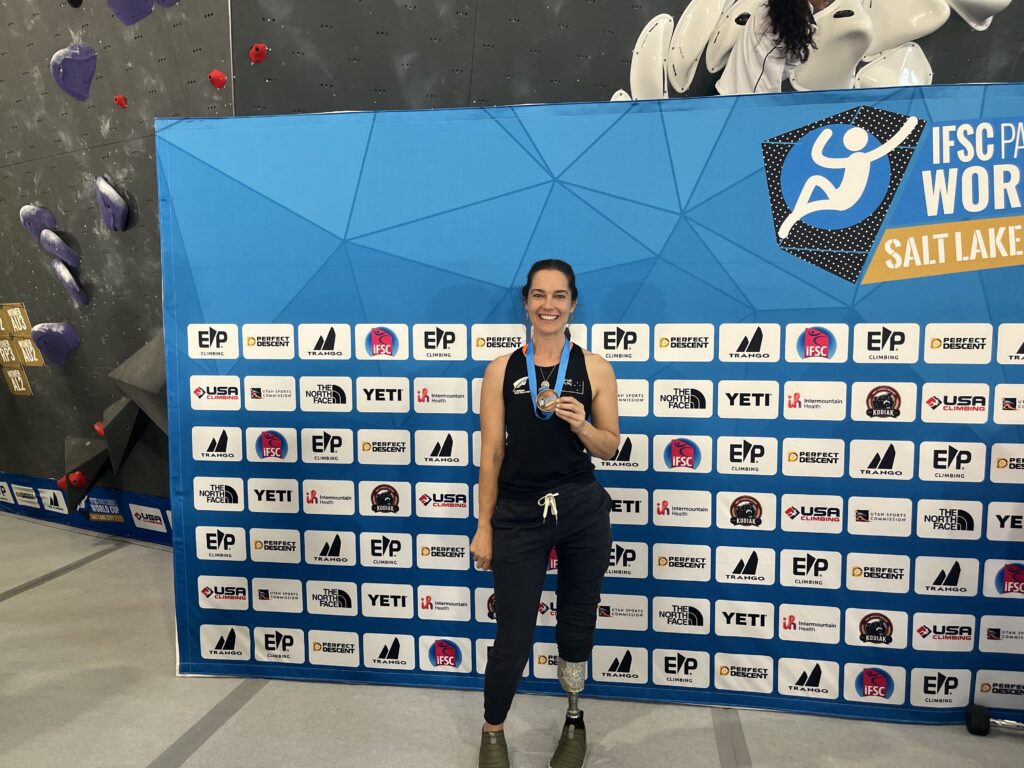
I’ve been competing internationally since 2018, so hearing that Para climbing had been added to the programme for LA28 meant a lot. Only a limited number of Para sport classes will be included, but fortunately my class, AL2, is among them.
Hopefully we’ll be able to showcase the Para sport in the way it deserves and see a full range of classifications included in future Paralympic Games beyond LA28.
How does your disability impact your climbing?
I’m classified as an AL2 Para athlete, which means I’m a lower-limb amputee. My leg was amputated in 2019 after a 20-year journey to save it following a bouldering accident when I was 16 years old.
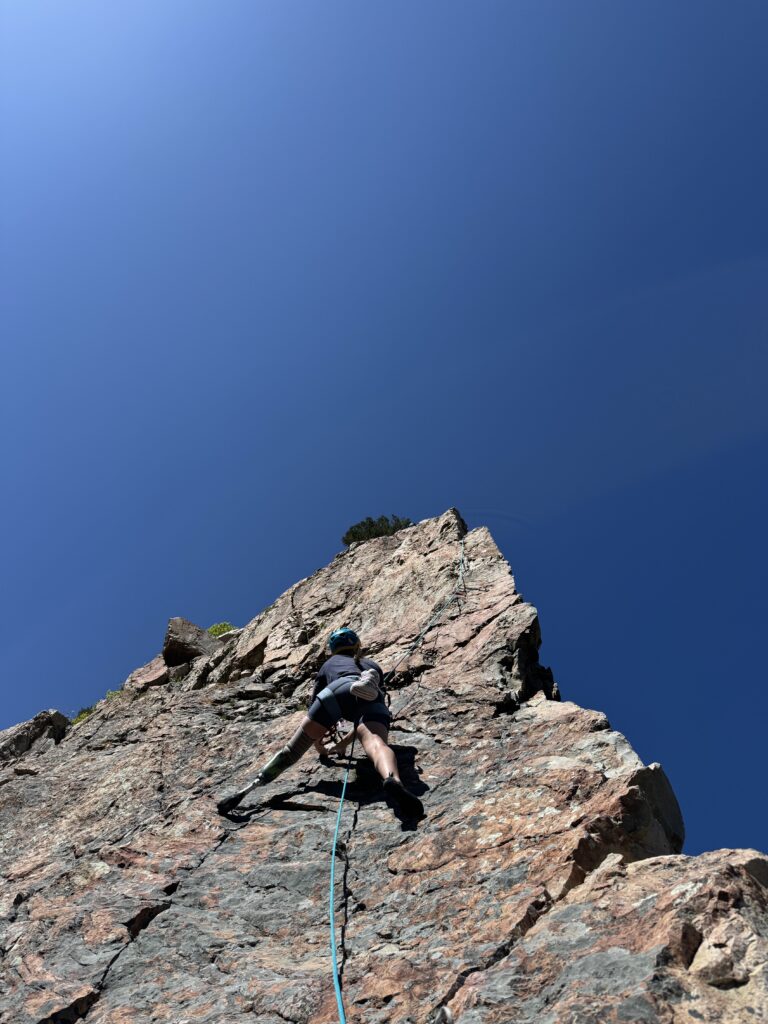
For my first few seasons in AL2, I climbed without a prosthetic, using my kneecap to kneel and create points of contact on the wall. Over the past few years, however, I’ve transitioned to using a prosthetic leg. It’s been a new challenge, but I’m excited about where it can take me.
Within my classification, every Para athlete is missing a limb, yet we all adapt in different ways. Every route presents a new problem to solve, and we learn to do that within our own physical limitations.
What is your favourite part of the Para sport?
One of my favourite aspects of climbing is how it engages your mind, body and spirit. It’s not something that can be measured purely through physical metrics. It’s more about reaching a flow state.
In those moments, the pain in my leg fades away, as does the fatigue from the lack of sleep that pain can often cause. I’m so immersed in the climb that the adrenaline and dopamine take over.
That then carries into my everyday life. It gives me more energy to tackle household tasks and the confidence to step into my week. Climbing gives me a sense of power and self-belief.
Above all, it’s the problem-solving aspect that I enjoy most.
What has been your proudest moment in your Para climbing career?
I think what I’m most proud of now is how I continue to show up for myself, through all the different seasons of life and Para sport.
Making little pieces of New Zealand climbing history will always be something I’m grateful for, but it’s the resilience I’m growing along the way that means the most to me. I hope that stays with me long after the records are forgotten.
You are a single mum with three kids back in Whanganui. What does it mean to be able to represent them on the world stage?
I have three children: a 19-year-old son, who has now left home, a 16-year-old son, and my daughter Charlotte, who has high needs and brings so much joy and light to our family.
Pursuing my own goals in Para climbing is important because it shows my children that, alongside being a mum, I’m also a person with ambitions and dreams of my own.
There are no climbing facilities in Whanganui, so I’ve had to come up with some creative training solutions, including building a set-up in my garage. It’s not an ideal substitute for a climbing gym, but it allows me to continue chasing my goals while still being present for my family.
Tell me more about some of the home exercises that you do?
There’s a misconception that all athletes have access to extensive resources and facilities. For me, training is about making the most of what I have and fitting it around everyday life.
I use a fingerboard at home to build finger strength and resilience, which is a key part of climbing performance. A company called Unleashed has also helped install climbing holds in my garage, allowing me to train on the wall and complete climbing laps.
What I love most about my set-up is how practical it is. The training area is in the garage next to my kitchen, so I can be cooking dinner, step out to train for a few minutes, and then head straight back inside. It means I can balance life as a Para athlete, with life as a mum.
What are your hopes and expectations for the forthcoming Para Climbing World Series?
After a year shaped by surgery and recovery, I hope to reconnect with this bright part of my life, climb freely and confidently, and leave everything on the wall.
I’d love a top four finish for the invaluable finals experience, and a podium could open doors to much-needed funding.
I’m fiercely ambitious, but I hold these competitions within the longer arc of my journey towards LA 2028. I’ll give them everything, knowing my sporting future isn’t defined by two results.
If you earn selection for the LA28 Paralympic Games, what do you hope to get out of the experience?
I have both personal and wider goals. Personally, I’d love to stand on the podium, not because I need to be the best, but because I want to be the best version of myself.
I want to show that Para athletes from a small country with limited resources can still compete with the best in the world.
More broadly, as someone involved in a small, volunteer-run national federation, I’d love to help create a pathway that makes it easier for future generations of Para climbers to follow.
How special are the climbing and Para climbing communities?
As someone who moved schools frequently when I was younger, I often struggled to find a sense of belonging. The climbing community gave me that.
From the age of 16, I was welcomed into a diverse and eclectic group of people who shared a passion for the sport. It became a place where I felt accepted and connected.
We’re definitely tribal. But what makes the community special is the way climbers continually support and encourage one another.
***Continue to follow Rachel and her exploits at the World Climbing Para Series events in Gunsan and Fukuoka via PNZ channels.