
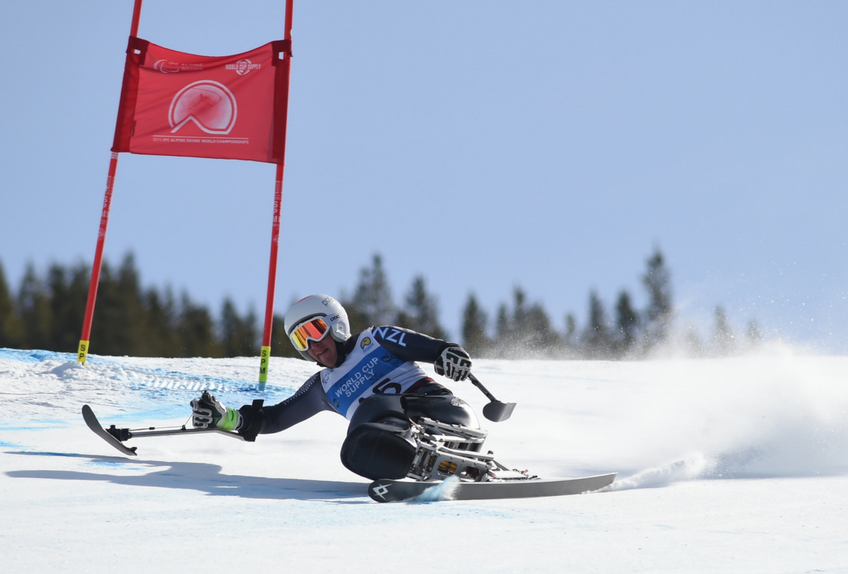
The first Paralympic Winter Games took place in Örnsköldsvik 1976, featuring two sports and 198 athletes. Today, the Paralympic Winter Games feature six sports, nearly 80 medal events, and close to 600 athletes, powered by rapid advances in adaptive technology that have transformed both performance and inclusion. From carbon fibre sit-skis and smart prosthetics to audio-guided racing and highly customised mono-skis like those used by Kiwi star Paralympian #188 Corey Peters MNZM or the customised high-performance alpine skis used by his compatriot Paralympian #158 Adam Hall MNZM, innovation on ice and snow sits at the heart of the growth of the Paralympic Movement.
Introduction: Innovation on ice and snow
The Paralympic Winter Games have always combined human determination and adaptive technology, which makes elite performance possible for athletes with a wide range of impairments. Each Paralympic Winter Games cycle brings new materials, smarter design, and more athlete-centred engineering that push what is possible on ice and snow.
For Paralympics New Zealand (PNZ) this innovation story is personal, with Milano Cortina 2026 showcasing Para alpine skiers Adam Hall and Corey Peters on the Olimpia delle Tofane slope in Cortina d’Ampezzo. Their equipment choices and the expertise behind them are a example of how adaptive technology has evolved from basic modifications to highly tuned, high-performance systems.
A brief history of Winter Paralympics and technology
The inaugural Paralympic Winter Games in Örnsköldsvik 1976, featured alpine and Nordic skiing for amputee and visually impaired athletes, plus ice sledge racing as a demonstration event. The Games attracted 198 athletes from 16 countries, and it was the first time Paralympic competition included athletes beyond wheelchair users, setting a new direction for the Movement.
Across the 1980s and 1990s the Paralympic Winter Games expanded with new classifications, sports and more sophisticated equipment, including early sit-skis and improved prosthetic limbs. A major milestone came when the Paralympic Winter Games began sharing host cities and venues with the Olympic Winter Games from 1992, accelerating investment in accessible infrastructure and technology.
By Vancouver 2010 and Sochi 2014, lightweight carbon fibre mono-skis, advanced shock absorbers and high-performance prosthetics had reshaped what Para athletes could do on snow. Beijing 2022 then added real-time tracking, more advanced communication systems for visually impaired skiers, and the most diverse athlete field yet, with nearly 600 competitors across six sports and close to 80 medal events. As Milano Cortina 2026 approaches, the focus is firmly on sustainability, accessibility, and integrating cutting-edge adaptive equipment into world-class venues such as Cortina’s Olimpia delle Tofane Para alpine course.
Sport-specific innovations: from slopes to rinks
Para alpine skiing: standing and sitting
Para alpine skiing is one of the most technologically intensive winter Para sports, with standing and sitting athletes relying on carefully engineered combinations of skis, bindings, boots, outriggers and suspension systems. Standing athletes like Adam Hall use custom ski and boot setups, often paired with outriggers that act as both support and steering tools, tuned to their specific strength profile, balance needs and impairment.
Sitting athletes such as Corey Peters use mono-skis or sit-skis that combine a moulded seat, frame, shock absorber and a single ski, designed to translate upper body movements into precise edge control at very high speeds. Research in alpine sit-skiing shows that trunk support design, seat height and the alignment of the frame all influence stability, energy transfer and spinal loading, highlighting the importance of engineering choices for both performance and long-term athlete health.
At Milano Cortina 2026, the Olimpia delle Tofane slope in Cortina d’Ampezzo will host Para alpine skiing, meaning that Adam and Corey’s equipment must be optimised for steep gradients, variable snow and high-speed turns. For Corey, defending his Men’s Downhill Sitting title and racing Super-G and Giant Slalom Sitting will depend on a mono-ski that balances shock absorption with responsiveness, letting him hold speed while staying stable over changing terrain.
Para snowboard
Para snowboard combines all the creativity of board sports with precision engineering in boards, bindings and prosthetics. Many athletes use custom-built lower-limb prostheses that integrate directly with the binding system, combining energy-return feet, tuned stiffness and rotational control to manage edge changes and landings.
Board design matters too. Sidecut radius, camber profile and flex are matched to the athlete’s weight, impairment, and racing discipline to support both speed and control through banked turns and snowboard cross features. For athletes with arm or trunk impairments, handle systems, balance aids and protective equipment are tailored so they can confidently handle jumps and contacts in tight racing environments.
Para ice hockey
In Para ice hockey, athletes sit on lightweight aluminium or composite sledges fitted with two skate blades and a frame designed for quick directional changes and robust contact. Players use two short sticks with metal picks on one end and blades on the other, enabling both propulsion and stickhandling; the angle, length and grip of these sticks are commonly customised to the reach and strength of each Para athlete.
Blade spacing and height adjustments can dramatically affect stability and turning; narrower setups allow faster more aggressive movement but require higher balance and core strength. Protective gear is adapted to seated posture and impact patterns, and some teams now explore sensor-based systems in training to analyse collisions and movement patterns for performance gains and injury prevention.
Wheelchair curling
Wheelchair curling uses standard curling stones but modifies the delivery method; athletes remain seated and use delivery sticks to propel the stone rather than sliding from a hack. Chairs may be slightly modified for stability with anti-tip features and careful positioning of wheels and brakes to ensure consistent delivery while complying with regulations that keep the sport inclusive.
Delivery sticks themselves have evolved, with improved grip materials, adjustable lengths, and flexible heads that allow fine control over stone rotation and speed. Because there is no sweeping in Wheelchair curling, technical consistency in release becomes even more important, so coaches increasingly blend video analysis and biomechanics to help athletes optimise their delivery technique.
Equipment customisation and accessibility
Behind every piece of adaptive winter sports equipment is a process of meticulous customisation, often blending sport science, biomechanics and athlete feedback. Studies in sit-skiing have shown that seat position, pole length, trunk support and stability strongly influence efficiency and fatigue, demonstrating how small adjustments can change performance and comfort.
Customisation is especially visible in Para alpine skiing, where boot alignment, binding positioning, suspension stiffness and seating angle are tuned to each athlete’s impairment, strength and racing style. For standing skiers, this may mean tailored orthotics, ankle bracing or prosthetic components; for sitting skiers, it can require bespoke shells, cushioning and chassis modifications that manage both vibration and impact loads over long courses.
Accessibility goes beyond the elite level, with adaptive sports programmes and assistive technologies opening snow and ice sports to more disabled people worldwide. Research on adaptive sports programmes shows that participation can significantly improve quality of life, social inclusion, emotional resilience and cognitive flexibility, underlining why investment in accessible equipment is about wellbeing as much as medals.
Read more: The future of sport and recreation for disabled New Zealanders
Engineers, sport scientists, sponsors: the innovation ecosystem
Adaptive winter sports technology rarely comes from a single idea; it usually grows out of collaboration between athletes, engineers, sport scientists, coaches and sponsors. The Adaptive Synergy framework described in recent sport science research underlines how cross-disciplinary teams working on adapted equipment, tailored training and inclusive environments can improve both performance and access for disabled athletes.
Engineers and biomechanists contribute by modelling how forces move through sit-skis, prosthetics and sledges, using simulation tools to test designs that may reduce injury risk or improve power transfer before they reach the snow. Sport scientists analyse data from wearable sensors, video and lab testing to fine-tune setups and training loads, which is particularly important for athletes with spinal cord injuries or reduced sensation who might not feel early warning signs of overuse.
Sponsors and manufacturers play a crucial role by funding research and development, subsidising equipment costs and helping scale innovations from bespoke prototypes to widely available products. When commercial partners commit to affordability and inclusive design, the same technologies that help Paralympians like Adam Hall and Corey Peters chase podiums can also reach young New Zealanders trying a sit-ski or mono-ski for the first time at their local mountain.
The future of adaptive winter sports technology
Looking ahead, several trends are poised to shape adaptive technology in the Paralympic Winter Games. Material science is moving toward stronger yet lighter composites, 3D-printed components and smart materials that can change stiffness in response to conditions, which could allow sit-skis, prosthetics and sledges to adapt dynamically during races.
Digital innovation is another frontier, with potential for more advanced wearable sensors, real-time feedback systems and AI-driven technique analysis to help athletes optimise their movements without increasing injury risk. In visually impaired skiing, audio guidance systems may integrate more precise positioning data and clearer communication channels, blending satellite and local technologies to improve timing and safety.
Importantly, future progress is likely to focus just as much on inclusion as on raw speed. Reports on the future of sport for disabled New Zealanders highlight the importance of accessible facilities, funding models, and even virtual or esport style training options to reduce geographic and financial barriers, ensuring that adaptive innovations benefit community sport as well as the Paralympic podium.
FAQ: Adaptive technology in the Winter Paralympics
When did the Winter Paralympics begin?
The first Paralympic Winter Games in Örnsköldsvik 1976, featuring Alpine and Nordic skiing for amputee and visually impaired athletes, with ice sledge racing as a demonstration event. A total of198 athletes from 16 countries took part, marking the start of a dedicated winter chapter in the Paralympic Movement.
How have the Winter Paralympics evolved over time?
From a small two-sport programme in 1976, the Paralympic Winter Games have rapidly expanded, and Milano Cortina 1976 will feature six sports, 79 medal events and more than 600 athletes. Along the way, new sports like Para ice hockey and Para snowboard have been added, classifications have expanded and adaptive technology has become more sophisticated, improving both performance and accessibility.
What key milestones shaped the Paralympic Movement in winter sports?
Key milestones include the inaugural Örnsköldsvik 1976 Paralympic Winter Games, the inclusion of more impairment groups in the 1980s, and the establishment of the International Paralympic Committee (IPC) in 1989 as a global governing body. Later milestones such as Vancouver 2010, Sochi 2014 and Beijing 2022 showcased breakthroughs in carbon fibre equipment, digital broadcast reach and female participation, setting the stage for the 50th anniversary Games at Milano Cortina 2026.
What adaptive technology is used in Para alpine skiing, especially for Adam Hall and Corey Peters’ events?
Standing Para alpine skiers like Adam Hall use customised skis, boots and outriggers tuned to their impairment, strength and racing style, often featuring lightweight materials and precise alignment setups for slalom and giant slalom events. Sit skiers like Corey Peters race in mono-skis that integrate a moulded seat, frame and shock absorber with a single ski; their design and suspension are optimised for downhill, super-G and giant slalom speeds on challenging slopes such as Cortina’s Olimpia delle Tofane.
How does adaptive sport technology support inclusion, not just performance?
Evidence from adaptive sports research shows that participation can significantly boost quality of life, emotional resilience and social inclusion for disabled participants, making accessible equipment a key enabler of broader wellbeing. Frameworks like Adaptive Synergy emphasise cross-disciplinary collaboration and equitable funding to reduce cost barriers so that innovations developed for Paralympians also reach schools, community clubs and grassroots programmes.
Where can readers learn more about the history of the Paralympic Winter Games and New Zealand’s role?
PNZ provides detailed guides to both the history of the Paralympic Winter Games and the evolution of the Paralympic Winter Games from 1976 to 2026, including New Zealand milestones and athlete stories. Readers can also explore PNZ’s athlete profiles for Adam Hall and Corey Peters to see how their careers, classifications and equipment have evolved across multiple Paralympic Winter Games.