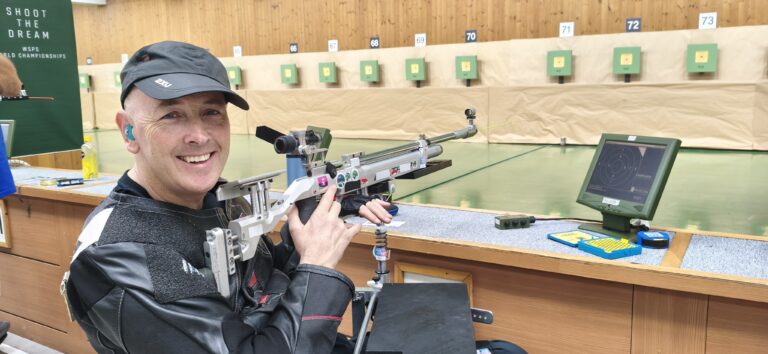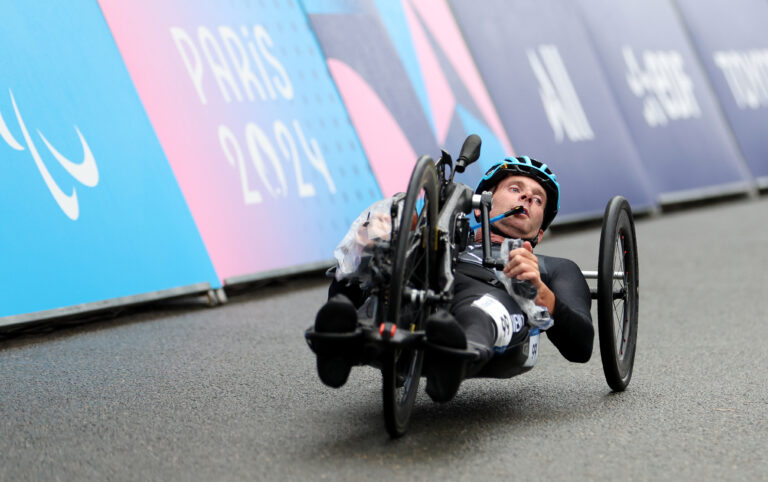
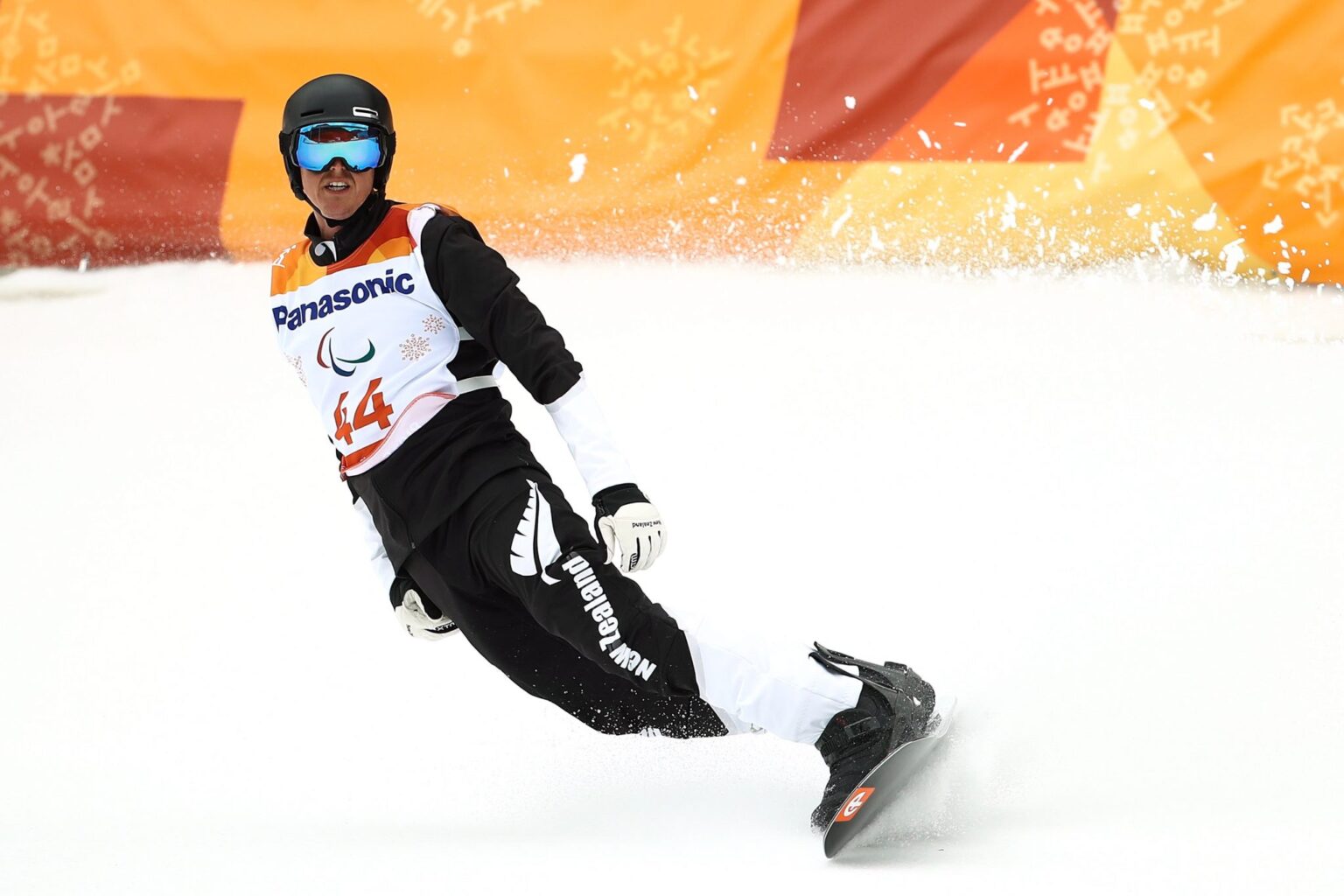
The Milano Cortina 2026 Paralympic Winter Games will feature six sports, delivering 137 medal opportunities in 79 events across Para alpine skiing, Para snowboarding, Para cross-country skiing, Para biathlon, Para ice hockey, and Wheelchair curling.
As the upcoming Milano Cortina 2026 edition approaches from 6 to 15 March 2026, these Games celebrate the 50th anniversary of the first Paralympics Winter Games held in Ornskoldsvik 1976, hosted across Italy’s iconic venues like Cortina d’Ampezzo for Para alpine skiing and Para snowboarding events, Tesero for Nordic disciplines, and Milan’s PalaItalia Santa Giulia for Wheelchair curling.
New Zealand’s Milano Cortina 2026 Team Spotlight
New Zealand will once again be led by two of our most experience Para athletes: Paralympian #158 Adam Hall MNZM and Paralympian #188 Corey Peters MNZM, who will both compete in Para alpine skiing. Competing in his sixth Paralympic Winter Games, Adam Hall, a five-time Paralympic medallist, targets the Men’s Slalom Standing and Men’s Giant Slalom Standing on Cortina’s Olimpia delle Tofane slope; his career is highlighted by Men’s Slalom Standing gold two gold medals in Vancouver 2010 and PyeongChang 2018. Hall’s sixth appearance in the Paralympic Games equals the record by a Kiwi, matching the six Paralympic Summer Games appearances of Paralympians #4 Graham Condon QSM and #148 Michael Johnson MNZM.
Corey Peters, competing at his fourth Paralympic Winter Games, defends the Men’s Downhill Sitting title he won in Beijing 2022, and also takes to the slopes in the Men’s Super-G Sitting and Men’s Giant Slalom Sitting. Peters has collected one gold, two silvers and a bronze medal from his previous three Games and will be hoping to add to that tally in Milano Cortina 2026.
Under Chef de Mission Jane Stevens, the team benefits from a dedicated performance support staff including Lynette Grace (Deputy Chef de Mission), Dan Bogue (Head Coach), Sam Lynch (Assistant Coach), Hamish Morison (Wax and Equipment Technician), Dr Julie Milmine (Medical and Health Lead), Helene Barron (Team Physiotherapist) and Sarah de Wattignar (Team Psychologist) as well as Jack Bouchier (Media Liaison and Content Creator).
The Six Paralympic Winter Sports
The Paralympic Winter Games feature six core sports, each with unique disciplines and categories tailored for athletes with different impairments.
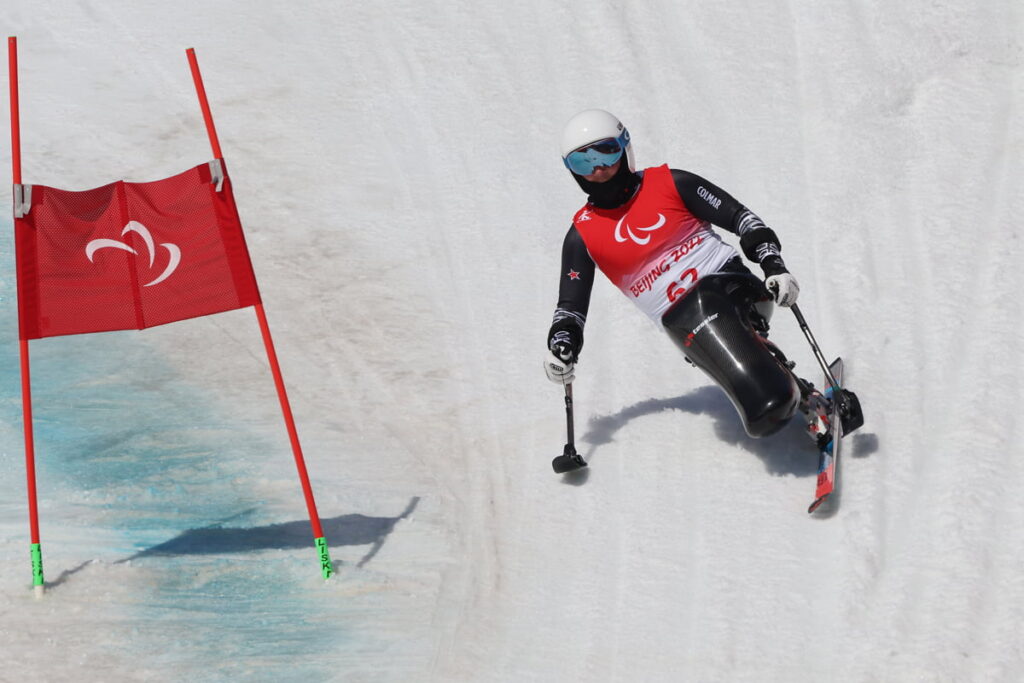
Para alpine skiing
Para alpine skiing boasts 30 medal events across men’s and women’s downhill, super-G, giant slalom, slalom, super combined, and team events in standing, sitting, and visually impaired classes. Athletes use equipment that is adapted to their needs, including single ski, sit-ski or orthopaedic aids. Skiers with vision impairment are guided through the course by sighted guides via a light or audio system providing immediate instructions to indicate the course to follow, navigating courses up to 1200m vertical drop at speeds exceeding 100km/h.
Para alpine skiing features five disciplines:
- Downhill
- Super-G
- Super Combined
- Giant Slalom
- Slalom
Para alpine skiers compete in three categories based on their functional ability. The results calculation system allows Para athletes with different impairments to compete against each other.
Para alpine skiers to watch
While Hall and Peters are expected to be in the medal hunt once again, Arthur Bauchet will be expected to feature prominently in the Men’s Standing category. The gifted French skier, who won three golds and a bronze at the Beijing 2022 Paralympics, should be a factor at Milano Cortina 2026.
Para snowboard
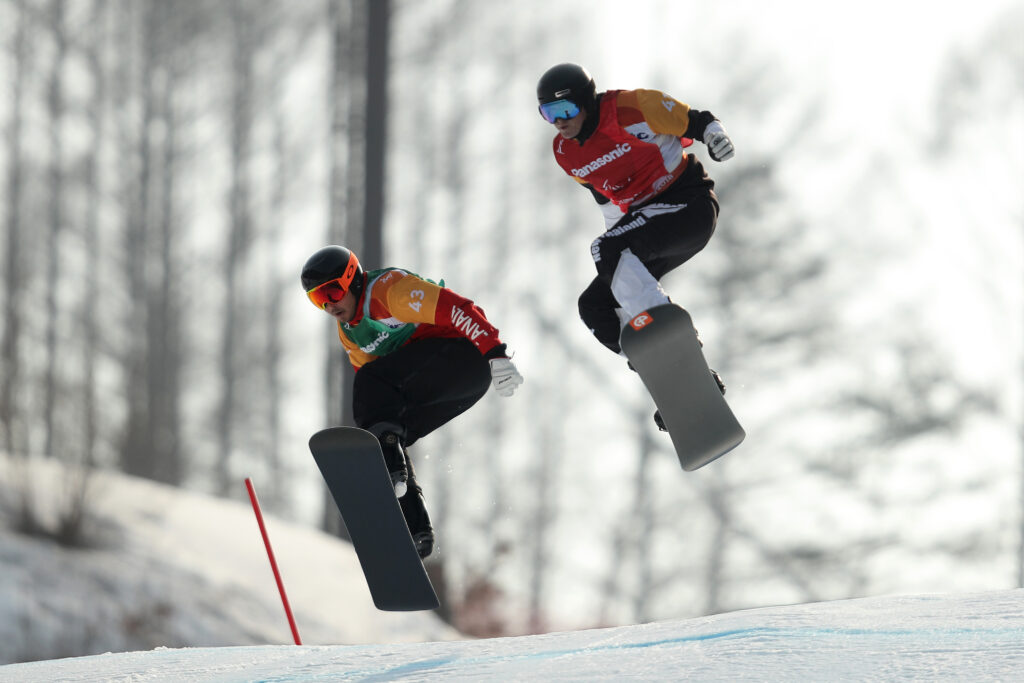
Introduced into the Paralympic programme at Sochi 2014, Para snowboarding offers medal opportunities in banked slalom and snowboarding cross in upper and lower limb impaired classes, emphasising jumps and high-speed gates. Athletes take on courses with 20-30 banked turns, reaching 70km/h; boards feature adaptive bindings for stability.
The sport was originally called Adaptive snowboard, referring to a modified version of the sport. Now, hundreds of Para athletes around the world practise the sport. Para athletes compete in three categories based on their functional ability – SB-LL1 and SB-LL2 for lower-limb impaired riders and SB-UL for upper-limb impaired Para athletes.
Para athletes combine speed and agility while racing down courses as fast as possible. The sport owes its success to the determination of a group of pioneering riders who, in 2005, began their quest to have the sport included at the Paralympic Winter Games.
The USA is the most successful country at Para snowboarding, having collected 21 medals across three Paralympic Winter Games. China is the second most successful country, collecting 10 Paralympic medals, including three golds, with the Netherlands securing a total tally of seven medals in Para snowboarding.
Para snowboarders to watch
Canadian Tyler Turner will head into the Milano Cortina 2026 Paralympic Winter Games as the favourite in the men’s SB-LL1 (lower limb) snowboard cross, where he won gold in Beijing 2022. A winner of the Beijing 2022 bronze in the SB-LL1 in the Men’s Banked Slalom SB-LL1 he will also be a threat in the latter event. Home favourite Emanuel Perathoner was unstoppable in the men’s LL2 category at the 2025 Para Snowboard World Championships, securing the Men’s Banked Slalom and Men’s Snowboard Cross double, and will head to his home Games hoping to delight the Italian fans and bring home gold.
Para cross-country skiing
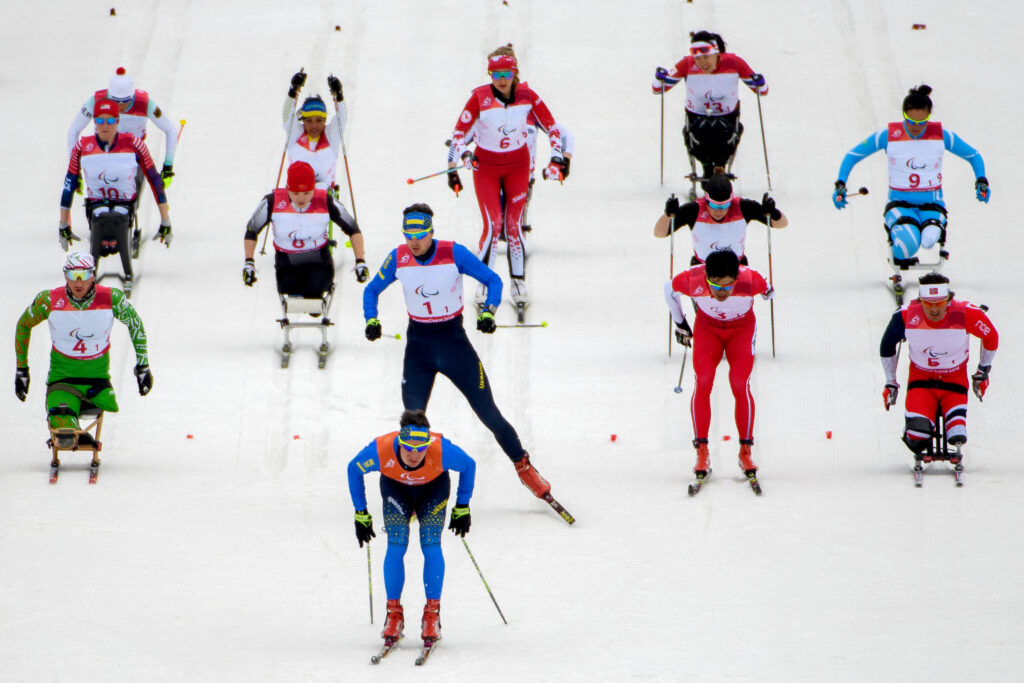
Para cross-country skiing and Para biathlon both fall under the Para Nordic skiing bracket. At Milano Cortina 2026, Para cross-country skiing events will take place in Tesero, Val di Fiemme region.
The sport made its Paralympic debut in the first Paralympic Winter Games in Örnsköldsvik 1976.
Para cross-country skiers can compete in individual or team, classical or freestyle events ranging from 5km to 20km in distance. Vision impaired skiers compete with a guide, while those with a physical impairment compete using either a sit-ski or standing using one or two skis and/or poles.
Look out in Milano Cortina 2026 for Cristian Ribera of Brazil, the gold medallist in the Men’s Sprint Sitting event at the 2025 FIS Nordic World Ski Championships, and Women’s Sprint Standing champion at the same event Vilde Nilsen of Norway.
Norway are the most successful nation at Para cross-country skiing, taking home 78 gold medals, 49 silver and 36 bronze medals, while host nation China with a haul of seven gold, six silver and five bronze medals topped the Para cross-country skiing medal table at Para cross-country skiing.

Para biathlon
Combining cross-country with rifle shooting, at Milano Cortina 2026 there will be three Para biathlon events: sprint pursuit, 7.5km sprint and 12.5km individual, each of them for men and women and divided into three categories.
The “standing” category includes skiers with physical disabilities who ski standing, also with the aid of prosthetics, using the free technique. Skiers with disabilities in the upper limbs ski without poles, or with just one pole; at the shooting range, after positioning the rifle, they give the order to shoot to a trainer, who pulls the trigger.
The “sitting” category includes skiers who ski on a sit-ski, consisting of a seat mounted on two cross-country skis, and use a technique like the classic one.
The “vision impaired” category includes skiers with a visual impairment who compete using the free technique accompanied by a guide. At the range, they are assisted by acoustic signals which, depending on the intensity of the signal, indicate when the athlete is on target.
At Milano Cortina 2026, the Para biathlon events will take place in Tesero, in Val di Fiemme.
Russia is the most successful nation in Para biathlon. The Russians have won a total of 66 medals (24 gold, 27 silver and 15 bronze). In second place in the medal table is Germany, with 56 medals (23 gold, 14 silver and 19 bronze). Last time out in Beijing, the Ukraine topped the medal table in Para Biathlon, collecting eight gold, nine silver and five bronze medals including double golds for Vitaliy Lukyanenko and Oksana Shyshkova.
Para ice hockey
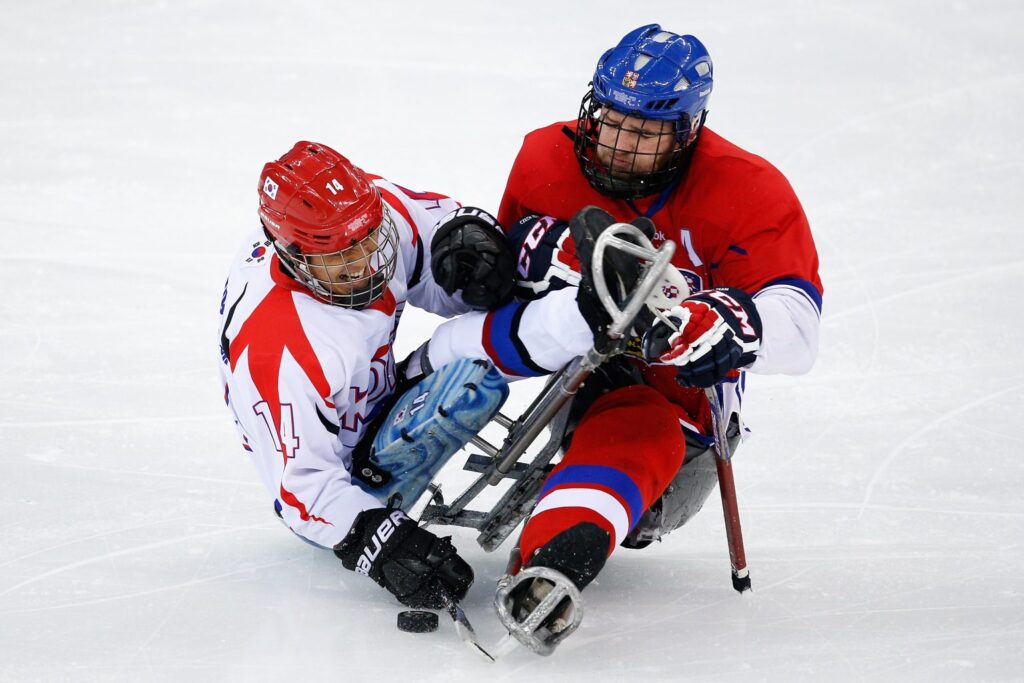
At Milano Cortina 2026, Para ice hockey events will take place at the Milano Santagiulia Ice Hockey Arena. Para ice hockey features eight nations vying for glory in one gold medal event. Players with lower-limb impairments use double-bladed sledges and sticks with spikes for turning and for striking the puck. Matches are played across three 15-minute periods, and the physical intensity of the sport makes it one of the most popular for TV viewers and spectators alike.
Para ice hockey made its debut at the Lillehammer 1994 Paralympic Winter Games, and since then, it has quickly established itself as one of the most popular sports at the Paralympic Winter Games. It is fast paced, highly physical and played by male and female athletes in a mixed event with a physical impairment in the lower part of the body.
Formerly known as ice sledge hockey, Para ice hockey players use double-blade sledges instead of skates that allow the puck to pass beneath. Players use two sticks, which have a spike-end for pushing and a blade-end for shooting. Therefore, with a quick flip of the wrist, the players can propel themselves using the spikes and then play the puck using the blade-end of the sticks. A player may use two sticks with blades to facilitate stick handling and ambidextrous shooting.
The Para ice hockey movement in Italy is growing thanks to the country’s success at the Paralympic Games. The Italian team has claimed top six finishes at each of the past three Paralympic Winter Games and will once again be a threat.
The USA will start clear favourites as the gold medallist at each of the past four Paralympic Winter Games. Expect Canada and China to also be prominent.
Wheelchair curling
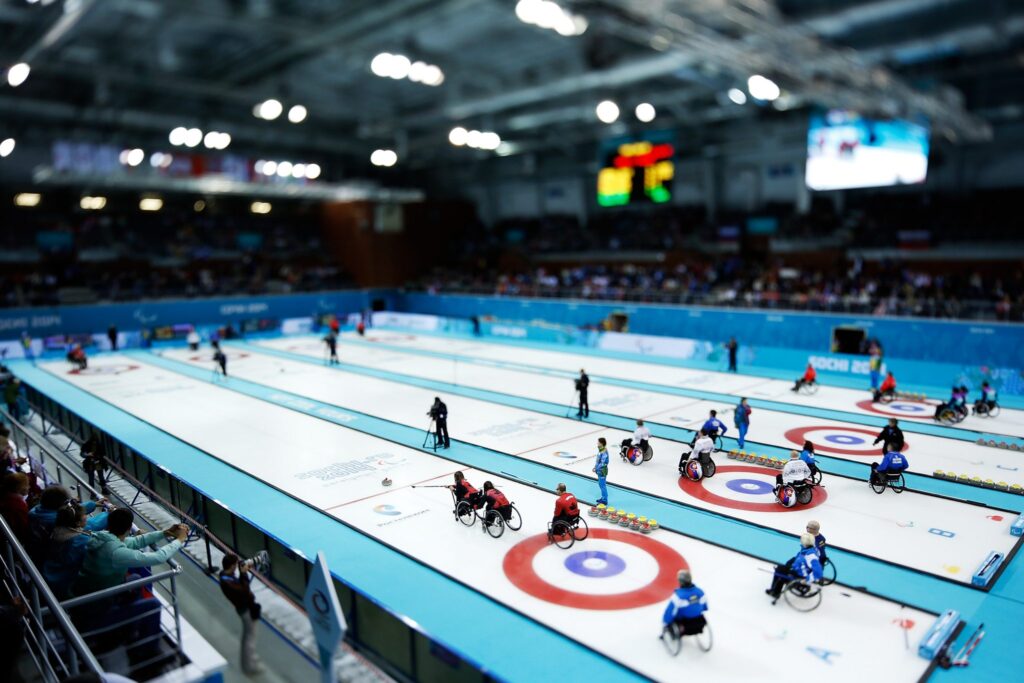
At Milano Cortina 2026, the Wheelchair curling competition will be held at the Cortina Curling Olympic Stadium in Cortina. Wheelchair curling made its Paralympic debut at the Torino 2006 Paralympic Winter Games, and in PyeongChang 2018, the event was successfully expanded and featured teams from 12 countries.
Wheelchair curling is played similarly to non-disabled curling, using the same rocks and on the same ice, although the rocks are thrown from a stationary wheelchair and there is no sweeping. Each team must be comprised of male and female players.
This mixed-team sport is open to men and women with physical disabilities in their legs. During each “end”, each player throws two stones for a total of eight stones per team. The goal is to get the stone as close as possible to the centre of the “house”, a circular target marked on the ice, to score a point. A team can score multiple points if there are two or more stones close to the centre. The stone can be thrown using the hand or an extender.
Defending Paralympic Mixed Team champions China, will arrive in Italy as the favourites. Sweden, who picked up silver in Beijing and Canada who claimed bronze in Beijing 2022, are expected to be in the medal hunt once again in the Mixed Team event. The Mixed Doubles event will make its debut appearance in Milano Cortina 2026.
Conclusion
As Milano Cortina 2026 approaches, the Paralympic Winter Games continue to showcase excellence, innovation, and the unbreakable spirit of Para athletes worldwide. With six dynamic sports and an increasingly competitive international field, the Games highlight not only athletic excellence but also the power of adaptive technology, teamwork, and determination.
For New Zealand, seasoned champions like Adam Hall and Corey Peters embody this spirit as they prepare to take on the world once again. Whether on the slopes, the ice, or the shooting range, every event showcases extraordinary skill and resilience, reminding us why the Paralympic Winter Games remain one of the most inspiring sporting events on the global stage.
This article first published 18 February 2022. Last update was made 17 December 2025.