
The Paralympic Winter Games stand as a testament to the power of resilience, innovation, and inclusion. What began as a relatively small event for Para athletes with a physical disability has evolved into one of the world’s most inspiring global sporting movements, where cutting-edge technology meets extraordinary athletic performance.
As we approach the Milano Cortina 2026 Paralympic Winter Games, the 14th edition of the Paralympic Winter Games, it’s the perfect time to reflect on how the Games began, how they’ve changed over the past five decades, and what their evolution means for the future of Para sport.
Origins of the Paralympic Winter Games
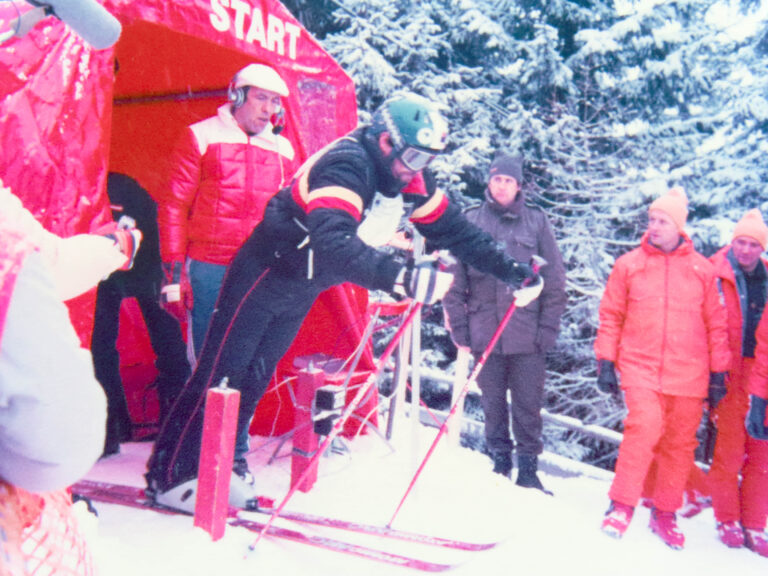
While the first Paralympic Games were held in Rome in 1960, the Winter edition took longer to take shape. The inaugural Paralympic Winter Games took place in Örnsköldsvik, Sweden, in 1976, featuring 16 nations and 198 athletes competing across Para alpine skiing and Para cross-country skiing.
The early vision was to create a winter equivalent to the Summer Paralympics, offering competitive opportunities for Para athletes with disabilities to showcase their skills on snow and ice. The inaugural event included athletes with physical and visual impairments, marking the beginning of a new chapter in adaptive sport.
This pioneering spirit was driven by organisations like the International Stoke Mandeville Games Federation and what would later become the International Paralympic Committee (IPC).
Source: International Paralympic Committee – History of the Games
Key Milestones Through the Decades
The Winter Paralympics have evolved dramatically since those early days in Sweden. Each decade introduced new sports, more participating nations, and advances in adaptive technology that pushed the limits of performance.
1980s: Establishing the Foundation
The Geilo1980 Paralympic Winter Games in Norway, were the second Winter Paralympics and introduced new classifications to make competition fairer. The Innsbruck 1984 Paralympic Winter Games, marked a milestone with the inclusion of athletes with cerebral palsy, expanding accessibility and athlete representation.
By this time, Para sport organisations around the world were beginning to align under shared governance, setting the foundation for what would become a global Paralympic Movement.
1990s: Unified Vision and the IPC
The Albertville1992 Paralympic Winter Games were the first to be held in the same host nation and year as the Olympic Winter Games, a major step toward integration and equality.
In 1989, the formation of the International Paralympic Committee (IPC) unified global governance across both Summer and Winter Paralympic Games, creating consistency in classification, athlete eligibility, and sport development.
By the Nagano 1998 Paralympic Winter Games participation had grown to 34 countries and 571 athletes, nearly triple the number from 1976. Nagano also marked the debut of ice sledge hockey (now Para ice hockey) as a medal sport, bringing a new level of excitement and visibility.
2000s: Expansion and Visibility
The Salt Lake City 2002 Paralympic Winter Games were the first to be fully organised by the same local organising committee as the Olympics, symbolising a deepening partnership between the two events.
The introduction of Wheelchair curling at the Torino 2006 Paralympic Winter Games expanded opportunities for team-based competition, while broadcast coverage and digital storytelling began to make Paralympians household names.
The Paralympics’ visibility was boosted by agreements between the IPC and IOC, ensuring that host cities would stage both Olympic and Paralympic Games, a partnership that continues today.
Source: IOC–IPC Co-operation Agreement
2010s: Performance and Professionalism
The Vancouver 2010 Paralympic Winter Games marked a turning point in athlete professionalism and performance. Technology such as lightweight prosthetics and carbon-fibre mono-skis revolutionised speed and agility on the slopes.
By the Sochi 2014 Paralympic Winter Games Para snowboarding was added to the programme, reflecting the IPC’s goal of aligning the Paralympics with mainstream snow sports culture. The Games also drew record global audiences, with more than 2.1 billion people watching coverage around the world.
The PyeongChang 2018 Paralympic Winter Games in South Korea continued this upward trend with 567 athletes from 49 countries competing, the highest participation to date at the time.
2020s: Diversity, Technology, and Global Reach
The Beijing 2022 Paralympic Winter Games showcased unprecedented innovation, including real-time tracking data and adaptive equipment breakthroughs. It was also the first Paralympic Winter Games to feature more women athletes than ever before, a sign of the growing inclusivity of para sport.
For New Zealand, Beijing was historic. Corey Peters and Adam Hall claimed multiple medals in Para alpine skiing, highlighting the country’s strength in snow sports and its continued commitment to high-performance para programmes.
Source: Paralympics New Zealand – Beijing 2022 Results
Growth in Participation and Technology
From 198 athletes in 1976 to nearly 600 in 2022, the Paralympic Winter Games have seen exponential growth in participation and representation.
Today, athletes at the Paralympic Winter Games compete across six sports and nearly 80 medal events, representing dozens of impairment types. Nations that once had limited access to adaptive snow and ice sports now field teams thanks to improved accessibility, funding, and international development programmes.
Technological Breakthroughs
The evolution of adaptive technology has been instrumental in driving performance:
- Sit-skis and mono-skis enable athletes with lower-limb impairments to tackle alpine courses with precision and speed.
- Carbon fibre prosthetics reduce weight while maximising energy return.
- Audio guidance systems for visually impaired athletes have become more sophisticated, using Bluetooth and real-time feedback to enhance communication.
This ongoing innovation ensures that the Paralympic Winter Games remain not only an elite sporting competition but also a showcase for human ingenuity and engineering.
Read: IPC Equipment Innovation and Research Initiatives
Accessibility and Inclusion Advancements
Beyond the competition itself, the Paralympic Movement has been a catalyst for social change. Accessibility and inclusion have become core pillars of how host cities and organisers plan events.
Universal Design and Infrastructure
Modern Paralympic host cities are required to incorporate universal design principles, ensuring venues, transport systems, and accommodations are accessible for everyone. The legacy of these Games often leads to lasting improvements for local communities, from barrier-free public spaces to more inclusive tourism infrastructure.
Representation and Gender Balance
The IPC continues to drive progress in gender equality and diversity. At Beijing 2022, 138 women competed, the most in the history of the Paralympic Winter Games. Programmes like the Women in Sport Commission and Athlete Leadership initiatives are helping create new pathways for female athletes, coaches, and administrators.
Source: IPC – Diversity and Inclusion Strategy
Media and Cultural Impact
Media coverage has played a key role in shaping public perception of disability and athleticism. With the rise of streaming and social platforms, fans worldwide can now follow the journey of Paralympians all year-round, not just during the Games.
This increased visibility has inspired new generations of athletes and contributed to a broader understanding of disability as a facet of diversity, not limitation.
Looking Ahead to Milano Cortina 2026
The Milano Cortina 2026 Winter Paralympics, running from 6–15 March 2026, will mark 50 years since the first Games in Sweden.
The event will take place across two iconic regions of northern Italy, Milan and Cortina d’Ampezzo, blending alpine heritage with cutting-edge sustainability and accessibility standards.
Anticipated highlights include:
- Continued growth in female participation and mixed-gender events.
- Enhanced digital experiences for fans, including virtual access to live competitions.
- Greater emphasis on climate-resilient event management, aligning with the IPC’s sustainability strategy.
For the NZ Paralympic Team, 2026 represents another opportunity to showcase the strength of our Para snow sports programmes and inspire future generations of Para athletes.
Visit the Milano Cortina 2026 official website for updates on venues and schedules.

Frequently Asked Questions
When did the Winter Paralympics begin?
The first Paralympic Winter Games were held in Örnsköldsvik, Sweden, in 1976, with 198 athletes from 16 nations competing in Para alpine skiing and Para cross-country skiing.
How have the Winter Paralympics evolved over time?
The Games have grown from two sports to six, expanded from fewer than 200 Para athlete to nearly 600 Para athletes, and introduced advanced technologies that allow athletes with a wide range of impairments to compete at elite levels.
What key milestones shaped the Paralympic Movement?
Major milestones include the founding of the IPC in 1989, the inclusion of new sports like Para ice hockey (1998) and Para snowboarding (2014), and co-hosting with the Olympic Games since 1992.
How has technology changed Winter Paralympic sports?
Adaptive equipment such as sit-skis, carbon fibre prosthetics, and guided communication systems has revolutionised performance and accessibility.
When and where are the next Winter Paralympic Games?
The next Paralympic Winter Games will take place in Milano Cortina, Italy, from 6–15 March 2026.
For more stories, updates, and historical insights about New Zealand’s Paralympic journey, visit paralympics.org.nz.