In the third and final part of our series marking the 50th anniversary of the Toronto 1976 Paralympic Games, Paralympian #25 Brian McNicholl OAM reflects on the Games that launched a long and decorated Paralympic career.
For Brian McNicholl, Toronto 1976 was about far more than winning a silver medal.
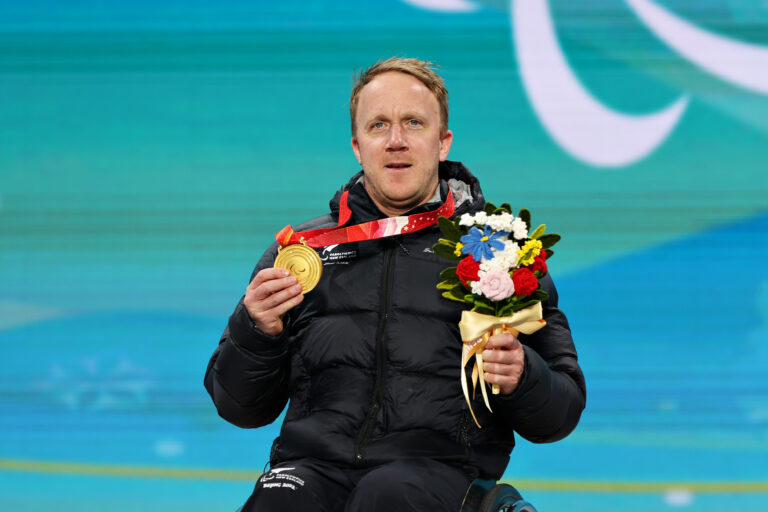
Making his international debut for the NZ Paralympic Team, the Cantabrian bettered his expectations by sitting on the podium in Canada. More importantly, the Games ignited a career that would span six Paralympic Games and deliver five Paralympic medals, highlighted by gold in the men’s under-90kg Para weightlifting event at Barcelona 1992.
“Toronto kick-started everything for me,” says Brian, now 74.
“Winning a silver medal exceeded my expectations. It gave me the fire in my belly to keep going, compete in more events and keep improving.”
Born in Christchurch, Brian contracted polio at just 11 months old. By coincidence, he recovered in the same hospital ward as future Paralympian #4 Graham Condon QSM, who would go on to win six Paralympic medals. The pair later became lifelong friends.
Growing up with a disability in 1950s Aotearoa New Zealand was not always easy, but Brian credits his parents for refusing to limit his ambitions.
“Looking back, I was very lucky my parents chose not to wrap me up in cotton wool just because I had a disability,” says Brian, whose impairment affected his legs and lower abdomen.
“They let me have a crack at pretty much anything and I’m very grateful for that.”
School life brought its challenges. Brian was bullied, but he believes those experiences helped him discover one of his greatest strengths.
“I was reasonably strong getting around on callipers and crutches, and the bullies soon stopped when they realised the treatment they’d get in return,” he explains “I had a stronger upper body composition than most other kids.”
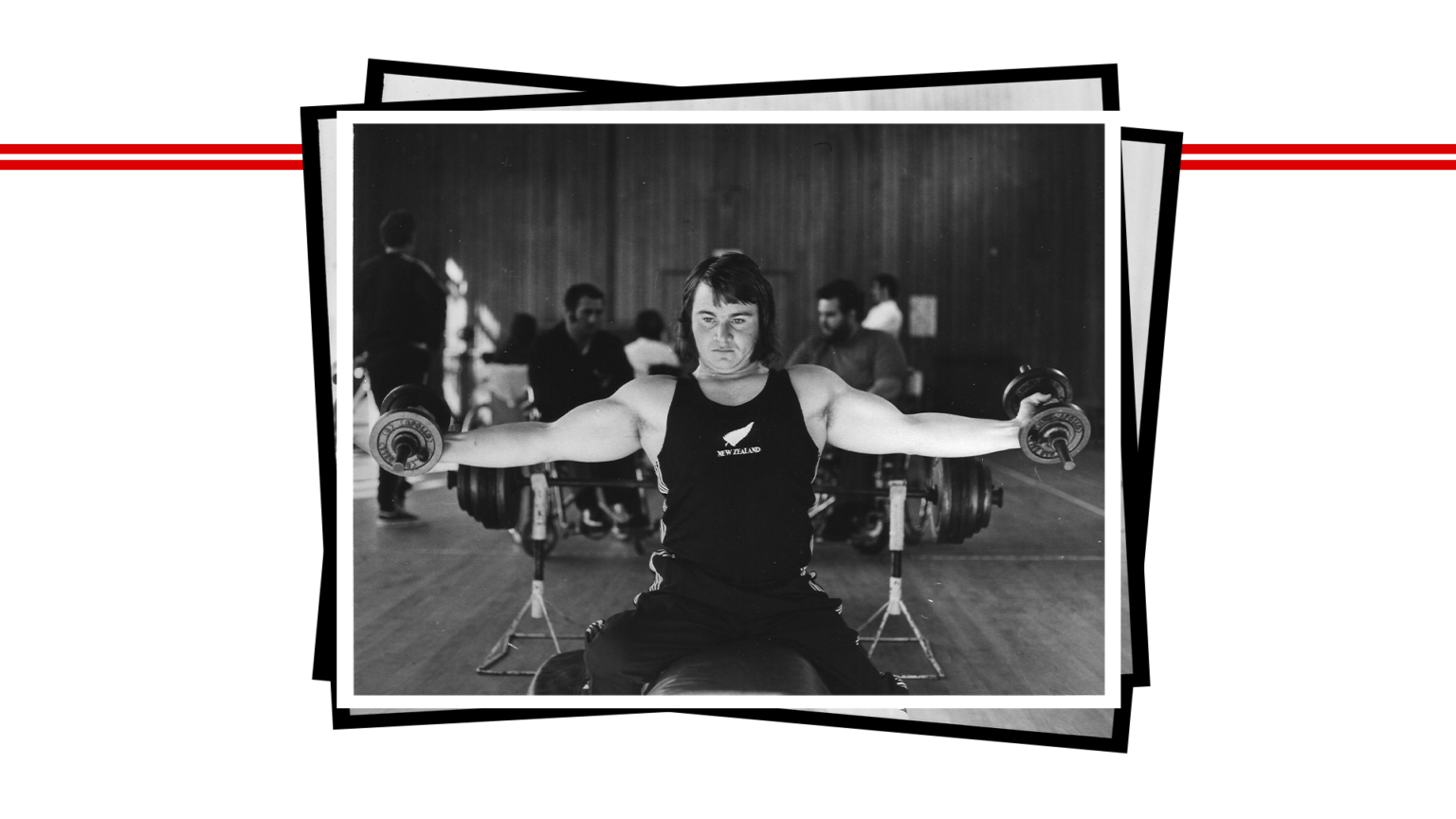
Encouraged by his parents to develop that strength from the age of 11 or 12, Brian began training at Christchurch’s Crichton Cobbers gym, a popular youth club offering a range of sporting activities.
His ability in the bench press quickly became apparent and encouraged by Condon, he later turned his attention to Para sport.
While Para weightlifting (now Para powerlifting) became his specialty, Brian also competed in several Para athletics events, including the Shot Put, 100m and Slalom – a timed obstacle-course event that tests speed, agility and wheelchair handling skills.
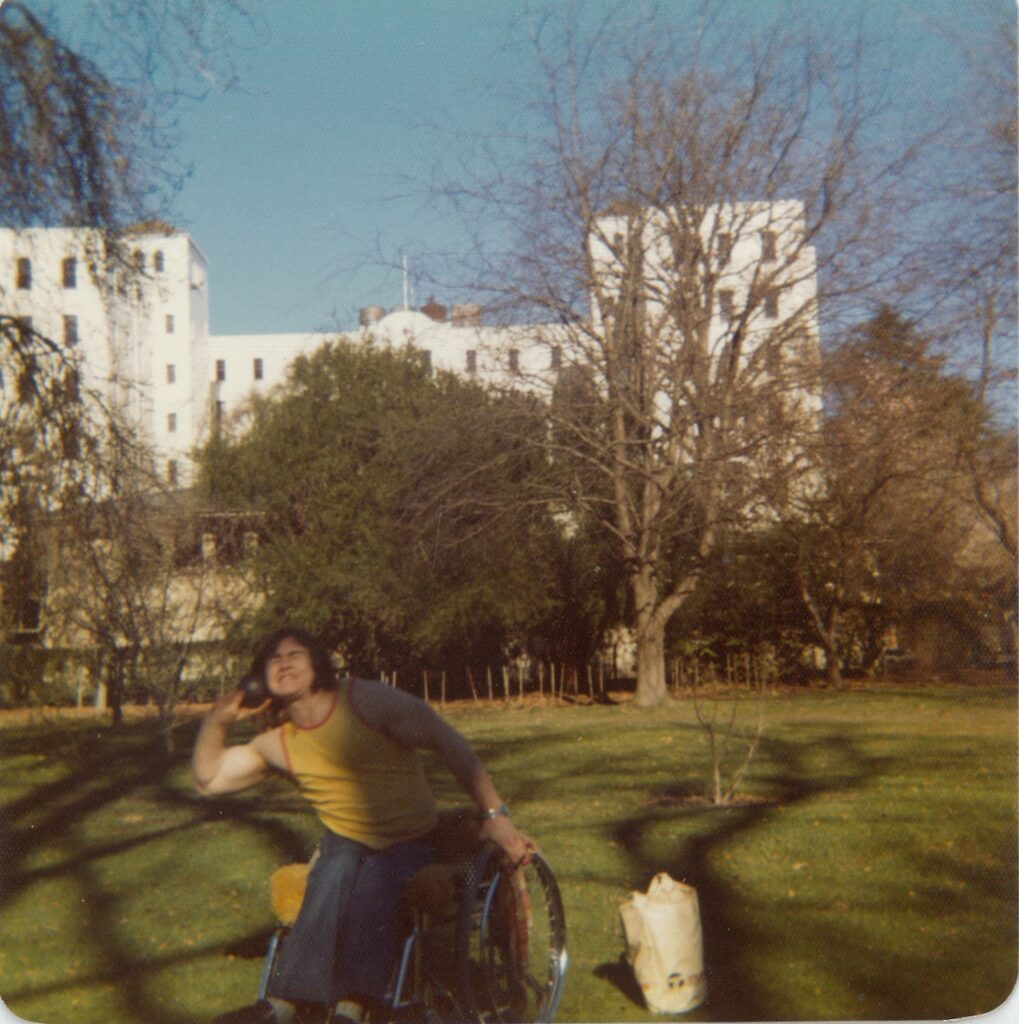
Working as a fitter and turner, Brian found extra motivation after watching Condon strike Paralympic gold in the Men’s Discus 3 at Heidelberg 1972.
Training three times a week, he earned his first international selection for the 1975 Fra East South Pacific (FESPIC) Games in Japan before receiving the news via telegram the following year he had been selected for the NZ Paralympic Team for Toronto 1976.
“I was so proud and honoured to represent my country,” Brian recalls.
“A couple of days later these suitcases full of uniform arrived – shoes, socks, jacket, pants. I remember thinking, ‘Wow…how good is this?'”
At the time, all selected Para athletes for the NZ Paralympic Team were required to compete in at least three events. Besides his favoured Para weightlifting, Brian entered the Men’s 100m 3, Men’s Shot Put 3 and Men’s Slalom 3.
Travelling overseas for the first time, he relished the experience of flying with New Zealand’s close-knit team of 12 Paralympians.
Nothing, however, prepared him for Toronto.
“Coming from Christchurch, Toronto seemed enormous,” he says.
“My eyes were wide open the whole time. We stayed at a university complex and there was this huge marquee where everyone gathered to eat, have a drink, listen to music and meet Paralympians from around the world.”
Not everything went to plan.
Brian and several teammates were struck down by a virus shortly after arriving in Canada. Fortunately, he recovered in time for the Opening Ceremony – attended by Paralympic founder Sir Ludwig Guttmann – and was primed and ready when competition began.
He opened with the Men’s Shot Put, where he briefly held a world record before eventually finishing fourth behind teammate Paralympian #7 Bill Lean, who claimed gold.
“My world record lasted about six minutes,” Brian laughs.
“I was very happy for Bill because he was a great mate. I had the strength but Shot Put is a very technical event. I probably could have done better if I’d spent more time practising, but my main focus was Para weightlifting.”
After placing 28th in the men’s 100m, Brian turned his attention to the Slalom – perhaps the event in which he had the lowest expectations.
Negotiating ramps, tight turns, weaving through cones and ducking beneath obstacles, Brian found himself unexpectedly sitting in a medal position midway through the competition.
“It was a real rollercoaster waiting for everyone else to finish,” he recalls.
“When I found out I’d won silver in probably the event I least expected to do well in, it was an incredible feeling. Sitting on the podium with the New Zealand flag raised and a medal around my neck is something I’ll never forget.”

He rounded out his Games by placing fourth in the Men’s Lightweight Para weightlifting competition, lifting 145kg to finish just behind close friend Paralympian #10 Reuben Ngata, who claimed bronze.
Away from competition, Brian embraced every aspect of the Paralympic experience.
He remembers Canadians wholeheartedly getting behind the Games, visiting the newly opened CN Tower – then the tallest standing structure in the world – and stopping at Disneyland in Los Angeles on the journey home.
Toronto left him wanting more.
The following year he moved to Melbourne to develop his career and he benefited from stronger domestic competition helped elevate his performances.
Representing Australia for the remainder of his international career, Brian won Paralympic bronze medals at Arnhem 1980 and Seoul 1988 before reaching the pinnacle of his career at Barcelona 1992.
Working with former Bulgarian weightlifting world champion Blagoy Blagaev transformed his technical approach, while also mentored by legendary Australian middle-distance runner Herb Elliott, a former world record-holder for the mile, helped revolutionise his mindset.
“I told Herb I always seemed to train better than I competed,” Brian says.
“He told me competition was like acting in a play – you rehearse your lines over and over until it becomes second nature.
“I started breaking my training into exactly the same segments as competition day. Once I did that, I could immediately see the difference.”
The change proved transformative.
Brian claimed Paralympic gold in Barcelona with a world-record lift before adding silver four years later at Atlanta 1996 in his sixth and final Paralympic Games.
Retiring from competition in 2000, Brian later worked as a personal trainer before joining Telstra in 1998 where he worked as a video conferencing manager until retirement in 2018.
His contribution to Para powerlifting continued long after his competitive career ended, serving as an International Technical Official from 2000 until 2024 and fulfilled the role at the Sydney 2000, Beijing 2008 and London 2012 Paralympic Games. He also served as Chair of the Australian Disabled Powerlifting Association.
Still living in Melbourne, Brian reflects on a Paralympic journey that all began in Toronto half a century ago.
“I’m proud of both my longevity and what I achieved in Para sport,” he says.
“I’m proud to have represented both New Zealand and Australia, but New Zealand is where I was born and raised, and Toronto 1976 will always hold some very special memories.”