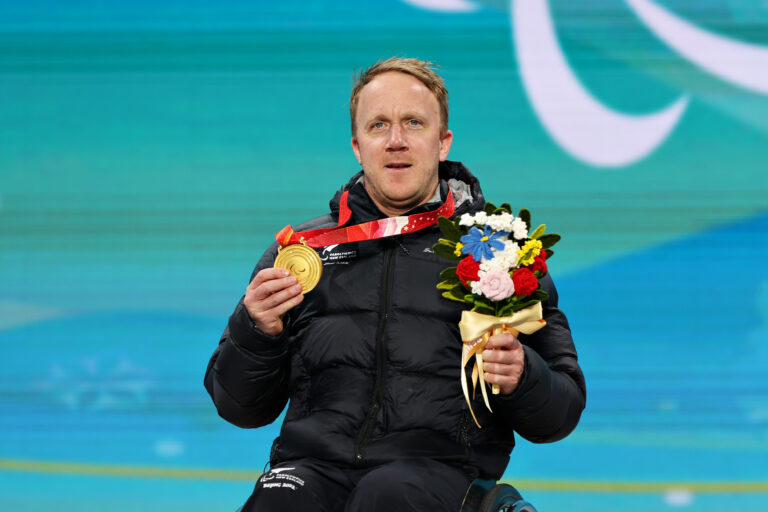
To mark the 30th anniversary of the Atlanta 1996 Paralympic Games we focus on the appropriately numbered Paralympian #96 Duane Kale PLY ONZM. The pioneering Paralympian proved a star of the pool at those Atlanta Games and has since left an indelible mark on Para sport out of the pool.
Perhaps no Kiwi has had quite the same impact on the evolution of the Paralympic Movement as Paralympian #96 Duane Kale PLY ONZM.
The most highly decorated NZ Paralympian at a single Paralympic Games – he snared six medals – including four gold – in the pool at Atlanta 1996.
However, it has been his accomplishments out of the pool in the field of sports governance where Duane has perhaps had an even greater impact.
Domestically, he served on the Paralympics New Zealand (PNZ) Board for 20 years (2005-2025), was a two-time Chef de Mission for the NZ Paralympic Team Beijing 2008 and London 2012, and is current Chair of Sport NZ and High Performance Sport NZ (HPSNZ).
Meanwhile, internationally he served on the International Paralympic Committee (IPC) Governing Board from 2013 to 2025 – for the latter eight years as Vice President. Today he is also a member of the International Olympic Committee (IOC) Co-ordination Commission for the LA28 Olympic and Paralympic Games, and the Brisbane 2032 Olympic and Paralympic Games.
“Coming off Atlanta I was top on the world stage, and I thought life doesn’t get any better, but I was wrong,” explains Duane. “While Atlanta was fantastic, the opportunities I’ve since had have been far better and offered much more fulfilment.”
Raised in the Hawke’s Bay Duane enjoyed what he describes as a “typical upbringing in provincial New Zealand.” Learning to swim at the age of seven he later progressed into competitive swimming. A strong regional-level athlete he also competed at a couple of national championships.
Believing he was not “overly academic” he left school at the end of sixth form and joined the National Bank. The move into the financial sector proved a great decision. Supportive managers allowed him to pursue his sporting ambitions, and it also instilled leadership skills which has enabled him to flourish in sports governance.
For several years in early adulthood, he competed as a triathlete. Yet the direction of his life was to change forever when the handlebars on his bike snapped while out for a training ride near his home in Wellington.
Crashing to the ground he recalls: “I was sore, bruised and grazed but aged 21, I thought I would recover.
The next day he struggled to get out of bed and was in intense pain. A doctor suggested a visit to the physiotherapist, but what followed was more than six months of persistent pain, accompanied by a loss of feeling and reduced function in his lower body.
The medics diagnosed the cause as a prolapsed disc despite there being no clinical evidence to support. He underwent surgery to ‘address the prolapsed disc’. What the surgeon found was there was no prolapsed disc, but rather an inflamed spinal cord. To relieve the pressure on the spinal cord, some of the vertebrae were widened to take off the pressure on the spinal cord.
Six months on with little progress and continued constant pain, a sports medicine specialist became concerned by his physical condition and recommended an MRI scan in Auckland.
It was discovered that six inches higher up the back than where surgeons had previously operated, Duane had a benign spinal tumour which had been growing for four to five years. Finally, the source of the pain and the loss of feeling was identified.
The tumour had grown to a size that was interfering with the spinal cord. Its removal led to permanent nerve damage and a partial paralysis for Duane.
“Earlier doctors had simply not joined the dots,” he explains. “It just goes to show how you totally put your trust in medics and doctors, but they don’t always get it right. Life is like that, choices, decisions and outcomes that are not always anticipated”.
Aged 22, with no awareness or understanding of anyone with a disability it was a big adjustment. Struggling to accept the perceptions and judgements of some people regarding disability he thankfully had supportive employers and a move back into the pool proved critical to his rehabilitation.
“I was back in Havelock North from Wellington, and I went to see my old swimming coach, John Beaumont. He said ‘you look bad. You have no muscle tone, you are drawn in the face, get your backside up here and I will sort you out’.”
Prior to being transferred back to Hawke’s Bay, where he would reconnect with John Beaumont, he had also discovered the Chas Toogood documentary Twelve Days of Glory focused on the NZ Paralympic Team at Barcelona 1992. Watching this gave Duane the incentive to aspire to becoming a Paralympian and compete at the Atlanta 1996 Paralympic Games.
Competing at the 1993 national championships he met Paralympian #4 Graham Condon QSM. The six-time Paralympian had been impressed with Duane’s technique and suggested he target the FESPIC Games in China in 1994.
In early 1993 he returned to Havelock North to train under John and with an interim target of the Beijing FESPIC Games.
“John was always very honest with me and said, ‘I’ve never coached anyone who sinks from the waist down, but let’s see how we get on’. I was always very thankful of his open mindedness to help athletes with a disability and give new challenges a go.”
With a goal in mind, Duane embarked on a gruelling regime, which combined nine swim sessions per week at the 20-yard Havelock North heated pool plus three weights sessions. Competing in Beijing he claimed three individual golds and a bronze, leading him to comment: “Competing at FESPIC Games probably signalled to me that I was reasonably good enough and that Atlanta was very much a realistic goal.”
His next milestone international came at the Paralympic Test event in Atlanta the following year. Receiving confirmation there of his international classification as an S6 Para swimmer he secured four individual gold medals, along with two New Zealand team relay golds. Fuelled with a rising confidence he also worked on developing his mental capabilities in the countdown to Atlanta 1996.
“Training every day at a steamy and murky 20-yard pool, I was visualising the crystal clear 50 metre pool I would be competing in at Atlanta. I guess it was a form of visualisation used by so many athletes today.”
Duane was also working on self-affirmation – a tool which had been adopted by his employers – to restore self-worth and reduce stress.
“I started to align those in a sporting sense,” he explains. “It was fairly amateur by today’s standards,” he says. “It’s not very Kiwi to talk about how bloody good you are, but it definitely helped me build confidence.”
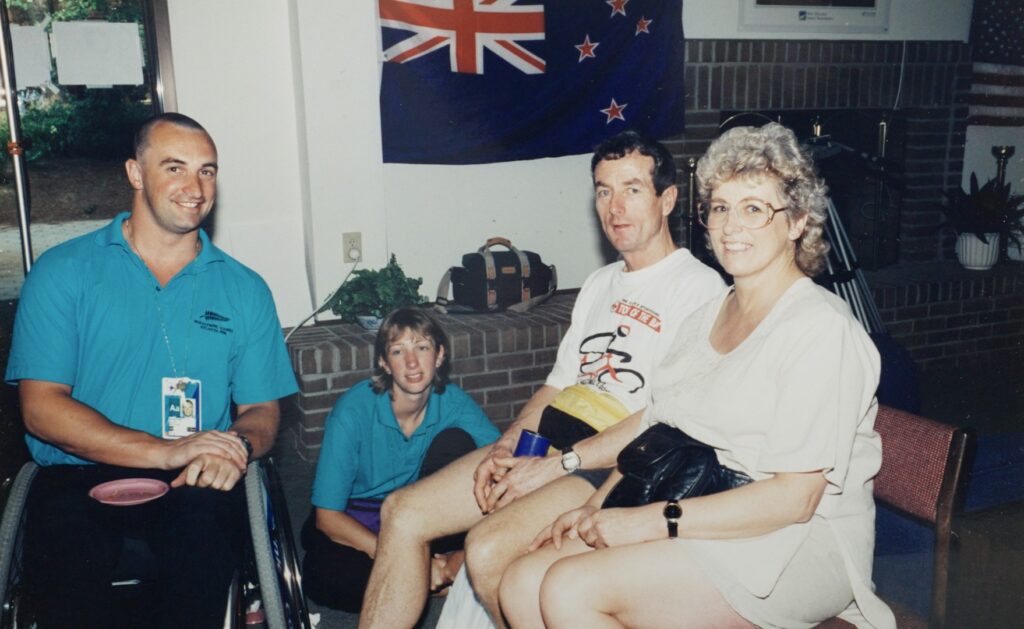
Believing he could win “two to three medals” at Atlanta 1996 he set himself the demanding goal of racing in six events across the nine-day programme. Advised to ignore the distractions of Paralympic Village life, the Opening Ceremony and the vast food hall in the Games environment, he admits with the benefit of hindsight he took that advice too literally.
“I really didn’t get involved in any of those experiences,” he recalls. “I didn’t get to celebrate the individual milestones along the way, but I have no regrets.”
His performance inside the Georgia Tech Aquatic Centre was nothing short of extraordinary. He claimed gold medals in the Men’s 100m Freestyle S6, Men’s 200m Freestyle S6, Men’s 50m Butterfly S6 and Men’s 200m Individual Medley SM6. Duane also added Men’s 50m Freestyle S6 silver and a Men’s 100m backstroke S6 bronze to be one of the star performers across all Para sports at Atlanta 1996.
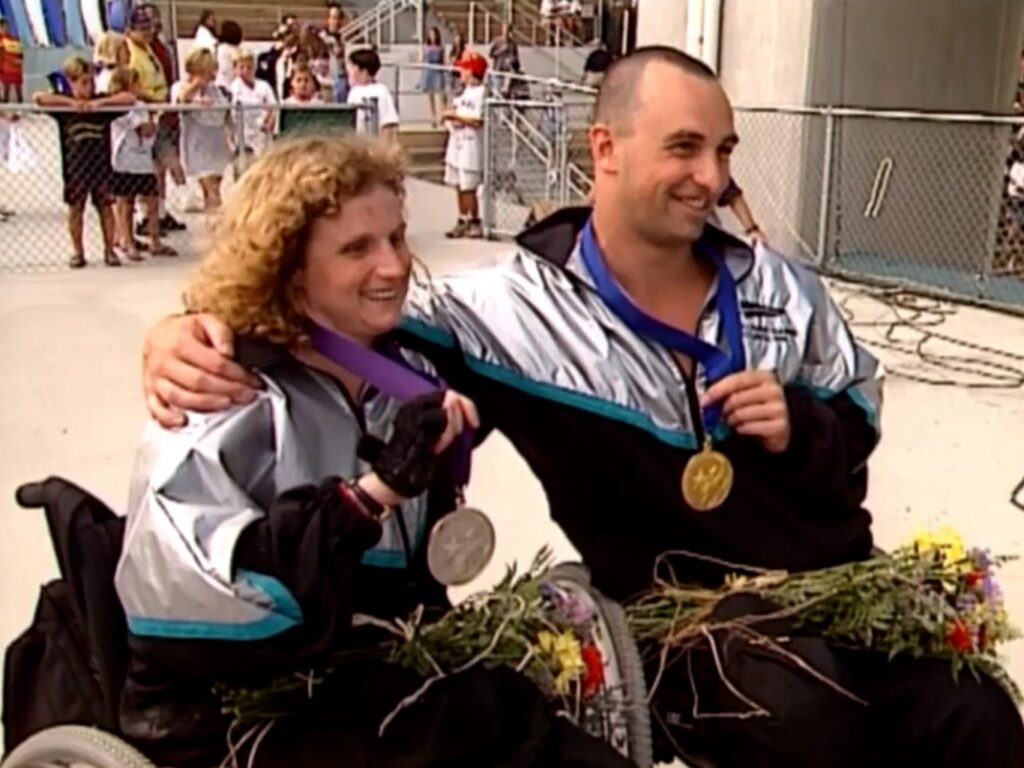
It was an outstanding display of sporting excellence by the New Zealander and reflecting back on the achievement some 30 years later, Duane admits he has two stand out memories of the competition.
“In my first event, the 200m medley, I won the final in a world record only for an official to come over moments after stepping out of the pool to and say I’d been disqualified. I remember asking, ‘for what?’ and later discovering I’d been disqualified for taking two strokes underwater after I’d dived. Thankfully, a little later a technical official from Australia came over to say it can’t be me that committed the indiscretion because I don’t dive into the pool (Duane starts in the water). I never got to the bottom of whether it was mistaken identity, but I was relieved it was overturned.
“I remember having to go in the call room saying sorry to the guys who were positioned in gold to bronze waiting for their medals. I felt really bad for the guys, especially the Para athlete in bronze.”
Duane’s second abiding memory was the huge “life lesson” he learned when winning a silver medal in his final event on the programme – the Men’s 50m Freestyle S6. Qualifying fastest in the heats and breaking the world record, I had allowed my focus to ease, going into the final with the wrong mindset.
Peter Lund Anderson of Denmark profited by winning gold by a 0.15 second margin from the Kiwi who had to settle for silver.
“In my view Peter had a greater desire to win than what I did,” explains Duane. “Up until then, Peter had not performed how he wanted. While my thoughts were ‘how hard can this be?’ While I was looking forward to going home, he was thinking about winning. It proved to me that if you don’t follow through right to the end, there is a chance someone could take it away from you. It was a huge learning.”
Aged 28 at that time, Atlanta 1996 had changed the entire trajectory of his life and validated that having a disability was not a barrier to achieving. Returning to Hawke’s Bay to a hero’s welcome, Duane chose to retire from competitive Para swimming while still at the peak of his career, ready to pursue the next chapter of his life.
At that time working as a branch manager for Countrywide Bank, he was still keen to stay associated with sport. In 2000 he served as NZ Paralympic Team manager for Para Swimming at the Sydney 2000 Paralympic Games, and in 2005 became a PNZ Board member. Keen to assist in any way he could with the NZ Paralympic Team for Beijing 2008, he was genuinely surprised and thrilled to be offered the role of Chef de Mission and later fulfilled the same role at London 2012.
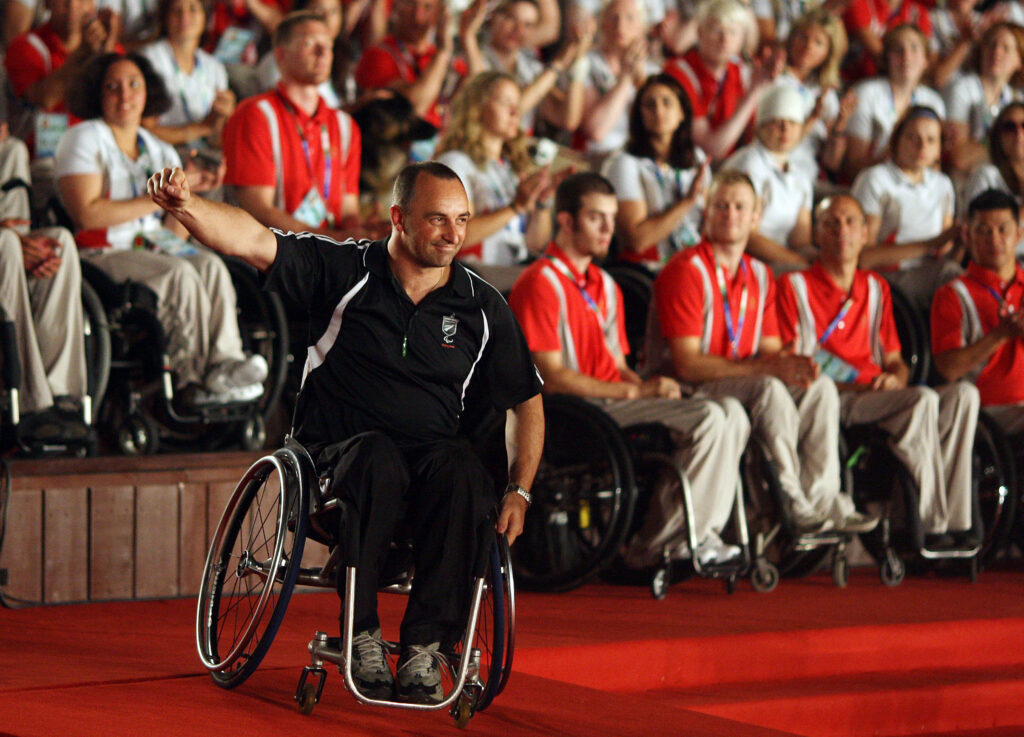
Describing both as “wonderful learning experiences” he was keen to pursue working in a similar capacity for Rio 2016. However, following discussions with Mark Copeland, who served as PNZ Board Chair at the time, he encouraged Duane to drop such thoughts in favour of pursuing a position on the IPC Governing Board.
Bolstered by the credibility of being a Paralympian and from a nation which is respected for its sporting feats, high integrity and neutrality, he was successfully elected in 2013.
“What I picked up during the voting process is the world view of New Zealanders is very positive,” he explains. “We are thought of as independent thinkers, honest brokers, who are generally likeable and considered people. I happened to be the beneficiary of that perception.”
Elected as an IPC Vice President in 2017, Duane has enjoyed a highly fulfilling 12-year journey with the organisation. Overseeing three summer and three winter Paralympic Games during his tenure brought its challenges. Drug scandals following Sochi 2014 and the COVID-19 impacted Games of Tokyo 2020 and Beijing 2022 were far from easy, but it brought about great personal growth and development for Duane and a greater understanding of governance, sport and politics.
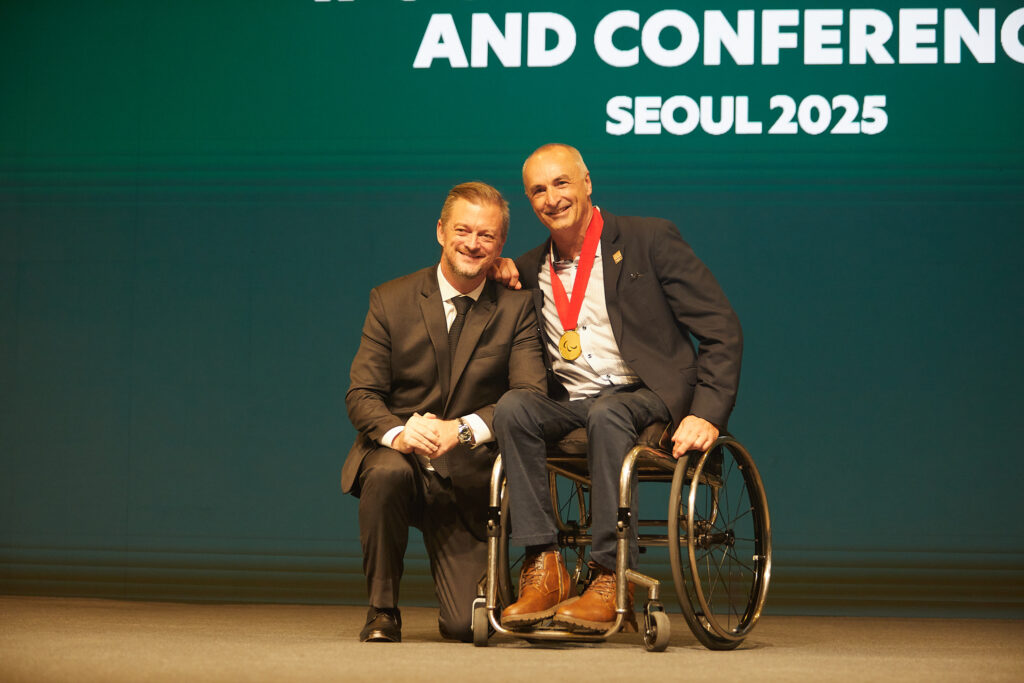
So, what is he most proud of?
“I can’t claim this as an individual because it is a huge collective effort, but I’m most proud of where we have taken awareness of the Paralympic Games and its standing in global sport. To be a part of an environment and a Movement that is having a profound impact on not only the 15 percent of the world population that has a disability, but also changing perceptions in how the rest of the population perceive disability has been very rewarding.”
Believing his strength is an ability to listen to both sides of the argument and shape the thinking to enable a decision to be reached, he is elated in the huge strides made by the Paralympic Movement. Awareness and visibility both domestically and internationally are at an all-time high and Duane takes enormous satisfaction from the fact that Paralympians are now household names in Aotearoa New Zealand.
Besides currently serving at Chair of both Sport New Zealand and HPSNZ, Duane has also served on the Executive Board of the Halberg Foundation and is presently Secretary General of the Oceania Paralympic Committee. Yet he has not ruled out one day returning to the IPC in a bid for the role of President. Should he achieve the feat it would be incredible milestone moment for a New Zealander in international sports governance. So, what still motivates the long-time sports leader?
“Politics and sport are now, unfortunately, so intertwined there is probably no going back, but we still need to fiercely defend and separate that as much as you can because of all the good that sport brings,” he explains. “Sport at every age is so good for everyone’s wellbeing and can bring so much fulfilment.”
Duane’s journey from Paralympic champion to one of the world’s most influential sports administrators demonstrates the impact Para athletes can have long after competition ends. He hopes others with disabilities will also pursue leadership opportunities.
“I would say to others, don’t let your disability get in the way, it has helped shaped your experience,” he explains. “Your life experience will be different to a non-disabled person but because of that you will bring a different perspective to the conversation. As long as you have that voice, then different perspectives will help shape the conversation.”