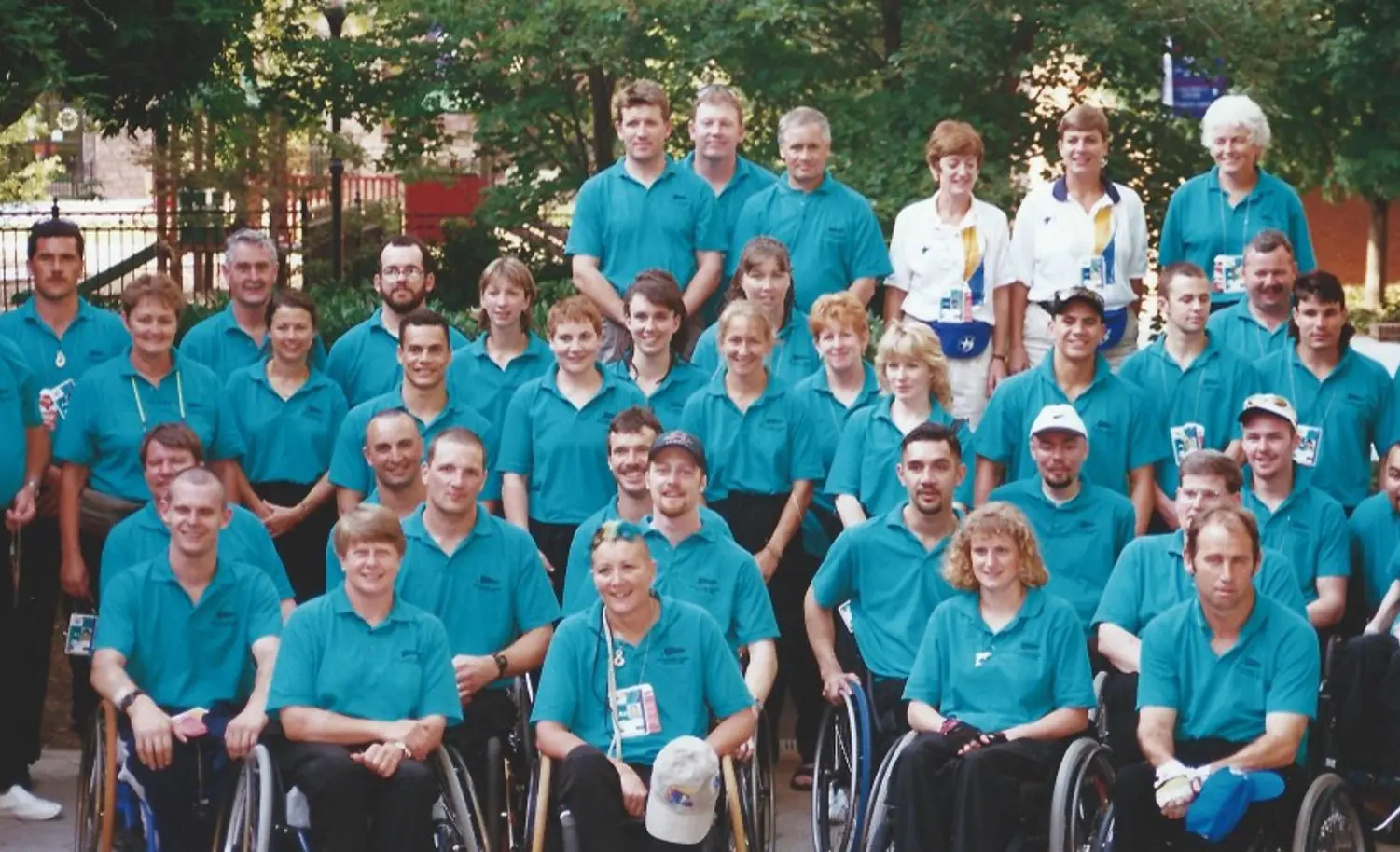
A 34-strong NZ Paralympic Team enjoyed a memorable Atlanta 1996 Paralympic Games by winning a total of 18 medals including nine golds. To mark the 30th anniversary of Atlanta 1996, we speak to a trio of medallists who share their memories of competing in the 10th summer Paralympic Games.
Paralympian #105 Curtis Palmer
For Paralympian #105 Curtis Palmer, winning bronze at this debut Paralympic Games in Atlanta 1996 proved the springboard for even greater success in the future.
The four-time New Zealand Paralympian enjoyed an outstanding international career, which also included Wheelchair rugby bronze at Sydney 2000 before memorably taking gold as part of the triumphant Wheel Blacks squad at Athens 2004.
“To come away with a medal in Atlanta was really good,” explains Curtis who was aged just 19 at the time. “Atlanta was the first time Wheelchair rugby was a medal sport at the Paralympic Games and winning bronze was an important part of the legacy of the Wheel Blacks. I have some beautiful memories there. It put us on the map.”
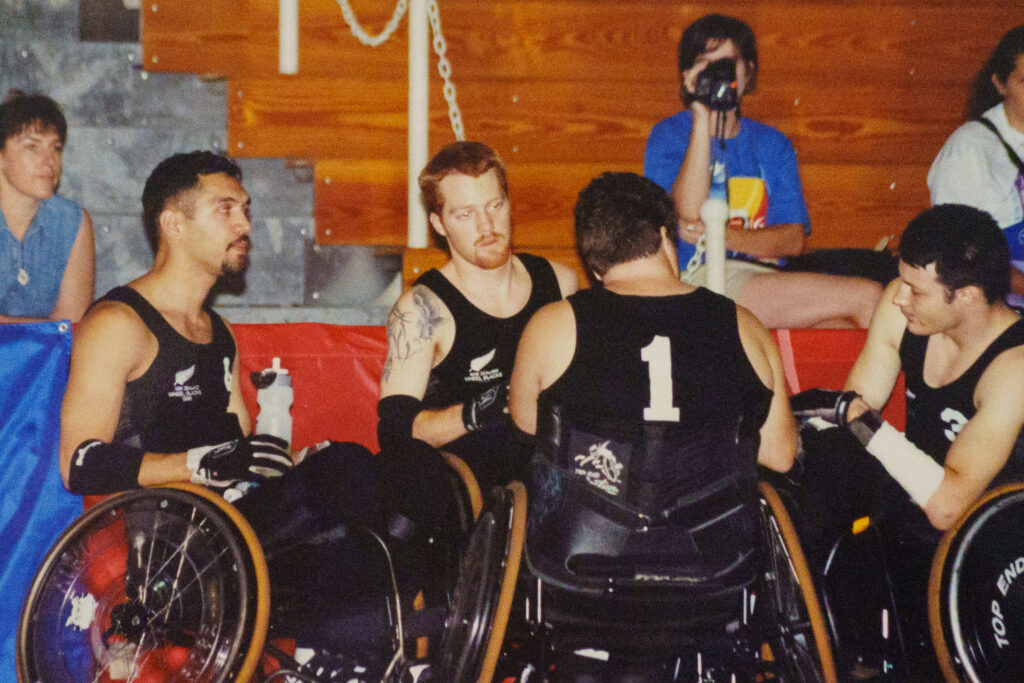
Born on the South Island before relocating to Waikato he moved with his family to Australia as a ten-year-old. Sustaining a spinal injury aged 15 while playing rugby league was to change the course of his life. He sought solace in Para sport and quickly found Wheelchair rugby.
“Following my accident I surrounded myself with Para sport,” explains Curtis. “It wasn’t long before I was introduced to Wheelchair rugby and within eight months was on a plane to England to play Wheelchair rugby at the 1993 Stoke Mandeville Games. I got a taste of the international game, and it quickly snowballed.”
Touring Aotearoa New Zealand with the New South Wales team triggered a change in direction. Impressed by the professionalism and talent in the Wheel Blacks squad he sought to align himself with his country of birth.
“I saw the New Zealand boys at that time were on a different level to the Australian national team, he explains. “Given my connection to New Zealand, I persuaded his family to move to Auckland in early 1996 in pursuit of a place with the Wheel Blacks.”
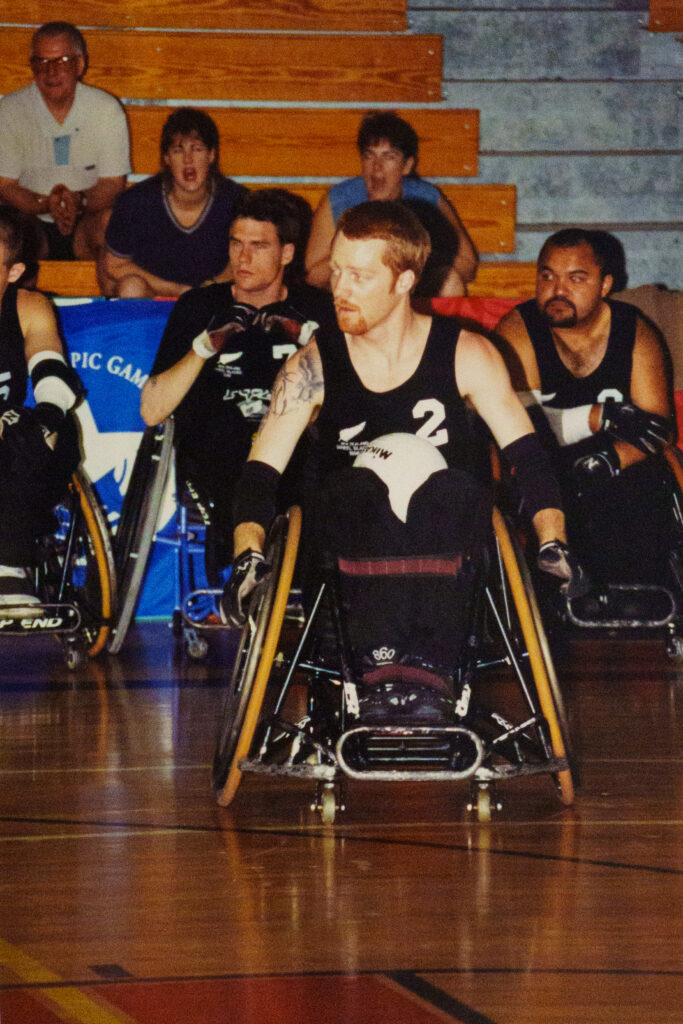
Embraced by the New Zealand team, Curtis recalls a similar atmosphere to what he had experienced as a young, emerging rugby league player in Australia.
“It was just like being on a rugby or league team, with the same expectations and banter,” he recalls. “After the Wheel Blacks won a bronze medal at the 1995 World Championships there was a real belief in 1996 that we could do something special against some of the giants of the Para sport.”
Earning selection for the Wheel Blacks to compete at Atlanta 1996 – the first time Wheelchair rugby was part of the Paralympic Games programme – was a moment of immense pride.
“I thrived off that hero status of being selected,” he explains. “To me it proved although I was in a wheelchair, I had no limitations on what I could achieve. It showed to my family that although I had a spinal injury, it would not hold me back.”
Attending a star-studded Atlanta 1996 Opening Ceremony in which Aretha Franklin, Carly Simon and Liza Minnelli all performed, he recalls that the Wheelchair rugby competition took place at a modest gymnasium in front of a crowd of around 200 people.
After the Wheel Blacks impressed in the round robin stage, they fought an epic semi-final against Canada only to succumb to a heartbreaking 39-38 defeat.
“We were hot, feeling confident with that giant killer attitude,” he says. “You talk to some people who were there and they’ll say we scored a try against Canada which was disallowed and could have won us the game, but I was not too worried. I was young and didn’t mind if we were competing in the gold medal or the bronze medal match.”
Thankfully, the Wheel Blacks’ efforts were rewarded in the bronze medal match as they comfortably defeated Great Britain to earn a podium spot.
“It was a wonderful feeling, and boosted my confidence so much,” he says of winning bronze.”
Four years later at Sydney 2000 the Wheel Blacks repeated the feat – doing so in front of capacity crowds of 10,000. The huge support was affirmation of the growth of the Paralympic Movement and four years later at Athens 2004, the Wheel Blacks enjoyed their finest hour to memorably strike gold.
“To be the best in the world and to think there is no-one better than us right now was an amazing feeling.”
Curtis competed at one more Paralympic Games for New Zealand at Beijing 2008 and after working for a stint as a TV reporter for Attitude TV he returned to Australia 15 years ago.
A father of two boys working as a teacher aide he has spent periods of time coaching Wheelchair rugby in both Australia and Japan.
Yet for Curtis, featuring for the Wheel Blacks brought about enormous pride.
“To be part of the team which helped set up the legacy of the Wheel Blacks – which won three Paralympic medals in a row – was very special.”
Paralympian #75 Aaron Bidois
For Paralympian #75 Aaron Bidois PLY winning silver at Atlanta 1996 was the pinnacle of his Para sporting career and proved to himself he could overcome disability to achieve his goals.
Competing as a Para swimmer, and aged only 20 at the time, he rocketed to the podium in the Men’s 100m Breaststroke SB6 with a stellar performance. Finishing fourth in the Men’s 200m Individual Medley SM7, the Aucklander enjoyed a memorable Games and says: “I was just an ordinary guy with a disability that wanted to prove I could achieve something and by winning silver I did that.”
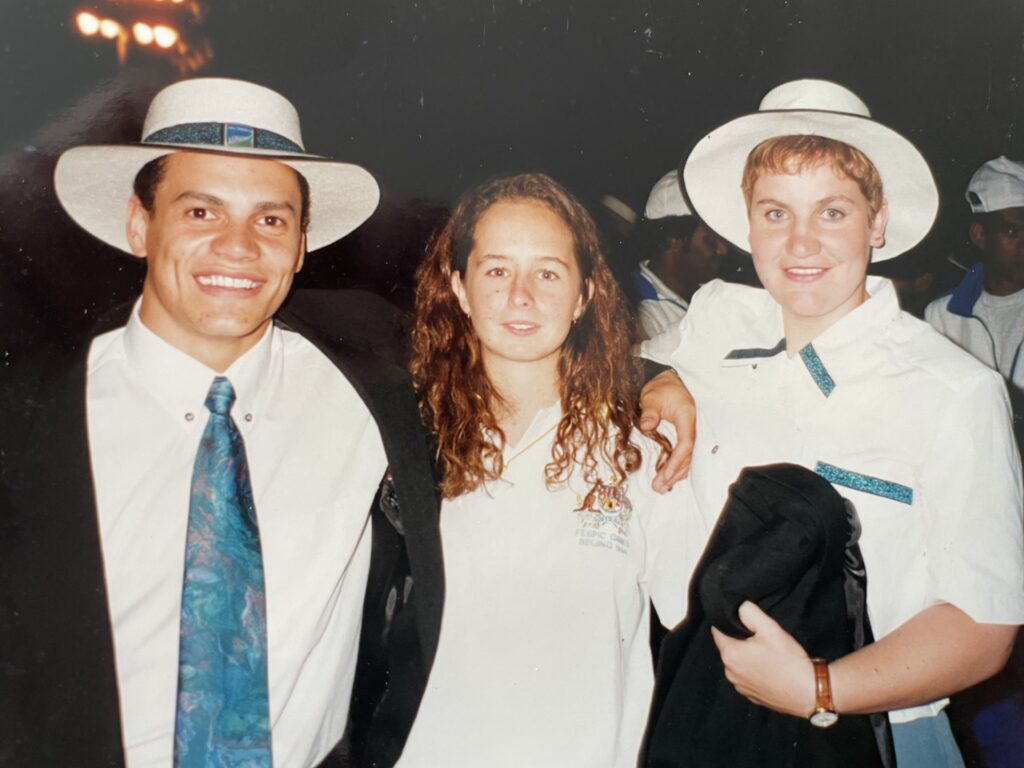
Born with Arthrogryposis, Aaron recalls growing up in South Auckland with a disability was at times tough and he found school challenging. Yet from the moment he acted upon a newspaper article to give Para swimming a go, he found a freedom in the water which was to lead to great fulfilment.
“I loved interacting with others and receiving acceptance from able-bodied swimmers in the pool,” explains Aaron he took up Para swimming aged 11. “I also loved the competitive nature of Para swimming. I struggled at school, but Para swimming gave me a positive outlet.”
Thriving under the coaching of Jane Logan, he was selected to make his Paralympic debut at Barcelona 1992 aged just 16. He impressed at the Games competing across five events and finished fifth in the Men’s 100m Breaststroke SB6.
“Nobody back then in (Aotearoa) New Zealand really talked about the Paralympic Games,” he recalls. “But it was amazing to be selected to compete for New Zealand and I think by competing in Barcelona it prepared me for competing in Atlanta.”
Switching to a new coach, Dean Greenwood, was to prove transformative. Taking on greater mileage in training and making technical tweaks started to reap rewards. Competing up a classification he finished just outside the medals in the Men’s 100m Freestyle S9 at the Victoria 1994 Commonwealth Games, but was starting to make his mark internationally.
At Atlanta 1996 Aaron targeted a medal. Recalling the positive vibe of the NZ Paralympic Team he remembers Paralympian #96 Duane Kale PLY ONZM going on to bank six medals in the pool, including four golds. He shared a room with Paralympian #87 Hayden Brown and spent a lot of time hanging out with good friend Paralympian #79 Belinda Keogan (nee Honey) PLY.
Taking on a heavy schedule he competed in four events with the undoubted highlight, winning a silver medal in the Men’s 100m breaststroke SM6. Reaching the turn first he eventually had to settle for second, finishing a little under two seconds behind Spaniard Jesus Iglesias.
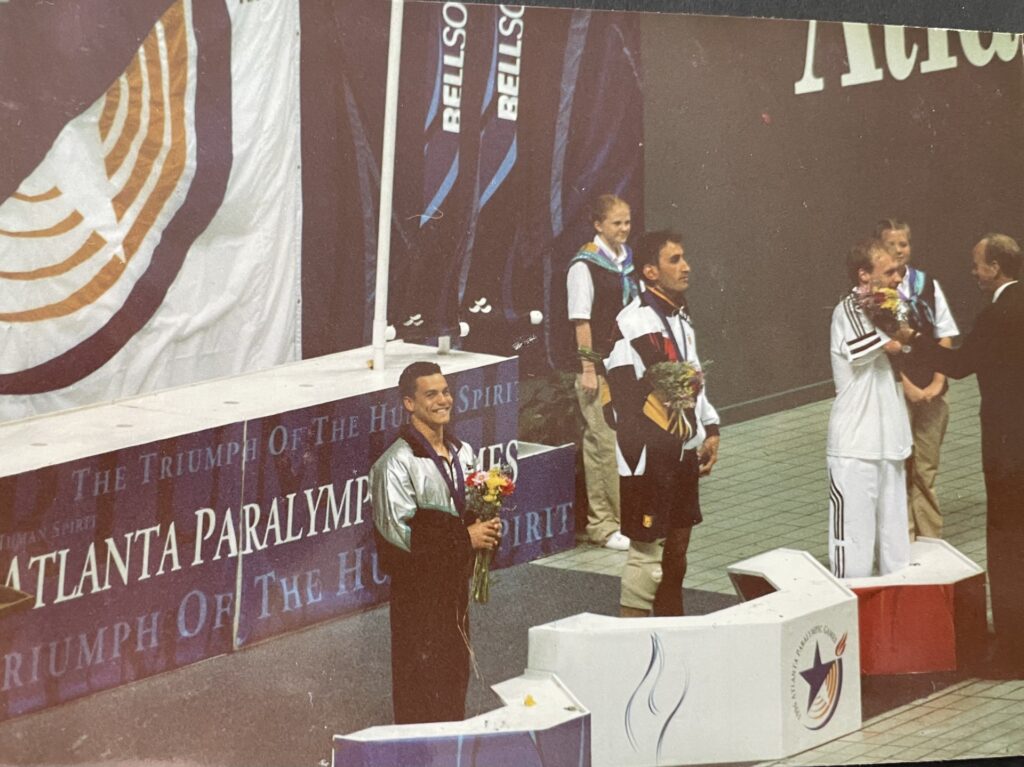
Retiring from competitive Para swimming in the wake of his Atlanta success, today he lives in the central Auckland suburb of Epsom.
“In many ways I achieved my goals in Atlanta by winning a silver medal,” says Aaron, 50. “It changed my life in that it closed one chapter of my life and opened another. I had never been a confident person with a lot of self-belief but I’m immensely proud of what I achieved in the pool. Atlanta 1996 was undoubtedly the highlight.”
Paralympian #100 Peter Martin PLY MNZM
For Paralympian #100 Peter Martin PLY MNZM striking gold and winning silver at Atlanta 1996 was confirmation he could be the best in the world. His debut Paralympic Games 30 years ago helped kick-start a glorious career in which he claimed seven Paralympic medals – including four golds – to become one of the most successful New Zealand Paralympians in history.
“By the time I got to Atlanta I was on a mission,” recalls Peter, 64. “It was justification to me that I was on the right track and that my coaching set up was right. I had pushed and pushed to reach that point, but from then on, I continued to push and just got better and better.”
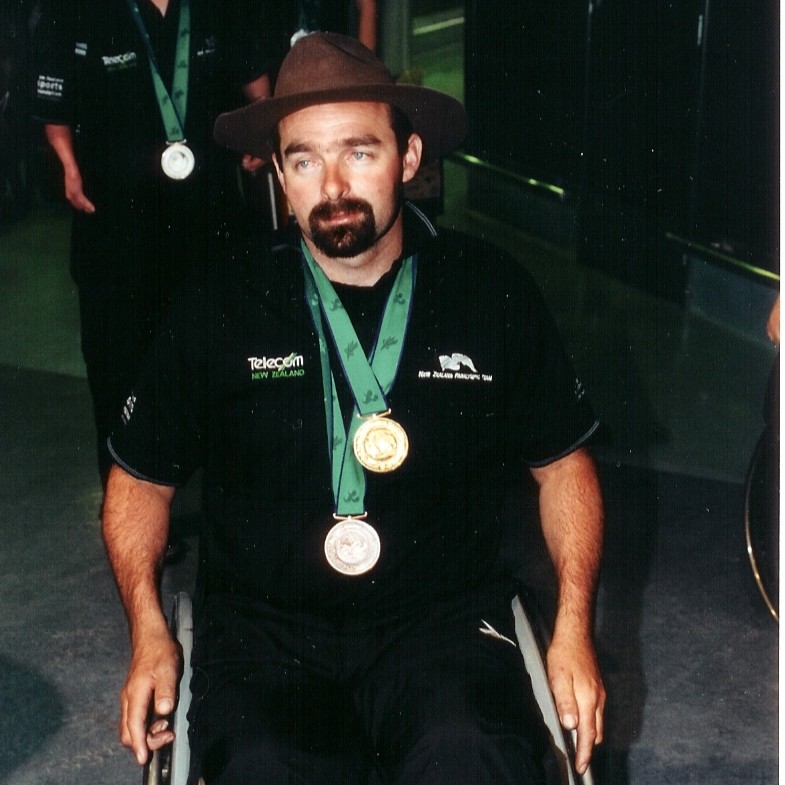
Raised on a sheep and beef farm in Whakamaru in the South Waikato, Peter had played sport at school and as a farmer, was naturally very physically active.
The trajectory of his life was to change at the age of 27. Breaking his neck in a farm bike accident, Para sport offered direction and purpose for the quadriplegic. Initially engaged in Wheelchair rugby, he competed internationally for the Wheel Blacks. However, after first trying Para athletics in the early 1990s, he discovered his natural strength was suited to the throws, particularly shot put and javelin.
Encouraged by his potential, he connected with a coach Bev Savage, who played a huge part in his subsequent success. Overlooked for the NZ Paralympic Team for Barcelona 1992 he was nonetheless determined to succeed. And in 1994 proved to himself and others of his ability, winning gold in the Men’s Shot Put F52 and Men’s Javelin F52 at the inaugural IPC World Para Athletics Championships in Berlin.
“It was a massive statement and a confidence boost,” he explains of winning double gold in Berlin.
Combining three throwing sessions a week with three weights sessions, two road pushes and a Wheelchair rugby and Wheelchair basketball session, he adopted a demanding schedule in preparation for Atlanta 1996.
To give himself every chance of succeeding he spent three weeks in Alabama acclimatising before the majority of the NZ Paralympic Team arrived in the US.
“I fully intended to go there and smash the world,” he said of his pre-Games expectations. “I wanted to better the world record in shot put, because that’s what I figured I needed to do to win gold. It was the first big multi-sport I’d been to, and these are always special occasions.”
Describing the NZ Paralympic Team as a mix of “anxiety and excitement” at Atlanta, he was roommate to Paralympian #104 Jeff Muralt. The wheelchair sprinter had previously competed at the Barcelona 1992 Games for the US, so Muralt was a calm presence which helped put Peter at ease at his maiden Paralympic Games.
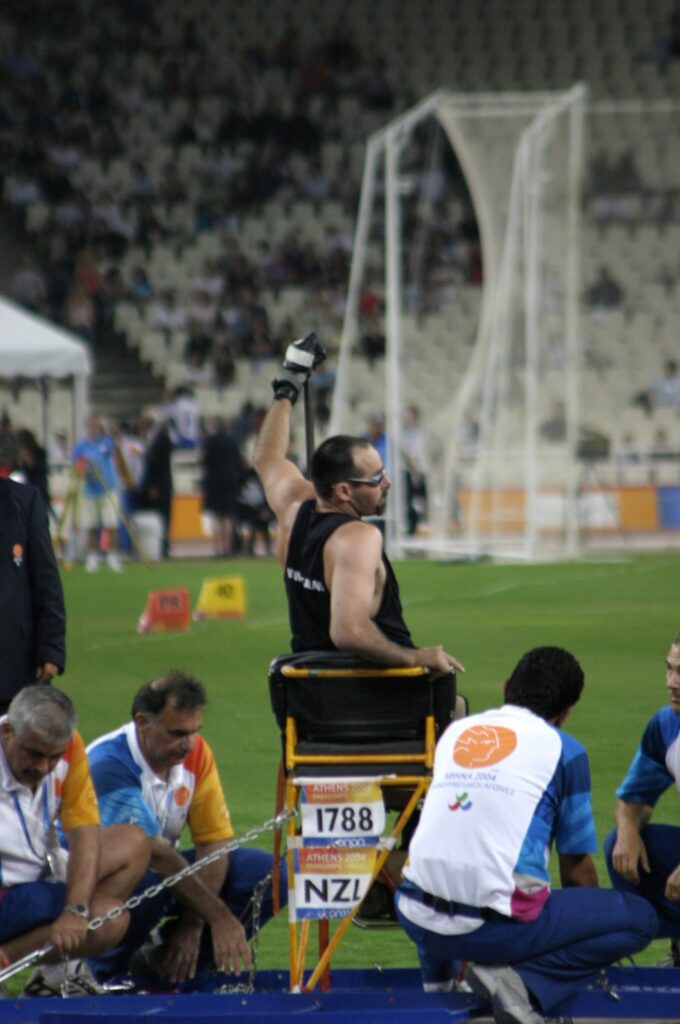
Peter opened his competitive programme in the Men’s Shot Put – his primary event. Leading from the outset he proved unstoppable smashing the world record with 7.69m to strike gold.
“To win the gold medal with a world record, I figured you can’t beat that,” he recalls. “I went on to enjoy a very good Paralympic career, and Atlanta was very important in establishing that.”
Next up in the javelin he set a lifetime best of 15.80m to win the silver medal. While Adrian Paz Velaquez of Mexico grabbed gold, the Kiwi was “ecstatic” with his performance.
“To be able to produce my very best performance on that day, I was very happy.”
Peter went on to enjoy more success at Sydney 2000, winning gold in the Men’s Shot Put F53 and bronze in the Men’s Pentathlon P53. Yet his finest hour came at Athens 2004 when at the age of 42, he clinched gold in both the Men’s Shot Put F52 and Men’s Javelin F52-53, and bronze in the Men’s Discus F52. Later that year he was immensely proud to be awarded the Supreme Māori Sportsperson of the Year award.
He retired in 2007 only to make one final comeback to compete at his fourth Paralympic Games in London 2012 before permanently retiring from Para sport. Married to long-time wife, Anna, today he divides his time between the lifestyle block in Matangi and the family farm in Whakamaru.
Reflecting on Atalanta 1996 and his time as one of New Zealand’s finest ever Paralympians he says: “I do feel proud, I miss it. It was a great time of growth in my life. “To me, there is no better things in life, than being tested, overcoming and succeeding. It is the very definition of euphoria.”