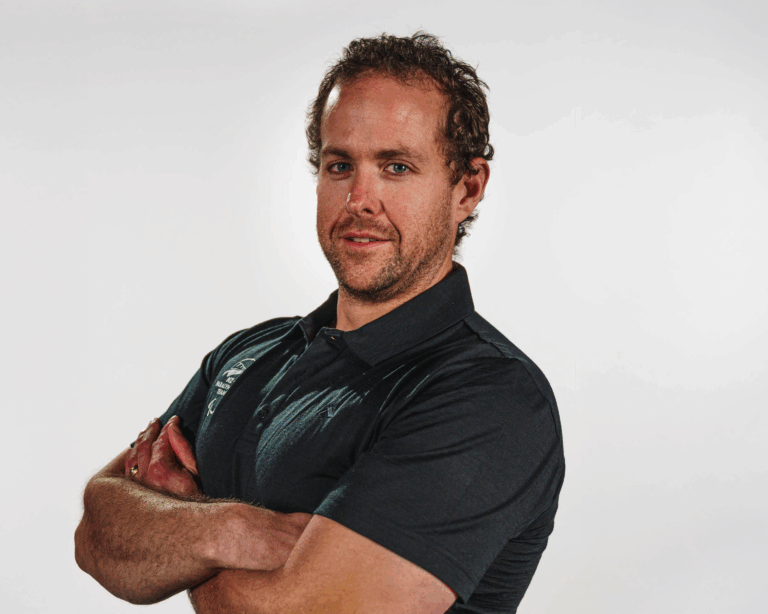
In our ongoing series focused on the support staff for the NZ Paralympic Team at the Milano Cortina 2026 Paralympic Games, we put the spotlight on Team Psychologist Sarah de Wattignar.
Amid the pressure-cooker environment of a Winter Paralympic Games, the physical, technical and mental demands on Para athletes are extreme. To ensure every base is covered, experienced Team Psychologist Sarah de Wattignar will play a critical role at Milano Cortina 2026, providing key support to the Team’s mental preparation and performance.
Born in Southland and raised in Dunedin, Sarah, a clinical psychologist, was introduced to the sporting realm by Professor Ian Lambie from Sport Psychology Associates. A keen recreational sportswoman, she quickly embraced working with elite athletes and in 2017 started working for High Performance Sport New Zealand (HPSNZ).
“Many of the people I work with in elite sport are looking to make positive changes, are highly motivated, have a strong work ethic and are generally psychologically minded,” explains Auckland-based Sarah. “This means changes can happen reasonably quickly. To see people embrace high pressure situations, challenging internal states, succeed and reach their goals, makes the work very rewarding.”
Working with elite athletes across a range of sports at HPSNZ such as athletics and canoe racing, she has gained an insight into what makes high performing athlete’s tick. Yet after serving as a Team Psychologist with the NZ Paralympic Team at the Paris 2024 Paralympic Games she is also excited by the challenge of once again working with Para athletes and support staff at Milano Cortina 2026.
“There is more complexity (with Para athletes) in terms of clinical needs and life experiences, often the adversity they have gone through has created an enormous resilience and adaptability, which is perfect for engaging with Para sport at a very high level. The challenges Paralympians have overcome is phenomenal.”
In Paris 2024, Sarah worked predominantly with the Shooting Para sport team based in Chateauroux, and having had that firsthand experience of previously working at a Paralympic Games, she feels better equipped to deliver her role in Milano Cortina 2026.
“The experience was new and novel in Paris where I wanted to observe, so as not to disturb the processes of anyone in the NZ Paralympic Team,” she says. “I’m much more comfortable knowing what a Paralympic Games looks like and I feel I can show up and offer a lot more.”
Sarah could contend with a whole range of challenges during Games-time from expectations around the Games, fears, and even relationship breakdowns – she needs to be prepared for any eventuality, but it is her job to remain calm and composed.
“It is important to work with the Team long before the Games to build up those relationships,” she says. “Everyone involved needs to have absolute clarity around their role and responsibilities at the Games, what values underpin their actions and to identify anything that could keep them away from maintaining their attention and focus. I’m there to hopefully give them that space to talk confidentially, and work that out.”
“Ultimately, I’m part of a small Team and I would like to contribute in a way which allows people to be the best version of themselves.”
The days can be long and demanding and the role does require great versatility, but there is little doubt why Sarah has committed to the position as Team Psychologist for Milano Cortina 2026.
“There are very few jobs where there is such a shared purpose and goals with all the people involved,” she adds. “Yes, the days can be long, and at times challenging, but there is something about the bonds you create and the memories you make with the NZ Paralympic Team that you wouldn’t get anywhere else.”