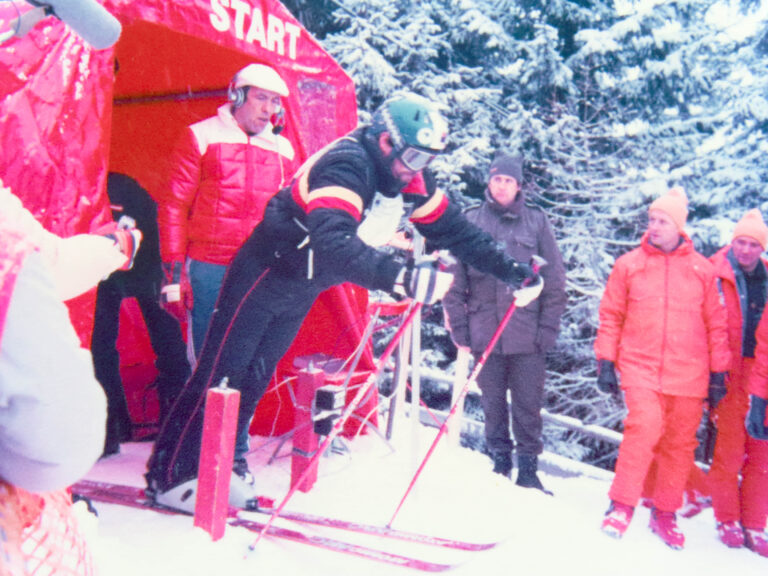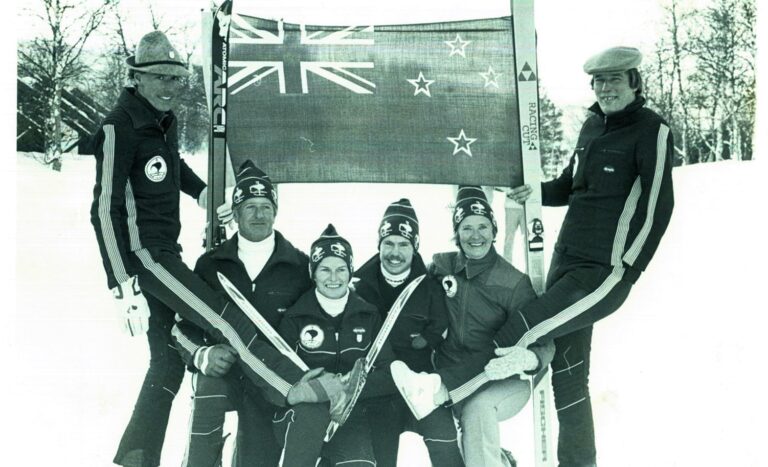
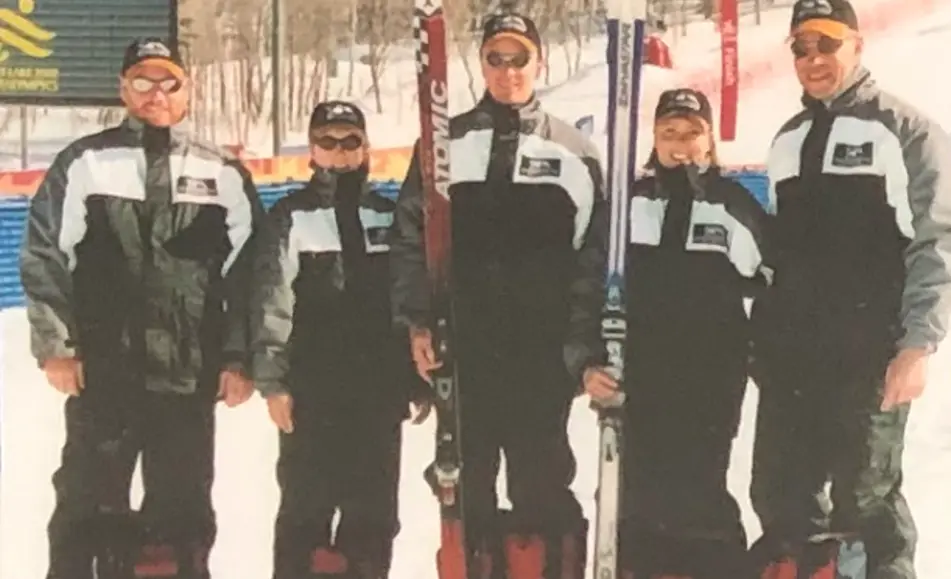
The NZ Paralympic Team boasts a rich and proud history at the Paralympic Winter Games. Since first contesting the quadrennial event at Geilo 1980, the Team has snared a magnificent 35 medals including 17 gold. With the latest edition in Milano Cortina 2026 (6-15 March) rapidly coming into view, we reflect on the journey undertaken by the NZ Paralympic Team at the premier winter Para sport competition. In the second part of the feature, we focus on the Paralympic Winter Games of the 21st century.
The Salt Lake City 2002 Paralympic Winter Games saw a continuation of the medal success enjoyed at previous Games, as the two-person NZ Paralympic Team took home a brilliant haul of six medals (four gold and two bronze).
Paralympian #114 Rachael Battersby (now Henderson) was the star of the show becoming the most successful female New Zealand Winter Paralympian in history by winning triple gold in the Women’s Downhill LW3,4,6/8,9, Women’s Giant Slalom LW6/8 and Women’s Slalom LW6/8. It was a staggering performance from the arm amputee who overcome her fear of the speed events by opening her gold medal account in the downhill.
Paralympian #115 Steven Bayley produced “the run of his life” in dumps of snow, gusty winds and on a bumpy course more akin to his club ski field growing up at Craigieburn Valley ski area, to claim gold in the Men’s Giant Slalom LW4. He also went on to grab bronze medals in the Men’s Downhill LW4 and Men’s Super-G LW4 events to enjoy a magnificent Games.

Battersby said of her success in Salt Lake City 2002: “My results were a reflection on my commitment, my effort, my focus and my determination. I feel very lucky to have had the opportunity to represent New Zealand, travel the world making friends, and it made me become a confident, successful young lady.”
Bayley added: “Losing my leg and moving into Para sport expanded my horizons,” he says. “It connected me with so many people and experiences that will be hard to match. It opened my perspective on how people overcome challenges and what is possible.”
The Torino 2006 Paralympic Winter Games witnessed the debut appearance of one of the all-time New Zealand Paralympic winter legends Paralympian #158 Adam Hall MNZM. Aged just 18 at the time, Torino 2006 served as a useful experience for his future Paralympic ambitions. Paralympian #157 Anthony Field was the other Para athlete to feature for the NZ Paralympic Team.
Four years later at the Vancouver 2010 Paralympic Winter Games, Hall added his name to the gold medal honours list with a thrilling victory in the Men’s Slalom Standing. Leading by more than two seconds after the first run he thought his chances of gold had evaporated after falling on his second run. But after somehow hauling himself back to his feet he was staggered to discover he had claimed gold by more than half-a-second on the Whistler Creekside.
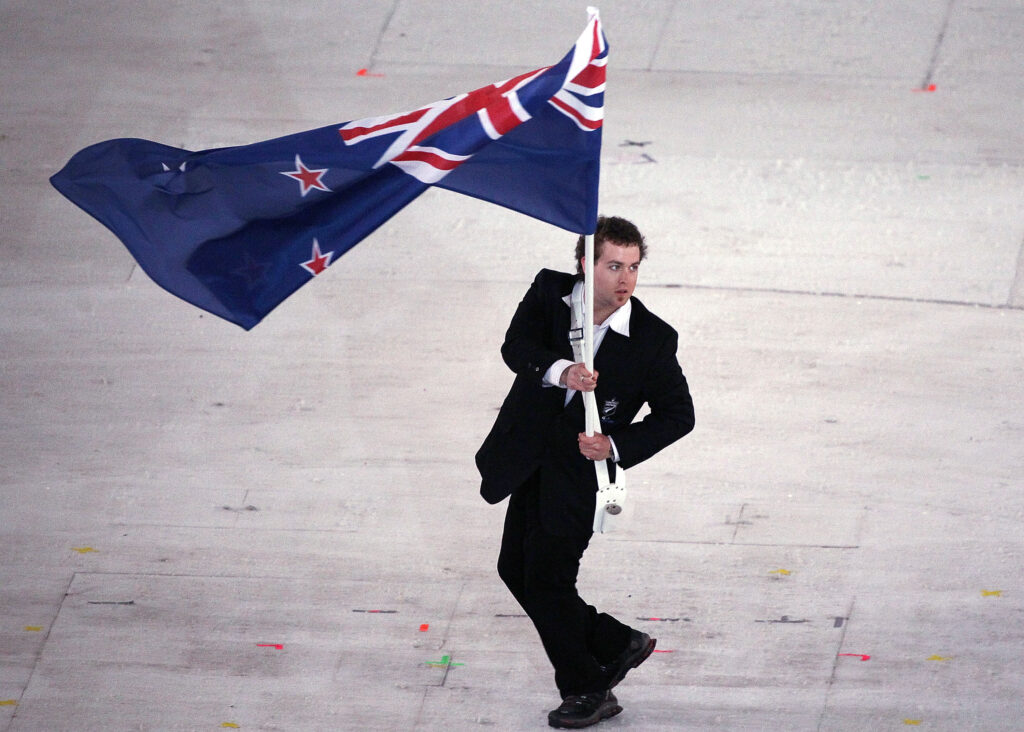
The three-strong NZ Paralympic Team for the Sochi 2014 Paralympic Winter Games performed with pride as Hall, and debutants Paralympians #188 Corey Peters MNZM and #189 Carl Murphy claimed seven top seven finishes between them.
While Hall secured a pair of fourth place finishes and Para snowboarder Murphy placed fourth in the Men’s Para Snowboard Cross Standing event, Peters earned a medal with a silver in the Men’s Giant Slalom Sitting. The New Plymouth-raised Para athlete, who had only acquired his disability five years earlier following a motocross accident, led the field after the first run before piecing together a consistent second run to take the silver medal.
The same trio of Paralympians competed for the NZ Paralympic Team at the PyeongChang 2018 Paralympic Winter Games and produced an outstanding display to take three medals (one gold and two bronze). For a second successive Paralympic Winter Games, Peters mounted the podium this time with bronze in the Men’s Downhill Sitting. However, the star of the NZ Paralympic Team was Hall who claimed bronze in the Men’s Super Combined Standing, before storming to success to reclaim the Men’s Slalom Standing title thanks to an electrifying second run. After the first run at the Jeongseon Alpine Center, the Dunedin-raised Kiwi competing at his fourth Games sat joint third, but drawing on all his experience, he executed a wonderfully composed second run to strike gold by a winning margin of 0.39.
Hall, who was one of two recipients of the Whang Yuon Dai Achievement Award for Para athletes that best exemplify the spirit of the Paralympic Games and Paralympic values at PyeongChang 2018, said: “When I look back at that campaign it was amazing to have an eight-year gap between Paralympic gold medals as I don’t think many Para athletes have achieved that. To be an older Para athlete and deliver was very cool.”
At the Beijing 2022 Paralympic Winter Games, the NZ Paralympic Team of three Para athletes; Hall, Peters and debutant Paralympian #228 Aaron Ewen impressed to snare a total of four medals (one gold, one silver and two bronze).
Hall captured a pair of bronze medals in the Men’s Super Combined Standing and the Men’s Slalom Standing events, but the star performer in the NZ Paralympic Team was Peters, who completed the full trifecta of medals.
Overcoming a lack of racing because of the pandemic and the uncertainty generated by crashes in both training runs, the Kiwi hurtled down the slopes to win the Men’s Downhill Sitting by a massive victory margin of 1.26 seconds.
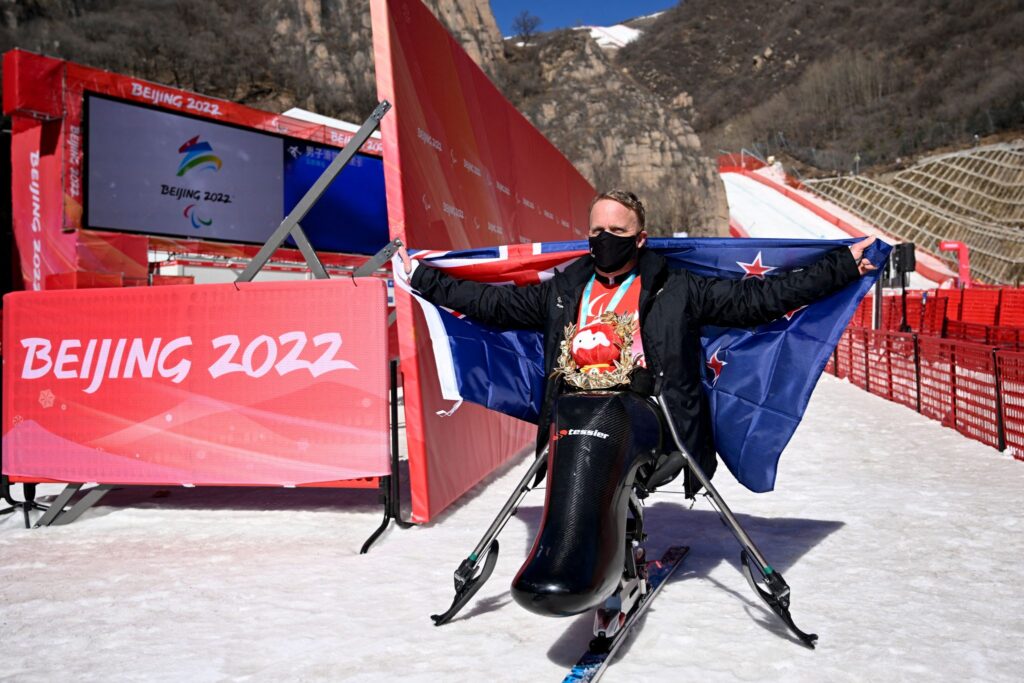
Peters, who also claimed a silver medal in the Men’s Super-G Sitting event, said of his downhill performance: “To me it felt like the icing on the cake to a successful career. I risked everything on that run – it was probably the best run of my life.”
***The Milano Cortina 2026 Paralympic Winter Games takes place from 6-15 March. Follow extensive coverage of Milano Cortina 2026 on TVNZ and on Paralympic New Zealand channels.