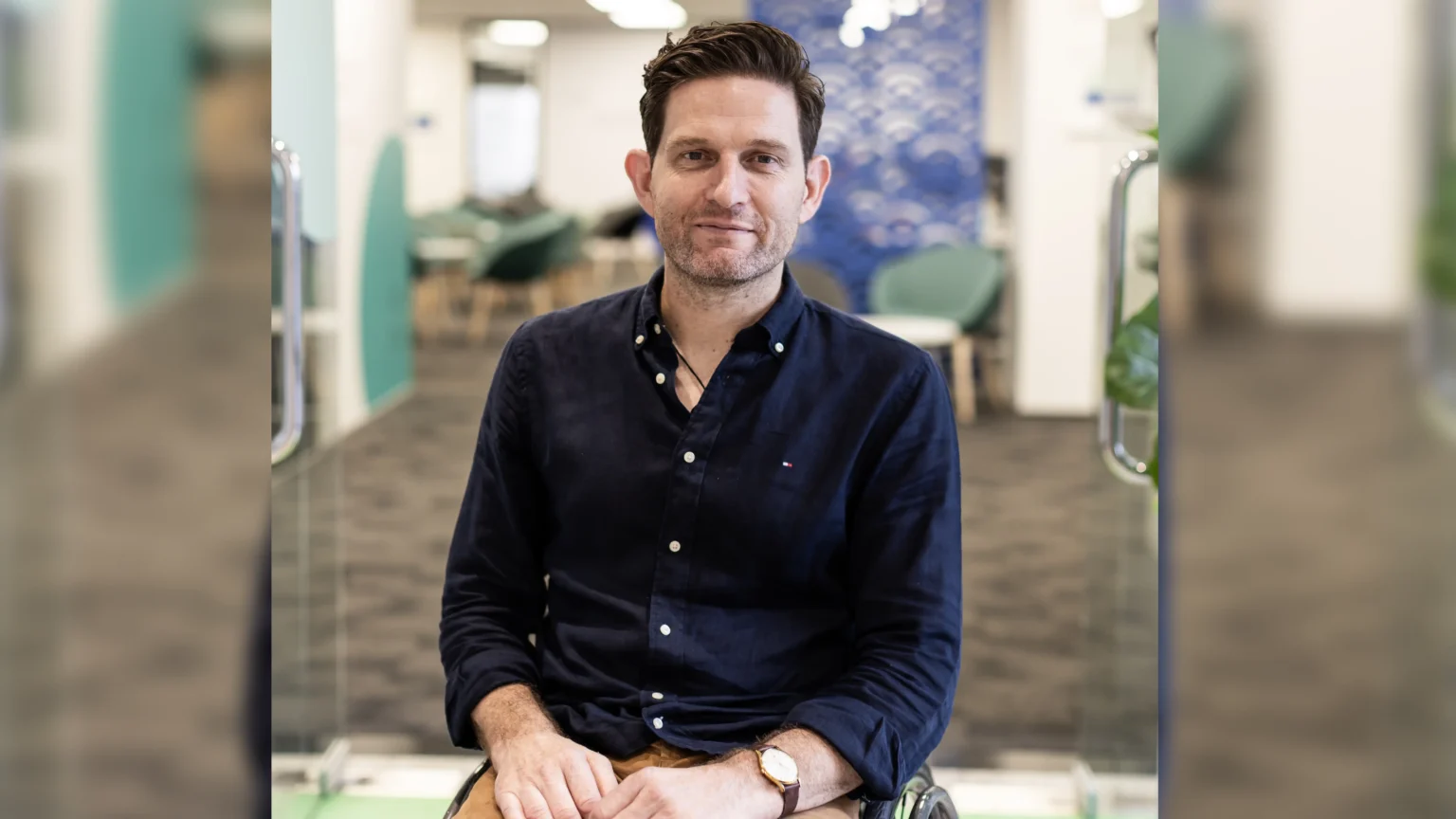
Paralympian #142 Dan Buckingham PLY MNZM was earlier this month appointed a Member of the New Zealand Order of Merit in the King’s Birthday Honours. It is fitting recognition for a man whose impact has extended far beyond the sporting arena. We reflect with Dan on his significant contribution to both Wheelchair rugby and disability advocacy in Aotearoa New Zealand.
At just 45 years of age, and with plenty of life still ahead of him, Dan admits he was slightly perplexed to receive such a prestigious honour.
“In many ways I feel like my life is just kicking off, so to find out I had received the award was a lovely surprise,” he says. “In some ways it feels a little premature, but it was really cool to have so many phenomenal people reach out to congratulate me – including some I hadn’t heard from in a long time. More than anything, I’ve tried to show a lot of appreciation and gratitude.”
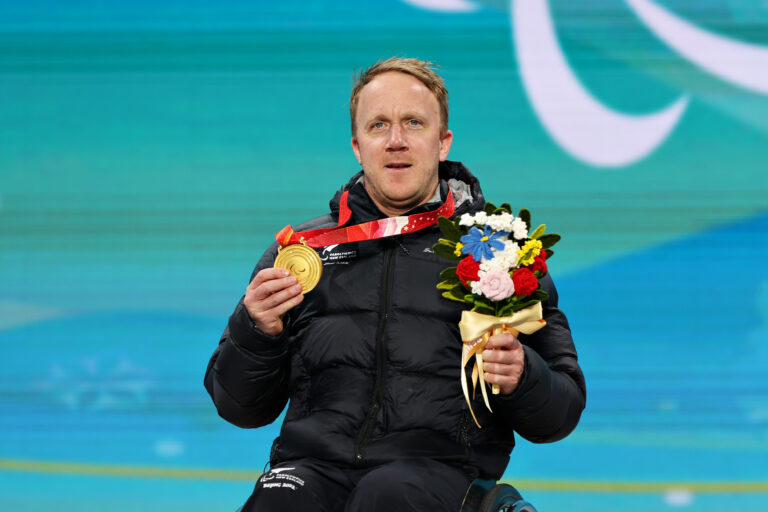
Born in Invercargill and raised on a farm in the Catlins, the proud Southlander has packed plenty into his first four and a half decades. A Paralympic gold medallist with the Wheel Blacks at Athens 2004, captain of the team at Beijing 2008, and former President of New Zealand Wheelchair Rugby, his contribution to the Para sport has been immense.
Yet his impact away from Wheelchair rugby has been equally significant. During a 14-year career with Attitude TV, where he rose to the position of CEO, Dan became an advocate for disabled people through the long-running Attitude television series and his work covering the Paralympic Games.
Today, as CEO of Able – Aotearoa New Zealand’s leading provider of media accessibility services, including closed captioning, subtitling and audio description – he continues to champion greater inclusion and accessibility for disabled New Zealanders.
Leadership came naturally to Dan. A former captain of his school’s First XV – despite in his words ‘being nowhere near the best player on the team’ – his life changed forever at the age of 18 when he sustained a spinal cord injury playing rugby while studying at the University of Otago.
Studying surveying at the time it was his good fortune that during rehabilitation in the Christchurch Spinal Unit, he was introduced to Wheelchair rugby.
“I saw this bunch of guys training who looked so dynamic, playing a sport they loved,” he recalls. “They were studying or working, they had wives and girlfriends, and they were living full lives. Seeing other wheelchair users come out the other side was hugely inspiring. Wheelchair rugby opened my eyes to what was possible and played a massive role in helping me navigate life after injury.”
The transition into the Para sport was not always easy. Having emerged from what he describes as the “mollycoddled” environment of the spinal unit, Dan soon discovered that Wheelchair rugby demanded resilience, self-reliance, and independence.
“You were cut down to size pretty quickly in Wheelchair rugby,” he says. “The players would question things like why you needed armrests on your chair. It accelerated your independence.”
After taking up the Para sport in late-1999, just two years later Dan made his Wheel Blacks debut and attention quickly turned to winning gold at the Athens 2004 Paralympic Games.
Led by the inspirational coaching of Paralympian #107 Grant Sharman MNZM and the analytical leadership of captain Paralympian #126 Tim Johnson PLY MNZM, Dan describes that period as a magical time in his sporting career.
“We were exposed to the cutting edge of high-performance sport,” he says. “It was a privilege to learn about psychology, strength and conditioning, and nutrition. It was a hell of a ride – a time of growth, learning and achievement.”
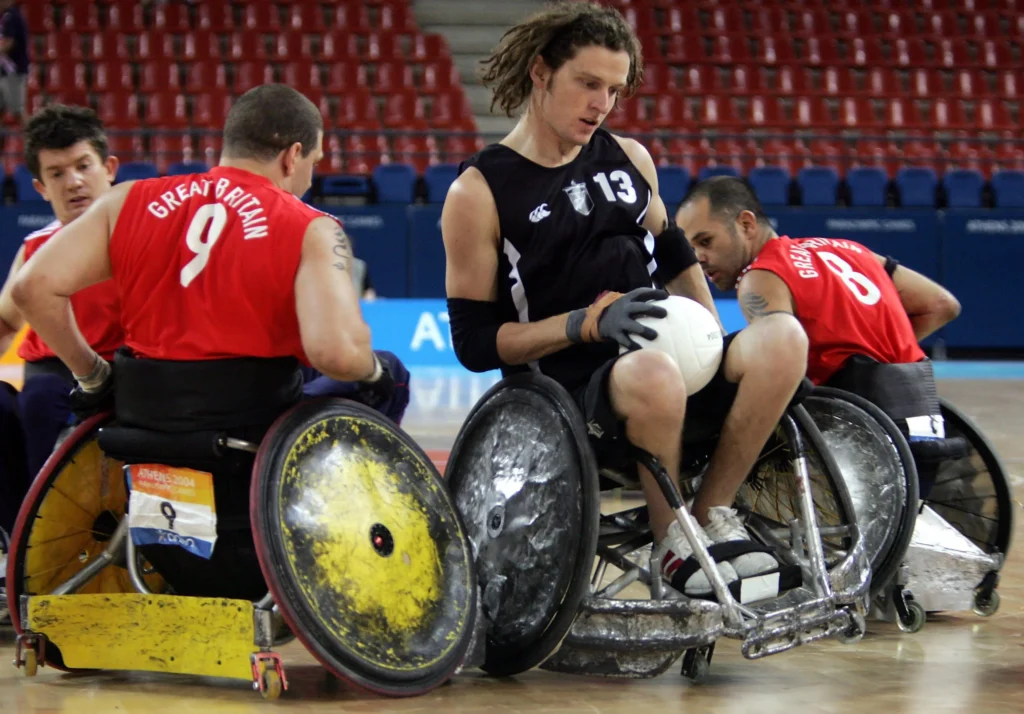
The Wheel Blacks arrived in Athens in peak condition and with a quiet confidence that contrasted sharply with many of their rivals.
“Other teams looked so nervous and unsettled,” he recalls. “I remember thinking, wow, this is a weird feeling because we’re so relaxed. But that captured exactly where we were mentally. We had so much trust in the process.”
Their confidence proved well-founded. In a thrilling final, the Wheel Blacks defeated Canada 31-29 to secure Paralympic gold, a remarkable achievement for Dan at his debut Games.
More than two decades later, however, he believes the true value of that success extends far beyond the medal itself.
“Nobody really remembers too much about the gold medal, but for the nine of us and the support staff who won it, that experience stays with us forever,” says Dan. “We went on an incredible journey together and what it gave you was confidence. It showed you that if you could achieve something like that, you could go on and achieve in other areas of your life too.”
Dan would go on to enjoy a distinguished 15-year international career with the Wheel Blacks, winning a silver medal at the 2006 World Championships and captaining the side to fifth at the Beijing 2008 Paralympic Games.
He also played Wheelchair rugby in the United States, Canada and Australia, but for Dan that pride in representing New Zealand never waned.
“I never lost that sense of privilege of playing for my country,” he says. “I’ve never forgotten people stopping me in the street after winning gold in Athens telling me how much that gold medal meant to them.”
Giving back to the Para sport was always a core part of Wheel Blacks culture and, given his passion for leadership and governance, it was perhaps inevitable that Dan would become involved off the court. He served in governance roles with Canterbury Wheelchair Rugby, ParaFed Canterbury, and later as President of New Zealand Wheelchair Rugby.
More broadly, leadership has been a recurring theme throughout his life.
Dan joined Attitude TV in 2008 as a researcher, reporter and presenter. Over the next 14 years he helped shape one of New Zealand’s most influential disability-focused media organisations, eventually serving as CEO from 2019.
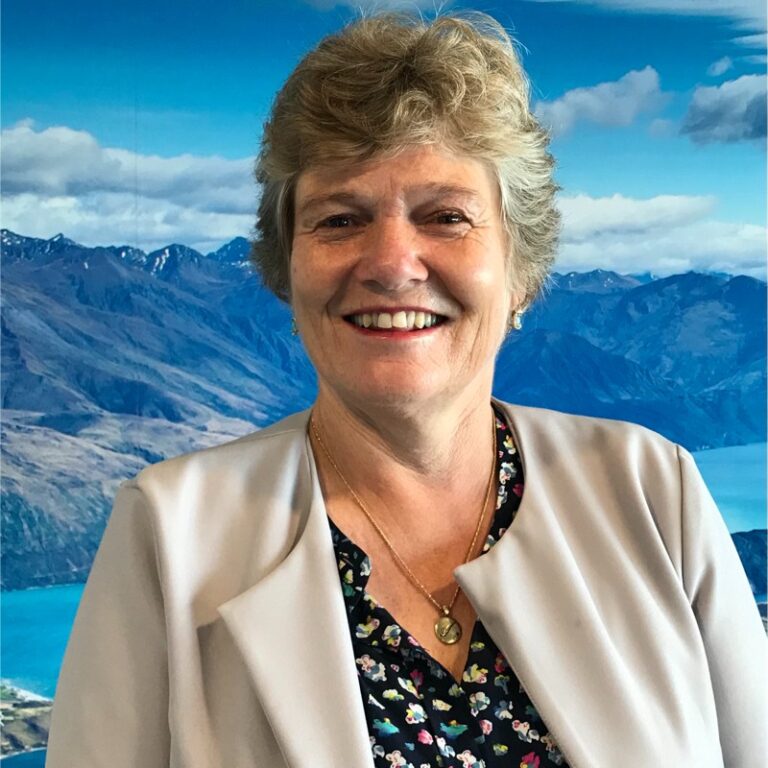
“It was a hell of a journey,” he says. “Robyn Scott-Vincent (Director of Attitude) had incredible vision and foresight to pursue different opportunities and, for much of my time there, I felt like I was just trying to keep up. I have so many great memories from Attitude, but eventually it felt like the right time for a new challenge.”
That challenge arrived in 2022 when he became CEO of Able. Drawn to the size and structure of the organisation, which employs around 40 staff, Dan relishes the opportunity to think strategically while empowering others to deliver.
“I get to be forward-thinking and strategic, and I trust the team around me to execute.”
Alongside his executive career, Dan has built an impressive governance portfolio. He has served on boards including Drug Free Sport New Zealand (now the Sport Integrity Commission Te Kahu Raunui) and ACC. He currently sits on the boards of the Disability Media Collective, the CatWalk Trust, and the Screen Production and Development Association of New Zealand.
“I love sitting around a table with other strategic thinkers, grappling with big issues and challenging assumptions,” he says.
A key motivation throughout Dan’s career has been helping shift perceptions of disability and contributing to a more inclusive society. While he acknowledges significant progress has been made since his accident 27 years ago, he believes there is still work to do.
“We’ve seen much greater pride within the disability community and we’re seeing a new generation coming through where disabled people are expected to succeed and thrive,” he says.
“For non-disabled people, there’s also far greater visibility of disability. Programmes like Attitude helped make disability more visible and normalised. The coverage of Rio 2016 (on TVNZ which was presented by Dan) further helped showcase some amazing Paralympians and gave greater exposure to what the disabled can achieve.”
Looking ahead, Dan remains open to future opportunities in sports leadership. Yet whatever path he takes, raising the bar for disabled people remains central to his purpose.
“I was exposed early in my Wheelchair rugby journey to people like Bill Oughton (Paralympian #129) and Tim Johnson,” he says. “I remember rooming with Bill on my first trip and turning up with a shower chair. He said, ‘With your level of function, you don’t need a shower chair. We’ll teach you how to transfer into a bath.’
“It was a simple example of someone challenging your assumptions about what you thought you needed. I’ve shown that it’s entirely possible to live a full and meaningful life as a disabled person, and I think we need to keep raising those expectations for the generations that follow.”