Paralympian #46 Christopher Orr made history as the first Kiwi to win a Paralympic Winter Games medal, achieving the feat at Innsbruck 1984. We reflect on his success and his post-sporting life, where Chris continues to make a positive difference for those with a vision impairment.
Auckland’s busy rail or bus network, which carries thousands of passengers every day, has undergone somewhat of a revolution in more recent times for its vision impaired passengers.
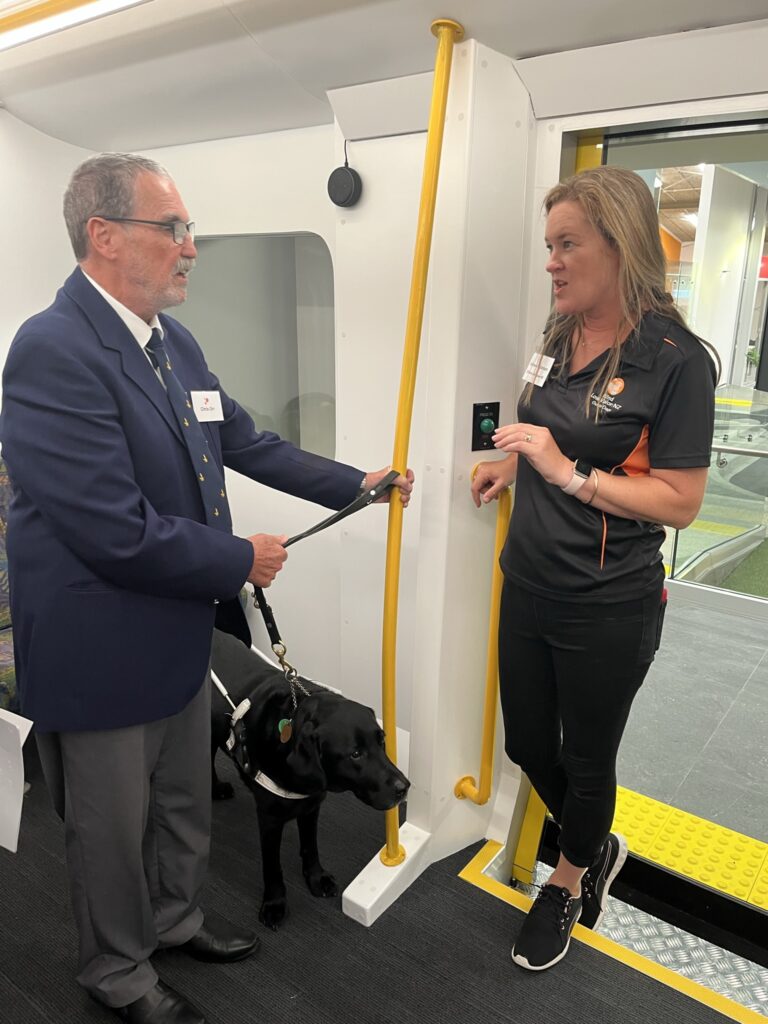
From on-request audio announcements on buses, to braille and large print signs, audio announcements on trains, high-contrast designs and tactile elements, the public transport experience for vision impaired passengers has been transformed – and pivotal to this happening was a team which included Paralympian #46 Christopher Orr.
Working in a range of roles for Blind Low Vision NZ (formerly the Royal New Zealand Foundation of the Blind), the disability advocate has left a huge mark.
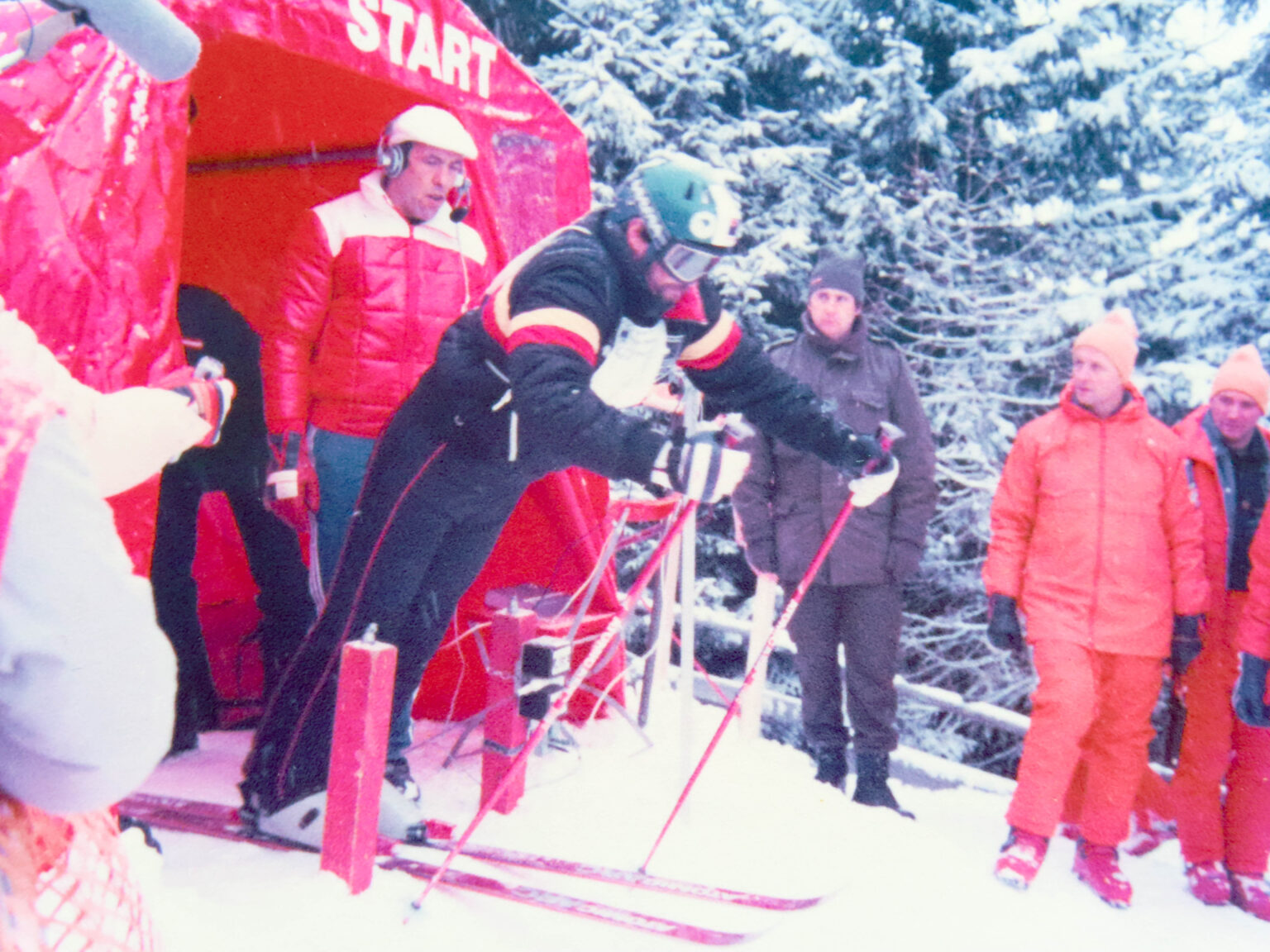
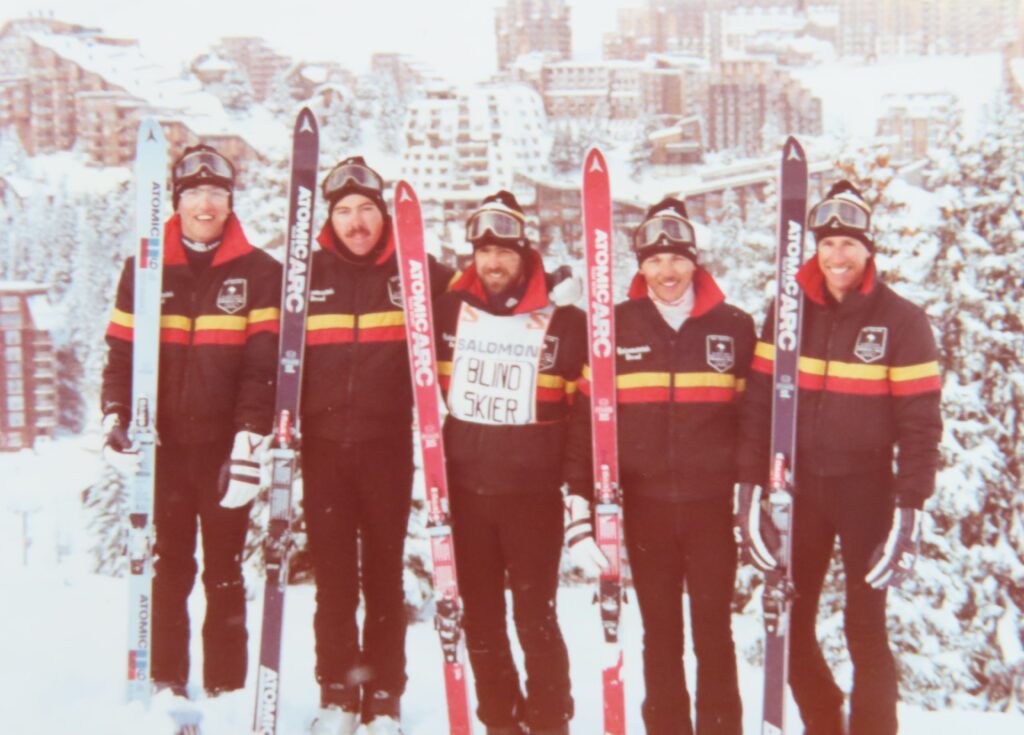
Yet what many do not realise is that some 42 years ago Chris made history on the ski slopes winning a silver medal in the Men’s Downhill B1 to become the first NZ Paralympic Team medallist at a Paralympic Winter Games, achieving the feat at Innsbruck 1984.
“It was so exhilarating, and you do get caught up in the moment,” recalls Chris, now aged 72. “That night (after winning gold) I remember walking around Innsbruck with my medal and people were coming up to myself and Viv Gapes (Paralympian #45 who later that day had claimed New Zealand’s first Paralympic Winter Games gold medal) on the street wanting to talk to us. That is how big skiing was in Austria. It was a special time, and it was very special to be part of that NZ Paralympic Team.”
Raised by his grandparents in Dunedin, Chris quenched his fierce competitive spirit through sport. An accomplished cricketer and rugby player he also showed his athletic prowess by winning the Otago long jump title in his youth.
After leaving school he took on “a dream job” working on the brewery floor at Speight’s before he was to encounter a life altering incident on his 21st birthday. One of Chris’ friends became embroiled in a fight outside a Dunedin bar, during which Chris was an unfortunate victim of a shooting that resulted in the loss of his vision.
“It was life-changing for me, but I’m probably a better person for it.” he adds.
In the early days of adapting to life with a disability Chris found it tough.
“I thought that was the end for me,” he says. “Up until the accident I’d never even met a blind person.”
Relocating to Auckland to complete an immersion rehabilitation programme to learn everyday life skills, he gradually accepted his changing circumstances. And it was his good fortune that the Royal New Zealand Foundation for the Blind was undergoing a modernisation.
“A new CE (at the Royal New Zealand Foundation for the Blind) started in 1977 who had travelled to the US and seen the benefit of those with low vision to develop daily living skills,” explains Chris. “I came in at an exciting time and watched the organisation grow; I was very lucky too that I grew with it.”
Learning to work the switchboard he was offered a job as a receptionist, and he found further purpose and an outlet for his competitive nature through Para sport. He started running with a guide and competed in 11 marathons, including the World Blind Marathon Championships, three ultra marathons and countless half marathons and 10km events.
“I loved the camaraderie and the feeling of satisfaction running gave me,” he added.
His skiing journey was to begin in the late 1970s. The New Zealand Association of Disabled Skiers were keen to attract more Para alpine skiers from the urban area and curious Chris signed up. The programme was led by physiotherapist Gilian Hall, and he recalls spending a week on Mt Ruapehu learning the basic skills. He was immediately hooked.
“When you are running you a tethered to a sighted runner, but in alpine skiing, there is no physical link to your guide, so I enjoyed that sense of freedom that skiing gave me,” he explains.
Invited to attend training camps at Mount Hutt in Canterbury, his skiing was further refined thanks to the skills of ski instructor David Boyd, who would later be Team Coach of the NZ Paralympic Team at Innsbruck 1984. Over time it was David who convinced Chris to try his hand at ski racing. Connecting with Roger McGarry as Chris’ ski racing guide, the pair enjoyed a special chemistry on the slopes and the duo quickly figured out a method to gain more speed and fluency.
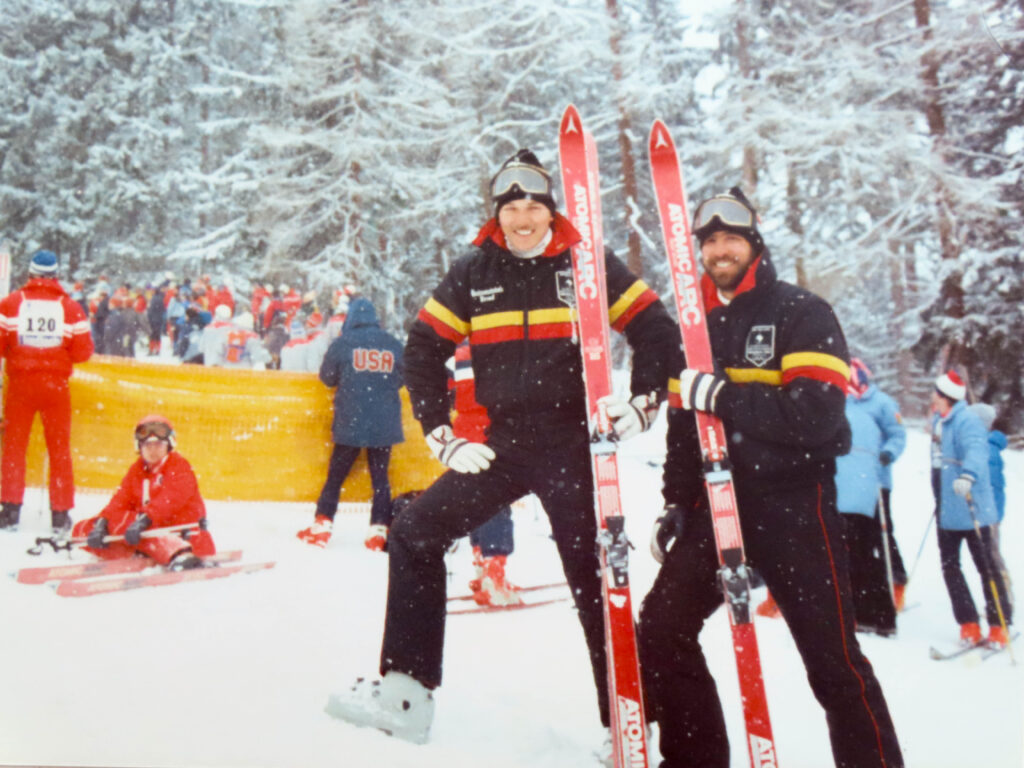
“Traditionally, the guide would ski behind and give instructions, but I wasn’t reacting quickly enough,” explains Chris. “So, we experimented and decided that by Roger skiing ahead of me and giving me instructions was much better. I could hear his skis turning ahead of me and that’s when we started to improve.”
Such was his improvement in 1983 he had earned selection as part of an eight-strong NZ Paralympic Team selected for the Innsbruck 1984 Paralympic Winter Games. Hugely motivated, he spent prolonged periods training in Turoa in the North Island and at Mt Cheeseman ski field in Canterbury.
It was during a period training at the latter venue when a TV crew came out to film the Team. David suggested that Chris be filmed skiing down the mountain – which in retrospect proved a key moment in his Para alpine skiing journey.
“When David suggested I should be filmed, I said, ‘you have got to be joking.’ But David convinced me to go for it. Roger and I whizzed through the course, it was fantastic. That’s what clinched it for me, that I could do this.”
To prepare for Innsbruck 1984 – staged in January – the squad headed out to France for pre-competition training in November. Chris and the squad picked up more confidence working on their starts and turns and how to break the wand at the start of the race.
“Don’t forget, at that point we’d never competed at an international ski race,” he said.
Arriving in Innsbruck for their first Paralympic Winter Games and what was his first ever international competition was “daunting” according to Chris and he arrived in Austria with no expectation.
But with Roger’s unstinting support, they executed a clean run in the Men’s Downhill B1 – his opening event.
“I can remember breaking the wand, taking off but the rest was just a blur,” he says. “I got to the bottom thinking, that’s all done. I was sat second when David came up and said, it looks like the men’s event has finished as women are now racing the course. Next Ed Bickerstaff (Paralympian #40) started jumping all over me saying I had secured silver. It was an amazing feeling of exhilaration to know I’d won a medal.”
He went on to claim fourth place finishes in both the Men’s Giant Slalom B1 and the Men’s Alpine Combination B1 and was elated with his overall performance.
Yet once the jubilation of winning a Paralympic silver medal subsided, he held one deep regret – that Roger was not also presented a medal.
“For all of the support Roger gave me he deserved the medal,” explains Chris. “I get the glory because I record the time, but the guide plays a huge role.”
Retiring from competitive skiing post-Innsbruck to focus on family life – he went on to have three children and now has one grandchild – he continued for many years to ski recreationally at the Rangitikei Club based out of Ohakune.
Post his Para alpine skiing career he continued to work for the Royal New Zealand Foundation of the Blind teaching others with a vision impairment to read braille and later become a specialist fundraiser and worked for a period in public relations.
For 20 years the South Aucklander focused on access to the built environment for people who are blind or have low vision (including roads, footpaths and buildings). His access work on the built environment included public transport facilities such as bus stops and rail stations, including advising on the design of the electric trains for the Auckland rail network.
“It has been immensely satisfying giving back to blind people to ensure that their journey on the Auckland transport system is so much smoother,” he comments.
Retiring in 2022 after 46 years at Blind Low Vision NZ, today Chris still contributes to the cause of the vision impaired by serving on the Board of Directors at Blind Low Vision NZ.
“The role is brilliantly satisfying and when I eventually pull the pin I will miss it,” he explains. “But at the end of the day, I can hold my head up high and say I did the best that I could.”